
Optimal Indoor Humidity Levels for Enhanced Wellness
Maintaining the right indoor humidity isn’t just about comfort — it directly affects your breathing, sleep, skin, and overall wellness. Keeping your home between 40–60% humidity helps prevent dryness, reduces allergens, and creates a healthier living environment.
WELLNESS
4/26/20262 min read
Comprehending Indoor Humidity
Indoor humidity is essential for our well-being, affecting various elements of our health and comfort. The optimal indoor humidity range for wellness is typically recommended to be between 40–60%. This range not only aids respiratory comfort but also promotes skin health, improves sleep quality, and hinders mold development, which can negatively impact our health.
Adjustments for Seasonal Humidity
While the advised humidity levels range from 40% to 60%, it is crucial to make seasonal modifications. In winter, humidity levels might significantly decrease due to heating systems, making a target of around 30% more appropriate. This lower humidity can help prevent problems such as dry skin and respiratory issues, but should be monitored carefully to avoid excessive dryness.
Keeping Ideal Humidity Levels
Conversely, during the summer months, humidity levels generally rise, and maintaining indoor humidity around 55% can be advantageous. High humidity during this season can lead to an unpleasant atmosphere and may foster mold growth if not managed correctly. To sustain ideal humidity levels year-round, consider utilizing a humidifier in winter and a dehumidifier in summer. Regularly monitoring indoor humidity with a hygrometer can assist in keeping within the recommended range, ensuring your comfort and health.
In conclusion, keeping indoor humidity between 40–60% is crucial for wellness, but adjustments need to be made according to seasonal variations. By proactively managing and monitoring humidity levels, individuals can create a healthier indoor environment that is beneficial for respiratory health, skincare, and overall comfort. In the summer, I use a humidifier and find it necessary to empty the water container daily.
The Importance of Humidity for Your Health
Humidity refers to the amount of water vapor present in the air, and its effects on your body and home are significant. When humidity is too low, air extracts moisture from your skin, throat, and sinuses. Conversely, when it’s too high, your home becomes a breeding ground for mold, dust mites, and musty odors.
Low humidity can lead to dry skin, irritated sinuses, nosebleeds, and worsen asthma symptoms.
High humidity can promote mold, mildew, and dust mites, which can trigger allergies and respiratory complications.
What Is the Ideal Indoor Humidity Level?
Experts advise maintaining indoor humidity within 40–60% for comfort and wellness. Nevertheless, seasonal variations matter:
Winter: ~30% helps prevent excessive dryness without causing condensation on windows.
Summer: Up to 55% keeps the air comfortable without promoting mold growth.
Indicators Your Home’s Humidity Is Imbalanced
Too High:
Condensation on windows
Musty odors
Mold stains in bathrooms or closets
Warping of wood or furniture
Too Low:
Dry or itchy skin
Scratchy throat
Static electricity
Cracking wood furniture
These are preliminary warning signs that your indoor environment requires attention.
Ways to Maintain Healthy Humidity Levels
Utilize a Hygrometer
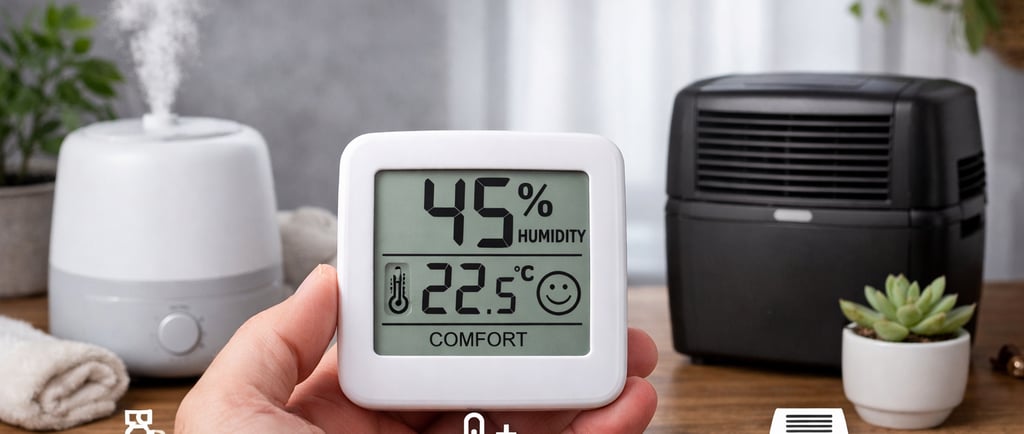
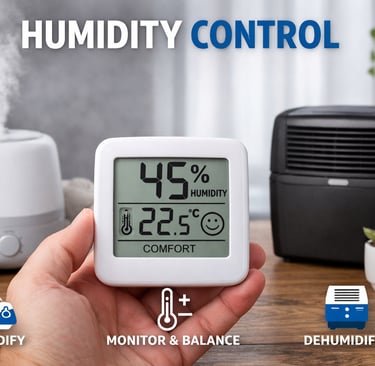
A hygrometer is an affordable tool that accurately measures indoor humidity. It is the simplest method for staying within the 40–60% range.
If Humidity Drops Too Low
Use a humidifier in bedrooms or living areas
Incorporate indoor plants (natural moisture release)
Air-dry clothes indoors during winter
Seal gaps around windows and doors to avoid dry air leaks
If Humidity Is Excessively High
Use a dehumidifier, especially in basements
Enhance ventilation in kitchens and bathrooms
Utilize exhaust fans when cooking and showering
Repair leaks and mitigate sources of standing water
Regulate Temperature
Warm air retains more moisture; hence, slightly adjusting your thermostat can aid in stabilizing humidity.
Wellness Advantages of Balanced Humidity
Maintaining humidity within the ideal range fosters:
Improved sleep (less nasal irritation)
Healthier skin
Decreased allergy symptoms
Reduced risk of respiratory infections
A more comfortable and breathable living environment
Contact
Get in touch for questions or collaborations. Avi Cha
Phone
Maplefixpro.ca@gmail.com
+1-647-916-5573
© 2026 Smarteryouu. All rights reserved. Some images on this site are AI-generated for illustrative purposes