
Why Organic Olive Oil Should Replace Your Usual Cooking Oils
Discover why switching from sunflower and vegetable oils to organic extra virgin olive oil is a powerful wellness upgrade. Learn the benefits, healthier fats, and how olive oil supports cleaner cooking and better everyday health.
ORGANIC FOOD
4/26/20263 min read
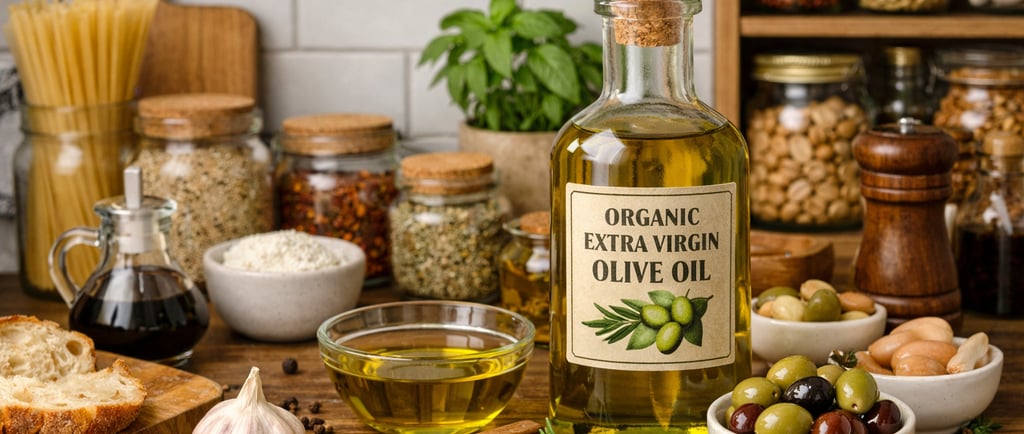
Introduction to Organic Olive Oil
For years, many households relied on sunflower and vegetable oils as their primary cooking fats. However, an increasing number of people are now discovering the numerous benefits associated with organic olive oil. Rich in antioxidants and healthy fats, this oil stands out as a powerful alternative to refined seed oils. In this post, we delve into why organic olive oil has become our go-to choice in the kitchen and for everyday wellness.
The Health Benefits of Organic Olive Oil
What sets organic olive oil apart from traditional cooking oils is its impressive health profile. Unlike refined seed oils, which often undergo extensive processing, organic olive oil is extracted through cold-press methods, preserving its natural nutrients. This oil is loaded with monounsaturated fats, which are beneficial for heart health. Additionally, it is rich in antioxidants and anti-inflammatory compounds, making it a great ally in your wellness journey.
Transitioning from Conventional Oils to Organic Olive Oil
The shift to organic olive oil can be one of the easiest changes to improve your cooking and overall wellness. Simply replacing your usual cooking oils with organic olive oil can lead to significant health benefits. The taste of dishes cooked with organic olive oil tends to be more robust, adding a delightful flavor profile that enhances meals. Furthermore, you can use it in a variety of cooking methods, from sautéing and roasting to drizzling over salads and vegetables.
Conclusion: A Sustainable Choice
As you embark on your journey towards a healthier lifestyle, consider that choosing organic olive oil isn’t just good for you; it’s also better for the planet. By opting for organic products, you support sustainable farming practices that protect ecosystems and promote biodiversity. As a cleaner and healthier option, organic olive oil is not merely a trend but a lasting solution for anyone looking to elevate their cooking and maintain wellness. With all these benefits, it’s clear why we have made the switch and are not looking back.
Switching to Organic Olive Oil at Home: What We Learned and Why It Matters
Our Shift From Sunflower & Vegetable Oils
For years, like many households, we cooked with sunflower oil and generic vegetable oils because they were affordable, neutral in taste, and widely available. But once we started paying attention to wellness, inflammation, and the quality of ingredients we use daily, we realized our cooking oil was one of the biggest changes we could make with immediate impact.
Switching to organic extra virgin olive oil (EVOO) wasn’t about trends, it was about choosing an oil that’s less processed, richer in natural antioxidants, and better aligned with long‑term health.
Why Organic Olive Oil Is a Better Choice
Minimal Processing = More Nutrients
Extra virgin olive oil is extracted mechanically, without chemicals or high heat, which preserves its natural antioxidants and polyphenols. Sunflower and vegetable oils, by contrast, typically undergo refining, bleaching, deodorizing, and solvent extraction (often using hexane). This difference alone makes organic olive oil a cleaner, more natural option.
Healthier Fat Profile
Olive oil is rich in monounsaturated fats (mainly oleic acid), which support heart health and help maintain healthy cholesterol levels. Sunflower oil contains more polyunsaturated fats, especially omega‑6. Excess omega‑6 — common in modern diets — can contribute to inflammation. Switching to olive oil helped us reduce unnecessary omega‑6 intake while increasing anti‑inflammatory fats.
High in Antioxidants & Polyphenols
Organic EVOO contains powerful compounds like oleocanthal and hydroxytyrosol, known for anti‑inflammatory and antioxidant effects. Sunflower oil, especially refined versions, contains low to negligible polyphenols.
These antioxidants are part of why olive oil is linked to better heart health, reduced inflammation, and overall wellness.
Better for Everyday Wellness
Since switching, the benefits are noticeable:
Lighter, cleaner meals
Less heaviness after frying or sautéing
Better skin hydration (healthy fats matter!)
More stable energy levels
Reduced inflammation triggers
This aligns with research showing olive oil supports cardiovascular health and contains natural compounds that protect cells from oxidative stress.
What About Cooking? Smoke Points & Safety
A common myth is that olive oil isn’t good for cooking. In reality, high‑quality EVOO is stable under heat because of its antioxidants. Sunflower oil has a higher smoke point, but once overheated, it breaks down faster and can produce harmful compounds.
For everyday cooking sautéing, roasting, stir‑frying organic olive oil performs extremely well.
How We Use Organic Olive Oil Now
Daily cooking (medium heat)
Roasting vegetables
Light frying
Salad dressings
Drizzling over cooked meals
Homemade marinades
It replaced sunflower and vegetable oils almost completely in our kitchen.
Contact
Get in touch for questions or collaborations. Avi Cha
Phone
Maplefixpro.ca@gmail.com
+1-647-916-5573
© 2026 Smarteryouu. All rights reserved. Some images on this site are AI-generated for illustrative purposes