
Which Power Tools I’d Actually Tell a Beginner to Buy, in Order
As an Amazon Associate I earn from qualifying purchases. Some links in this post go to Amazon and may earn me a small commission at no extra cost to you.
Last Updated on September 4, 2026 by Smarteryouu
⭐ Which Power Tools I’d Actually Tell a Beginner to Buy, in Order
After 20 years of using nearly every power tool available, in Canada, through real jobs for myself and friends, I have a clear sense of what is actually worth buying first versus what can wait. This is not a general buying guide, it is the order I would genuinely tell someone to build a power tool collection in, along with honest opinions on the brands I have actually used over that time, DeWalt, Makita, and Ryobi.
⭐ First, a Cordless Drill Driver, No Exceptions
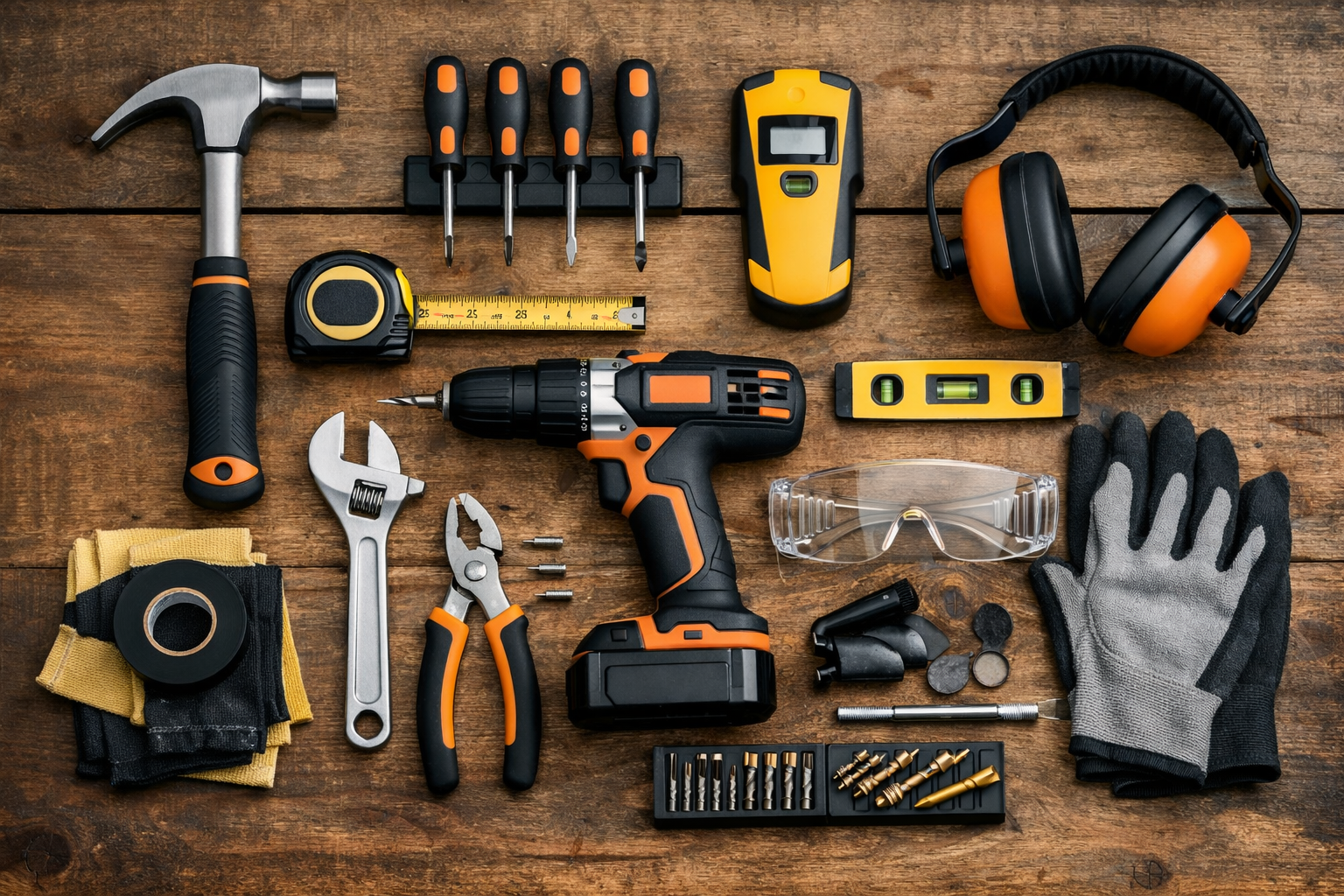
If you are starting from nothing, this is where every collection should begin. A cordless drill driver handles the widest range of everyday tasks, driving screws, drilling holes, assembling furniture, installing hardware, more than any other single tool. It is also the most forgiving for a beginner, the learning curve is short, and the mistakes you can make with it are minor compared to some of the tools further down this list.
Look for an eighteen or twenty volt lithium ion battery, adjustable speed settings, and multiple clutch or torque settings, the torque settings specifically prevent one of the most common beginner mistakes, stripping a screw head or overdriving a screw past where it should stop. A comfortable, rubberized grip matters more than people expect too, a drill that feels awkward or heavy will genuinely tire you out on anything beyond a quick task.

⭐ Second, an Impact Driver
Once a basic drill is covered, an impact driver is the next tool I would tell someone to add. It is not a replacement for a drill, it is a companion to one, an impact driver delivers significantly more torque for driving screws, particularly into denser material, and it does the job faster with less strain on your wrist than pushing a standard drill through the same task. I use mine constantly for anything involving a lot of repetitive fastening, deck boards, furniture assembly at scale, anywhere a standard drill would start to feel like work.
⭐ Third, a Compact Sander
This is the tool that surprises people with how often it actually gets used. A compact sander speeds up surface prep dramatically compared to sanding by hand, smoothing rough edges, removing old paint, prepping furniture before refinishing. It is not glamorous, but it saves real time on nearly any project involving wood or a surface that needs to look finished before paint or stain goes on.
⭐ Fourth, a Small Circular Saw
Once you are cutting wood with any regularity, a compact circular saw earns its place. I would not put this earlier on the list, it has a steeper learning curve than the first three tools and carries more risk if used carelessly, but once you are comfortable with the basics, it opens up a much wider range of projects than hand cutting ever will. A smaller, lighter model is the right choice for a beginner, raw power matters less than control when you are still building confidence with it.
⭐ Fifth, a Hammer Drill, Only If You Actually Need It
A hammer drill adds a pounding motion specifically for drilling into brick, concrete, or masonry, and honestly, most home projects never require it. I would not tell a beginner to buy one unless they know they have a specific need for it, an older home with masonry walls, a concrete patio project, something concrete rather than a general “might need it someday.” For most everyday home tasks, a standard drill driver and an impact driver cover it.
⭐ My Honest Take on DeWalt, Makita, and Ryobi
After using all three extensively over 20 years, here is where I have landed. DeWalt has been the most consistently reliable across the widest range of tools for me, battery life holds up well, and the build quality has genuinely lasted through years of regular use without the performance dropping off noticeably. If you are buying into a full ecosystem of tools that all share the same battery platform, this is where I would put my money first.
Makita comes in close behind, and honestly, for certain tools specifically, I have found Makita to actually outperform DeWalt, their drills in particular feel well balanced and comfortable over long sessions. The gap between the two brands is smaller than people expect, and either is a genuinely solid choice depending on which specific tools you are prioritizing.
Ryobi is where I would point a genuine beginner on a tighter budget, particularly for someone who is not sure yet how much they will actually use power tools. It is noticeably more affordable, and for occasional, lighter use, it holds up reasonably well. Where I have noticed the gap is under sustained, heavier use, battery life and overall durability do not match DeWalt or Makita over the long run, but for someone just starting out and testing the water, that tradeoff is often worth it.
⭐ A Realistic Buying Order, Put Together
If I were advising someone building a collection from scratch, this is the order I would actually recommend, a cordless drill driver first, an impact driver second, a compact sander third, a small circular saw fourth, and a hammer drill only if a specific project genuinely calls for it. On brand, if budget allows, DeWalt or Makita for anything you expect to use regularly, and Ryobi as a reasonable, lower cost way to start if you are still figuring out how much you will actually use these tools long term.
⭐ Bonus Features Worth Considering, Not Requiring
A few extras are worth knowing about, even if none of them are essential. A built in LED light is genuinely useful for dark corners, closets, or under cabinet spaces. A keyless chuck lets you change bits quickly without extra tools, a small convenience that adds up over a lot of small tasks. A magnetic bit holder keeps screws and bits within reach while working, and a compact design matters more than people expect if you are working in tight spaces or doing overhead work regularly.
⭐ What You Can Actually Do Once You Have the Basics
With just a drill driver and an impact driver covered, you can handle the vast majority of everyday home tasks, assembling furniture, hanging shelves, mounting curtain rods, installing hardware, drilling pilot holes, tightening loose screws, and taking on most simple DIY projects. Everything beyond that, the sander, the circular saw, the hammer drill, gets added as your actual projects call for it, not because a generic list says you need it upfront.
⭐ Best Sellers — Power Tools Worth Starting With
A few specific tools I would actually recommend to someone building a collection.
- DeWalt Cordless Drill Driver Kit — A reliable starting point with the durability to hold up over years of regular use.
- Makita Impact Driver — Genuinely comfortable for extended use and a strong second purchase once the basics are covered.
- Ryobi Starter Combo Kit — A solid, budget friendly way to start if you are not yet sure how much you will use power tools long term.t.
⭐ Final Thoughts
After 20 years of using nearly every power tool available in Canada, my honest advice for a beginner is to resist buying everything at once. Start with a cordless drill driver, add an impact driver once that becomes second nature, and build out from there as actual projects call for it. On brand, DeWalt and Makita have earned their reputations in my experience, and Ryobi remains a genuinely reasonable way to start if budget or uncertainty about long term use is a real factor.
⭐ Explore More
For the broader toolkit beyond power tools specifically, DIY Tools covers the full essentials list, including the hand tools worth having alongside these. Smart Living ways to stay organized at home, Simple wellness habits that support daily health, Government of Canada Home Safety Tips