
Simple Home Improvement Ideas To Organize Your Space And Refresh Any Room
As an Amazon Associate I earn from qualifying purchases. Some links in this post go to Amazon and may earn me a small commission at no extra cost to you.
Last Updated on September 5, 2026 by Smarteryouu
⭐ Simple Home Improvement Ideas That Work Room by Room
Most home improvement advice hands you a list of ideas without telling you where to apply them. The result is that people read about lighting, storage, and decluttering, feel motivated, and then stand in the middle of their house unsure where to actually start. This takes the same core ideas and applies them room by room, so you can pick one space and work through it properly rather than making scattered improvements across a whole house.
The underlying principles are the same everywhere, better storage, better lighting, less clutter, and thoughtful decor. What changes is how those principles apply depending on what a room is actually for.
⭐ Why Working Room by Room Beats Working by Category
The instinct with home improvement is to tackle a category, declutter everything, then organize everything, then fix the lighting everywhere. In practice that approach stalls, because the whole house is disrupted at once and nothing feels finished for weeks.
Working one room at a time gives you a completed space fairly quickly, which matters more than it sounds. A single room that genuinely feels finished creates momentum, and it also teaches you what actually works before you apply the same approach to five more rooms. It is far easier to adjust your approach after one room than to redo an entire house because a system you committed to everywhere turned out not to suit how you live.

⭐ Start With the Entryway, Even Though It Is the Smallest
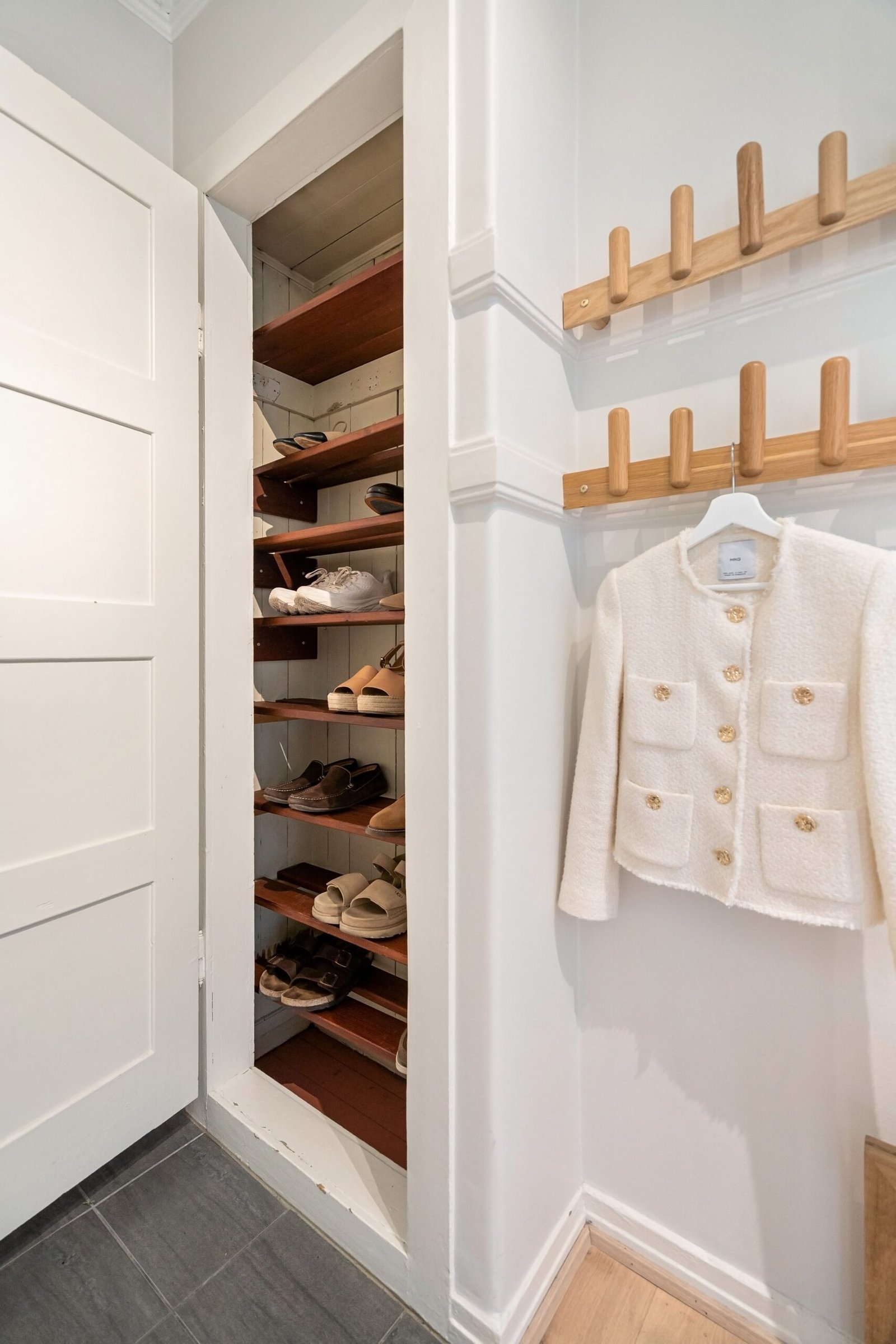
The entryway is the room people skip because it barely counts as a room. It is also the space you pass through most often, and it is the first thing you see walking in, which gives it disproportionate influence over how the whole house feels.
Storage here means giving the specific items that land by the door an actual home. Keys, bags, shoes, mail. A small tray, a few hooks, and a basket handle nearly all of it. Lighting matters here more than most people account for, entryways are often the darkest part of a house, and a single lamp or a brighter bulb transforms it.
Clutter accumulates fastest here precisely because it is a transition space, things get set down on the way through and never picked up. One basket that catches everything, emptied weekly, prevents most of that.
⭐ The Living Room, Where Lighting Does the Most Work
Living rooms are usually the largest space and the one where lighting has the most dramatic effect. A single overhead fixture makes even a well decorated room feel flat and functional rather than comfortable.
Adding a floor lamp to a dark corner, placing a smaller lamp on a side table or shelf, and switching to warm white bulbs in the evening changes the entire character of the room without moving any furniture. Mirrors positioned to reflect natural light make a smaller living room feel considerably more open during the day.
For storage, baskets on shelves or beside the couch handle blankets, remotes, and the general accumulation that living rooms attract. Woven baskets add texture rather than reading as pure storage, which matters in a room where appearance counts.
Decluttering here means being honest about surfaces. Coffee tables and side tables collect items that belong elsewhere, and clearing them makes the whole room feel intentional rather than lived in a chaotic way.
⭐ The Kitchen, Where Storage Logic Matters Most
Kitchens reward organized storage more than any other room because you are actively using the space several times a day. The principle worth applying is keeping daily items at eye level and within easy reach, and moving seasonal or rarely used items to higher shelves.
Clear containers genuinely help here in a way they do not everywhere else. Being able to see what is inside means you actually use what you have rather than buying duplicates of something already sitting at the back of a cabinet. Labeling containers keeps this consistent over time, since systems tend to degrade without some structure holding them in place.
Grouping similar items together sounds obvious but is often skipped. Baking supplies in one place, everyday cooking tools in another. It removes a small decision every time you cook, and those small decisions add up across a week.
Counter clutter is the main issue in most kitchens. Anything not used daily belongs in a cabinet, and clearing the counters makes even a small kitchen feel noticeably more workable.
⭐ The Bedroom, Where Less Is Genuinely More
Bedrooms benefit from restraint more than any other room. The purpose of the space is rest, and visual clutter works directly against that.
Storage in a bedroom means having a place for the things that otherwise end up on chairs and floors, clothes in transition between clean and dirty, books, chargers. Baskets in a closet, a small tray on a nightstand, and a designated spot for clothes worn but not yet washed handle most of it.
Lighting should skew warm here. A bright overhead light is useful for finding something in a closet, but a softer lamp is what makes the room feel restful in the evening. Having both, and using them at different times, works better than compromising on a single option.
A plant works well in a bedroom, particularly a low maintenance one like a snake plant or pothos that tolerates lower light and inconsistent watering. One is enough, the goal is a bit of life in the room rather than a display.
⭐ The Bathroom, Where Small Changes Read Loudest
Bathrooms are small enough that any improvement registers immediately. Storage here means getting products off the counter, since counter clutter in a small space is far more visible than the same clutter in a larger room.
Clear bins in a cabinet, grouped by category, make the morning routine faster and stop the slow accumulation of half empty bottles. A basket for towels frees up cabinet space and adds texture at the same time.
Lighting in bathrooms is often harsh and unflattering. Switching to a warmer bulb makes a genuine difference, particularly in a bathroom used in the evening.
⭐ Rearranging Decor Without Buying Anything
This applies to every room and costs nothing, which makes it the most underrated improvement available. Moving decor between shelves, creating a simple centerpiece on a table, or grouping items in threes for visual balance refreshes a room using only what you already own.
Mixing textures, wood, glass, fabric, ceramic, keeps a space from feeling flat. And leaving some empty space matters as much as what you place, a shelf with three considered items reads as intentional, the same shelf packed full reads as storage.
The practical benefit of rearranging first is that it often reveals you do not actually need to buy anything. Items you had stopped noticing become interesting again in a new position.
⭐ The Dining Area, Often Overlooked Entirely
Dining spaces sit awkwardly between rooms in most homes, sometimes part of the kitchen, sometimes part of the living room, and they get skipped in most improvement plans because of it. They also collect clutter faster than almost anywhere else, since a dining table becomes a default surface for mail, bags, laptops, and anything set down in passing.
The single most effective change here is deciding what the table is actually for and defending that. If it is for eating, then nothing lives on it permanently. A small centerpiece is fine, a pile of accumulated items is what makes the whole area feel neglected. Giving the items that keep landing there another home elsewhere solves this more permanently than repeatedly clearing the table.
Lighting in dining areas is often either too harsh or nonexistent, particularly in spaces that were not designed with a dedicated fixture. A warm bulb overhead, or a lamp nearby if there is no fixture, changes how the space feels in the evening considerably.
⭐ Making These Changes Actually Stick
The hardest part of home improvement is not making the change, it is keeping it. A decluttered surface stays clear for a week and then slowly refills. An organized cabinet degrades over a month. This is normal, and it is not a failure of discipline so much as a sign the system did not match how you actually live.
The fix is usually making the correct behavior easier than the incorrect one. If mail keeps landing on the dining table, the answer is a tray by the door, not resolving to stop putting mail on the table. If a shelf keeps getting cluttered, the answer is a basket on that shelf that catches things, not a rule about keeping it clear.
Building in a short reset, ten minutes at the end of the day returning things to their homes, also does more than any organizing system on its own. Systems reduce how much resetting is needed, but they do not eliminate it, and expecting a room to stay perfect without any ongoing effort is what makes people abandon the whole approach when it inevitably drifts.
⭐ Best Sellers
Top Products and Picks
A few things that support these changes across most rooms.
- Woven Storage Basket Set — Works in nearly every room and hides everyday clutter without looking purely functional.
- Warm White LED Bulbs — Changes the feel of a room in minutes, particularly in living rooms and bedrooms.
- Stackable Clear Containers — Makes kitchen and bathroom storage genuinely usable by letting you see what you have.
⭐ Final Thoughts
Home improvement gets easier when you stop treating it as a whole house project and start treating it as one room at a time. The same handful of principles apply everywhere, but how they apply changes based on what a room is actually for.
Pick the room that bothers you most, work through storage, lighting, clutter, and decor in that space, and finish it before moving on. One genuinely completed room does more for how a home feels than partial progress across five, and it makes the next room feel considerably less daunting.
⭐ Additional Resources
For general guidance on energy efficient lighting choices when updating bulbs or fixtures, Natural Resources Canada’s energy efficiency information is a reliable starting point.
For more on organizing systems that hold up over time, Storage and Organisation covers this in more depth, and Home Decor Inspiration has further ideas on styling a room once the practical work is done.