
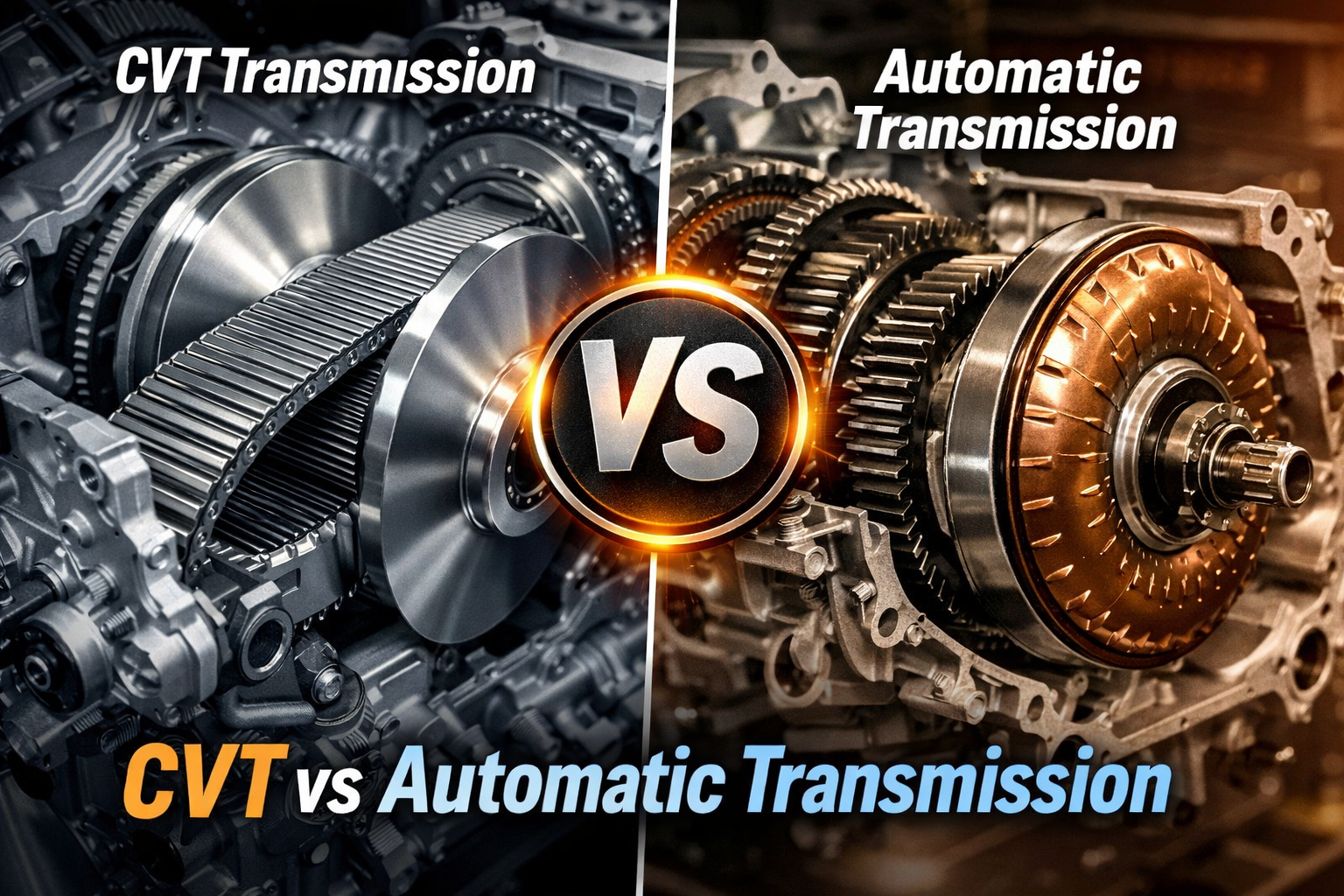
CVT vs Automatic Transmission Why CVT Is Not Really Reliable
As an Amazon Associate I earn from qualifying purchases. Some links in this post go to Amazon and may earn me a small commission at no extra cost to you.
Last Updated on September 5, 2026 by Smarteryouu
⭐ CVT vs Automatic Transmission, What Switching Between the Two Actually Taught Me
I owned a compact SUV with a gasoline engine and a traditional automatic transmission for years before switching to a hatchback with a CVT. Going from one to the other made the differences between these two transmission types a lot more concrete for me than any spec sheet ever did, and it changed how I think about transmission choice the next time I buy a car.
This breaks down how each system actually works, what tends to go wrong with a CVT specifically, the symptoms worth watching for, and why, based on my own experience switching between the two, a traditional automatic still holds up as the more predictable long term choice for a lot of drivers.

⭐ What a CVT Actually Is
A CVT, or continuously variable transmission, does not use fixed gears the way an automatic does. Instead, it relies on a belt and pulley system that constantly adjusts to keep the engine running in its most efficient range. There is no traditional gear shifting sensation at all, when you press the accelerator, the car just gains speed smoothly rather than stepping through gears.
CVTs became common largely because manufacturers needed to meet stricter fuel efficiency standards, and the design genuinely helps with that, keeping the engine at a lower RPM during cruising reduces fuel consumption, and CVTs tend to weigh less than a traditional automatic too. On paper this sounds close to ideal. Having actually driven one daily for a while now, the tradeoff is that the belt and pulley system is under fairly constant stress, and that stress is where most of what I have noticed and read about CVT reliability concerns actually comes from.
⭐ What a Traditional Automatic Actually Is, Based on My Previous SUV
My previous SUV’s automatic transmission used a set of fixed gears and a torque converter, shifting through those gears in a controlled, predictable way as the vehicle accelerated. This is a design that has been refined over decades and an enormous number of miles across the industry, and it showed. Across the years I owned that vehicle, the transmission was genuinely one of the least memorable parts of owning the car, which, in hindsight, is exactly what you want from a transmission.
The gears in a traditional automatic are made from hardened metal, and the torque converter is built to absorb real stress, while the transmission fluid helps cool the system and reduce wear. That combination is a big part of why an automatic transmission can often last the entire life of a vehicle with regular maintenance, and it is genuinely what that SUV’s transmission did for me.
⭐ What I’ve Actually Noticed Since Switching to a CVT
Since switching to a hatchback with a CVT, a few things have stood out compared to what I was used to with the automatic. The most noticeable is the driving feel itself, acceleration is smoother in one sense, no shift points, but the engine sometimes revs in a way that does not quite match the speed the car is actually gaining, which took some adjustment.
I have not personally experienced a major failure, but I pay closer attention now to a few specific things I never had to think about with the automatic, whether the car feels like it hesitates briefly before actually moving from a stop, whether there is any shuddering at low speed, and how the transmission behaves in stop and go traffic, since that is where CVTs are generally reported to wear faster. None of this has been alarming so far, but it is a genuinely different ownership mindset than the previous SUV ever required.
⭐ Why CVTs Tend to Have More Reliability Issues Generally
Beyond my own experience, the structural reasons CVTs tend to have more reliability concerns come down to the design itself, not any one manufacturer doing it poorly. The belt and pulley system is constantly adjusting and under nearly continuous tension, which creates a kind of wear a traditional automatic’s fixed gears simply do not experience in the same way.
Belt wear is one of the more commonly reported issues, the steel belt can stretch over time, and once it starts to slip, that shows up as shuddering, delayed acceleration, or a general feeling that the car is struggling to move, similar to what I described noticing on occasion in my own car. Overheating is another common factor, CVTs tend to generate more heat than automatics, and many have relatively small cooling systems, which makes overheating more likely in hot weather or heavy traffic.
CVTs also tend to use lighter internal components to help with fuel economy, and those lighter parts often wear faster under stop and go driving. Load matters too, hills, towing, or hard acceleration all tend to increase belt slip, which accelerates wear. Because of factors like these, CVT issues are often reported at meaningfully lower mileage than issues with a comparable automatic, which lines up with why I now pay more attention to these symptoms than I ever did with my previous vehicle.
⭐ Real World Symptoms Worth Watching For
Based on both my own experience and what tends to get reported consistently, a few symptoms are worth knowing before they become a bigger problem. Rising fuel consumption is often one of the first signs, since a slipping belt means the engine has to work harder. Shuddering at low speeds, the car vibrating or feeling like it is struggling to move from a stop, is another.
Delayed acceleration is worth paying attention to as well, pressing the accelerator and feeling a brief hesitation before the car actually responds. High engine RPM without a matching increase in speed is a fairly classic CVT symptom, the engine revs, but the car does not accelerate the way you would expect. Whining or humming noises, usually coming from the pulleys and bearings as they wear, are also common, and some vehicles will display an overheating alert directly, since many CVTs reduce power automatically to protect themselves once the fluid runs too hot.
⭐ Why My Previous Automatic Felt More Reliable
Looking back, a lot of what made that automatic transmission feel so dependable came down to predictability. Each gear shift was planned and consistent, which reduces wear and protects the internal components from sudden stress in a way a CVT’s constantly adjusting belt does not really replicate.
Automatics also tend to have stronger cooling systems, larger coolers and stronger pumps that keep temperatures more stable, which matters a lot in hot weather or heavy traffic. That combination, predictable shifting and better heat management, is a big part of why automatic transmissions frequently last well past 200000 km with regular fluid changes, and why a lot of owners go ten or fifteen years without a major transmission issue, which was essentially my own experience.
⭐ Cost of Repairs, Something Worth Planning For
Repair cost is a real, practical difference worth understanding before it becomes relevant. CVTs tend to be more expensive to repair, since the belt and pulley system is difficult to service, and many shops do not even offer CVT rebuilds because the parts and process require specialized tools a general mechanic may not have.
In a lot of cases, a failing CVT ends up needing full replacement rather than a repair, and that cost can run significantly higher than a comparable automatic repair, sometimes into the thousands of dollars depending on the make and model. Automatic transmissions are generally easier and cheaper to repair by comparison, since the design has been standardized for decades, most shops can rebuild one without much difficulty, and the typical cost tends to be meaningfully lower than a full CVT replacement. Exact numbers vary a lot by vehicle and region, so it is worth getting a local quote rather than relying on a single figure, but the general cost gap between the two shows up consistently.
⭐ Which Transmission I’d Actually Recommend
Having owned both, my honest take is that it depends on what you are optimizing for. If fuel economy is the priority and you do not plan to keep the vehicle for a decade or more, a CVT is a reasonable choice, and my current hatchback has been fine so far. But after years with a reliable automatic transmission, I have a clear appreciation now for how little that transmission ever asked of me, and if long term reliability and low maintenance stress matter more to you than squeezing out the last bit of fuel economy, an automatic is the choice I would lean toward again myself.
⭐ Explore More
For more on keeping a vehicle running well and staying prepared on the road, Automobile Essentials covers the everyday tools and upgrades worth having, regardless of which transmission your car has.
⭐ Final Thoughts
Owning a compact SUV with a traditional automatic and now a hatchback with a CVT has made this comparison a lot more real to me than it would be from research alone. CVTs offer smoother acceleration and genuinely better fuel economy in a lot of cases, but they tend to come with more to think about over time, and my own experience switching between the two has only reinforced that. Automatic transmissions have earned their reputation for a reason, and if reliability and predictability matter most to you, that reputation is worth taking seriously when you are choosing your next vehicle.