
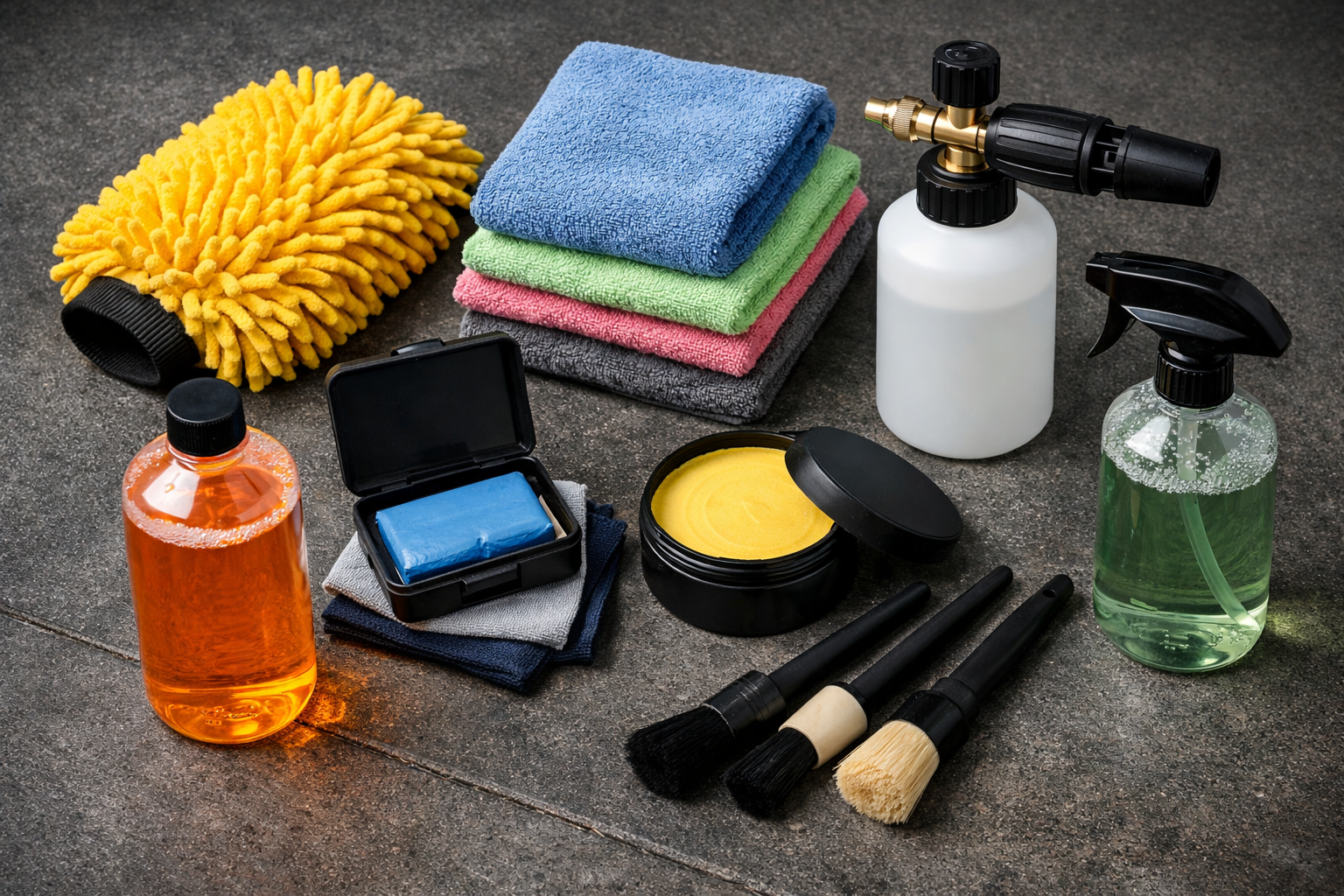
Car cleaning essentials flat lay including microfiber wash mitt, towels, foam cannon, pH-neutral car wash soap, clay bar kit, car wax, detailing brushes, and all-purpose cleaner arranged on a dark grey garage floor

Car Cleaning Essentials: The Ultimate 2026 Guide | SmarterYouu.com

A clean car isn’t just about looks. The right car cleaning essentials protect your investment, improve air quality inside the cabin, and can meaningfully boost your vehicle’s resale value when the time comes to sell. Whether you’re a total beginner reaching for your first wash mitt or a weekend enthusiast chasing that concours-level shine, having the correct products and a repeatable routine is what separates a truly clean car from one that just looks wet. In this guide, we cover everything you need to know about how to clean your car at home: the best interior cleaning tools, top exterior detailing products, our 2026 product recommendations, a step-by-step routine, Let’s get into it.

Why Car Cleaning Essentials Matter

Many car owners think of washing their vehicle as a cosmetic exercise — something you do before a road trip or when the grime gets embarrassing. In reality, keeping up with your car cleaning essentials is one of the most impactful forms of preventative maintenance you can do without ever opening the hood.

  • Paint protection: Road salt, bird droppings, tree sap, and industrial fallout are chemically aggressive. Left untreated, they etch into your clear coat and cause permanent damage.
  • Resale value: Clean, well-maintained vehicles command significantly higher prices. A car with swirl-free paint and a fresh interior is easier to sell and easier to price confidently.
  • Cabin hygiene: Upholstery, carpets, and air vents harbour allergens, bacteria, and mould especially in Canadian winters when salt, slush, and moisture are tracked inside constantly.
  • UV damage prevention: Dashboards, trim, and leather crack and fade under prolonged UV exposure. A UV protectant applied after every interior detail dramatically extends the life of these surfaces.
  • Early damage detection: Regular washing gives you a close look at your bodywork helping you spot chips, rust spots, and fluid leaks before they become expensive repairs.
  • Rubber seal longevity: Door seals, window rubbers, and trim all benefit from regular conditioning, preventing premature cracking and water intrusion.

Most detailing professionals recommend washing your car’s exterior every two weeks and deep-cleaning the interior at least once a month, with a more thorough detail — including clay bar and wax or sealant at the change of each season.

Interior Car Cleaning Tools & Products

The interior of your car takes a beating crumbs, dust, spills, pet hair, and UV rays all conspire against it. The good news is that with the right car interior cleaning tools, you can restore even a neglected cabin to near-showroom condition. Here’s what belongs in your kit.

a) Vacuum & Extraction Tools

Every interior detail starts with vacuuming. A handheld cordless vacuum (such as the Dyson V8 Car or Black+Decker Flex) handles quick top-ups, while a full-size wet/dry shop vac provides the suction power needed for deep carpet work. For fabric seats and carpets with set-in stains, a hot water extraction machine (like the Bissell Little Green or Mytee Tempo) is the professional-grade solution, it injects cleaning solution and extracts it along with embedded dirt in one pass.

b) Microfiber Cloths & Detailing Brushes

microfiber towel for car detailing is arguably the single most important tool in your kit. Use high-pile (400–500 GSM) microfibers for drying and buffing, and short-pile (200–300 GSM) cloths for interior surfaces. Supplement with a dedicated vent brush (a thin boar-hair or synthetic brush that fits between slats), a crevice brush for door pockets and console gaps, and a detailing brush set for general dusting. The Chemical Guys Brush Kit and Detail King sets are popular starting points.

c) All-Purpose Cleaner (APC)

An All-Purpose Cleaner is the workhorse of interior detailing, dilute it and it handles plastics, vinyl, rubber, carpets, and fabric. Top choices include Koch Chemie Green Star (used at 1:20 for general surfaces, 1:10 for tough stains) and Meguiar’s D101 APC (1:10 general, 1:4 heavy-duty). Always test on a hidden area first, and never apply at full concentration to delicate surfaces.

d) Leather Cleaner & Conditioner

Leather requires a pH-balanced, dedicated cleaner, never use an APC at full strength on leather. Lexol Leather Cleaner & ConditionerLeather Honey, and Chemical Guys Leather Cleaner are all excellent. Clean first to remove dirt and body oils, then condition to restore moisture and flexibility. Experts recommend conditioning leather seats every 2–3 months to prevent cracking, especially in climates with extreme seasonal temperature swings.

e) Interior Glass Cleaner

Interior glass attracts a film of off-gassing plasticisers (that “new car smell” residue) which is notoriously difficult to remove with regular glass cleaners. More importantly, use an ammonia-free formula, ammonia degrades window tint over time and damages rubber seals. Top picks: Invisible Glass Premium Glass Cleaner and Stoner Invisible Glass. Apply to a microfiber cloth first, then wipe in overlapping strokes to avoid streaks.

f) Interior Protectant / UV Dressing

After cleaning, protect all plastic and vinyl surfaces with a UV-blocking interior protectant. 303 Aerospace Protectant is the industry gold standard it provides a matte, non-greasy finish (unlike the shiny, slippery look of older Armor All products) and offers genuine UV protection to prevent fading and cracking. Apply with a foam applicator and buff off any excess.

g) Odor Eliminator

Air fresheners mask odours; they don’t eliminate them. For pet smells, smoke, mildew, or food odours embedded in fabric, you need an enzyme-based odour eliminator (such as Biokleen Bac-Out or Chemical Guys New Car Smell). Enzyme products break down the organic compounds causing the smell at a molecular level. Spray into the affected upholstery, allow to dwell for 10–15 minutes, then extract or blot dry.

Exterior Car Cleaning Tools & Products

Your car’s exterior faces constant attack from the elements, UV rays, road grime, tar, bird droppings, and environmental fallout. The right car exterior cleaning products don’t just make your car look great; they build and maintain a protective barrier that keeps the paint safe between washes.

a) pH-Neutral Car Wash Soap

The foundation of every exterior detail is a quality, pH-neutral car wash soap. Unlike dish soap (which strips wax and degrades coatings), dedicated car shampoos clean gently without removing your paint protection. Top picks for 2026 include Chemical Guys Honey Dew Snow Foam and Meguiar’s Gold Class Car Wash, both priced between $15–$30 CAD per bottle. These are excellent best car wash soaps for beginners — they foam readily, rinse cleanly, and are forgiving to use.

b) Wash Mitts & Microfiber Wash Pads

Never use a sponge on your car’s paint sponges trap grit against the surface and create swirl marks. Instead, use a plush microfiber wash mitt (the Gyeon Q2M Microfibre Wash Mitt is a detailer favourite) or a foam wash pad. The long fibres of a quality mitt cradle dirt away from the paint surface, dramatically reducing the risk of scratches during the wash process.

c) Two-Bucket Wash Method + Grit Guards

The two-bucket wash method is the single most effective technique for preventing swirl marks during a hand wash. Use one bucket filled with your soapy wash solution and a second bucket filled with clean rinse water. After each panel, rinse your mitt in the clean bucket first, dislodging grit into the water before reloading it with soapy solution. A grit guard insert (a simple plastic grate that sits at the bottom of each bucket) traps the released grit below the waterline so it cannot be picked back up.

d) Foam Cannon / Snow Foam Lance

foam cannon attaches to your pressure washer and coats the car in thick, clinging snow foam before you touch it with a mitt. This pre-wash stage loosens and lubricates surface grime, reducing the amount of abrasion during the hand wash phase. Entry-level foam lances (compatible with most electric pressure washers) start around $40–$80 CAD. The Chemical Guys Torq Professional Foam Cannon is a widely recommended option.

e) Wheel Cleaner & Wheel Brushes

Wheels accumulate brake dust, road grime, and tar that regular soap won’t touch. Use a dedicated, acid-free wheel cleaner for alloy and painted wheels (Sonax Full Effect Wheel Cleaner is popular, it turns purple as it reacts with iron deposits). Pair it with a barrel brush for the face of the wheel and a slim rim brush to reach behind the spokes. Never use acid-based cleaners on bare polished aluminium or chrome.

f) Clay Bar Kit

Even after a thorough wash, your paint will have embedded contaminants, industrial fallout, rail dust, overspray — that simply cannot be removed by soap. A clay bar (used with a clay lubricant spray) physically pulls these contaminants from the surface, leaving paintwork smooth as glass. You’ll know decontamination is needed when you run a fingertip in a plastic bag across clean paint and it feels rough or gritty. Clay 1–2 times per year, or before applying any wax, sealant, or ceramic coating.

g) Drying Towel (Waffle-Weave Microfiber)

Never let your car air-dry, it leaves water spots, especially if your water is hard (as is common in Southern Ontario). A large waffle-weave microfiber drying towel absorbs water rapidly without dragging on the surface. The Chemical Guys Woolly Mammoth and the Griot’s Garage PFM Drying Towel are both exceptional. Work from the roof downward in straight, overlapping passes.

h) Car Wax / Paint Sealant / Ceramic Coating

Protection is the final and most important step of any exterior detail:

  • Carnauba Wax (e.g., Turtle Wax Original, Collinite 476S): Natural wax provides a warm, deep gloss. Protection lasts 2–3 months. Best for show cars or enthusiasts who enjoy the waxing ritual.
  • Synthetic Paint Sealant (e.g., Meguiar’s Ultimate Fast Finish, Wolfgang Deep Gloss): Polymer-based protection lasting 6–12 months. Easier to apply than wax, more durable, and excellent for daily drivers.
  • Consumer Ceramic Coating Spray (e.g., Chemical Guys HydroSlick, Turtle Wax Hybrid Solutions Ceramic): The newest category — SiO2-infused sprays that bond to the paint and provide 6–12 months of hydrophobic protection. Extremely easy to apply; just spray on and wipe off.
  • Professional-Grade Ceramic Coating (e.g., Gtechniq C1 Crystal Lacquer): True 9H hardness ceramic coatings applied to decontaminated, polished paint. Can last up to 5 years with proper maintenance. Requires careful surface preparation and ideal conditions to apply — but the protection and self-cleaning properties are unmatched.

i) Tire Shine / Dressing

Finish the exterior with a water-based tire dressing (such as Chemical Guys VRP or Meguiar’s Endurance Tire Gel) applied with a foam applicator pad. Water-based dressings provide a natural, satin finish without the slinging associated with silicone-heavy products. They also condition the rubber to prevent UV cracking.

Step-by-Step Car Cleaning Routine, How to Clean Your Car at Home

Now that you have your car cleaning essentials in hand, here’s the complete routine — exterior first, then interior. Following this order keeps freshly cleaned interior surfaces from being contaminated by the water and grime generated during exterior washing.

Exterior Cleaning Steps

  1. Rinse the entire car with a pressure washer or garden hose. Start from the roof and work downward, dislodging loose dirt and debris. Pay special attention to wheel arches and sills where mud packs in.
  2. Apply snow foam / pre-wash. Fill your foam cannon with diluted car shampoo and coat the entire car. Allow to dwell for 3–5 minutes (don’t let it dry). This step lifts and lubricates surface grime before you introduce any contact.
  3. Two-bucket hand wash. Using your microfiber wash mitt, wash one panel at a time from top to bottom with your pH-neutral soap. Rinse the mitt in your rinse bucket after each panel before reloading with soapy water.
  4. Clean wheels and tires separately. Apply your acid-free wheel cleaner, allow it to dwell, then agitate with your barrel and rim brushes. Rinse thoroughly. Always do wheels before or separately from bodywork to avoid cross-contamination.
  5. Clay bar decontamination (monthly or seasonally as needed). After rinsing, if paint feels rough to the touch, clay the entire car using a clay lubricant spray in small sections. Fold the clay bar frequently to reveal a clean surface.
  6. Final rinse and dry. Rinse the car thoroughly, then immediately dry with your waffle-weave microfiber towel using straight, overlapping motions from roof to rocker panels. Don’t allow water to air-dry.
  7. Apply wax, sealant, or ceramic spray. Work in the shade or indoors. Apply your chosen paint protection product panel by panel per the manufacturer’s instructions. Buff off residue with a clean microfiber towel.
  8. Dress tires. Apply water-based tire dressing to a foam applicator and wipe evenly across each tire. Avoid getting product on the wheel face.

Interior Cleaning Steps

  1. Remove floor mats and vacuum the entire interior. Seats, carpets, under seats, boot (trunk), and all crevices. Beat the floor mats outside to dislodge embedded debris before vacuuming them.
  2. Use detailing brushes on vents and crevices. A vent brush gently agitates dust from slats; the crevice brush clears door pockets and seat rail gaps. Vacuum behind the brush as you work.
  3. Clean all plastics and vinyl with diluted APC. Spray onto a microfiber cloth (never directly onto a surface near electronics), then wipe. Follow with a dry cloth to avoid residue.
  4. Clean leather seats with leather cleaner, then conditioner. Apply cleaner with a soft brush, work in gentle circles, wipe clean. Follow immediately with leather conditioner on an applicator pad. Allow to absorb for 10 minutes, then buff lightly.
  5. Shampoo fabric seats and carpets. Apply diluted APC or upholstery shampoo, agitate with a soft brush, then extract with a wet/dry vac or extraction machine. Allow to dry fully, ideally with windows slightly open.
  6. Clean interior glass. Spray ammonia-free glass cleaner onto a microfiber cloth and wipe each window in overlapping strokes. Use a second dry cloth to buff streak-free. For the windshield, work in a figure-8 pattern to catch all angles.
  7. Apply UV protectant to the dashboard and trim. Apply 303 Aerospace Protectant to a foam applicator and work it into all plastic and vinyl surfaces. Avoid the steering wheel and pedals. Buff off any excess.
  8. Treat odours with an enzyme-based eliminator. Spray into affected carpet or fabric areas, allow to dwell for 10–15 minutes, then blot or extract. Leave windows open to ventilate while drying.

The Real Benefits of Keeping Your Car Clean

Beyond the satisfaction of a gleaming car in the driveway, consistent use of your car cleaning essentials delivers measurable, long-term benefits:

  • Paint corrosion prevention: Acidic bird droppings can begin etching clear coat in as little as 48 hours in summer heat. Regular washing removes these threats before they cause permanent damage.
  • Resale value: A well-maintained, clean vehicle can command hundreds to thousands more at resale or trade-in. Buyers and dealers both respond to a car that’s clearly been cared for, inside and out.
  • Better driving experience: There’s genuine psychological research linking clean, organised environments to reduced stress and improved focus. A tidy cabin makes every commute more pleasant.
  • Healthier cabin air quality: Seats and carpets trap allergens, pet dander, pollen, mould spores, and bacteria. Regular vacuuming and shampooing dramatically reduces the allergen load — important for allergy sufferers, parents with young children, and anyone spending significant time commuting.
  • Early damage detection: Getting close to your paint and bodywork every two weeks means you’ll spot chips, rust bubbles, or fluid leaks early — when they’re cheap to address rather than after they’ve spread.
  • Rubber seal and trim longevity: Door seals, window rubbers, and exterior trim all benefit from regular conditioning. UV-dried rubber cracks and allows water ingress, leading to damp interiors and expensive water damage repairs.

Conclusion — Start With the Right Car Cleaning Essentials

There’s no magic secret to a spotless car, just the right car cleaning essentials, used correctly, on a consistent schedule. Whether you’re just starting out with a beginner kit or diving deep into paint correction and professional-grade ceramic coatings, every level of effort pays dividends in appearance, protection, and long-term value.

You can find every product featured in this guide — from microfiber mitts to ceramic coatings Available on Amazon, so you can start detailing your car today

(This post contains affiliate links. We may earn a small commission at no extra cost to you.)
