
The Ten Tools Every Home Actually Needs, Ranked by What I Actually Reach For
As an Amazon Associate I earn from qualifying purchases. Some links in this post go to Amazon and may earn me a small commission at no extra cost to you.
Last Updated on September 4, 2026 by Smarteryouu
⭐ The Ten Tools Every Home Actually Needs, Ranked by What I Actually Reach For
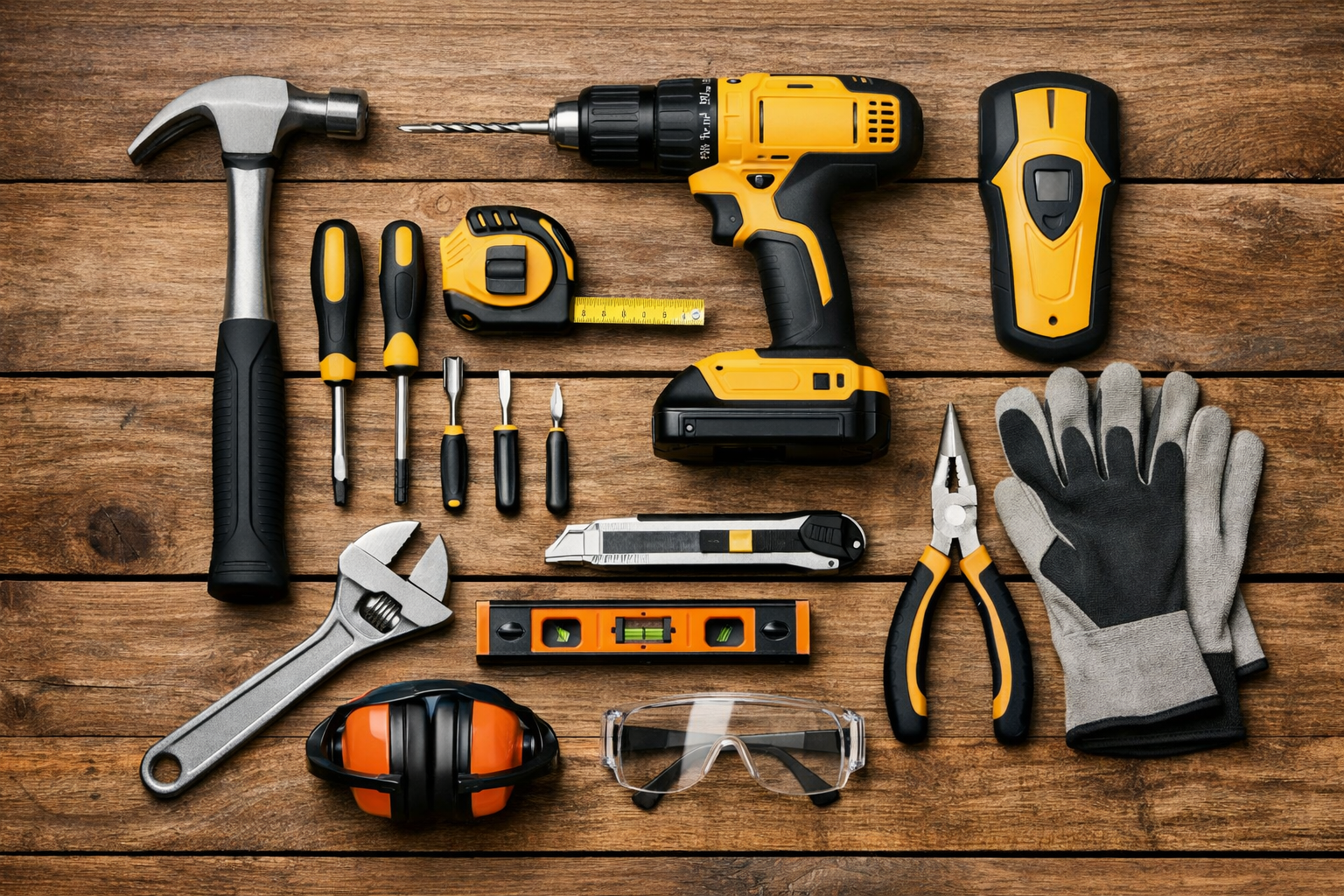
After 20 years of using these tools regularly, some get picked up constantly and some sit in the drawer for months at a time. This is my actual ranking, based on what genuinely gets used most in everyday home tasks and repairs, not a generic list where every tool gets equal billing. If you are building a toolkit from scratch, this is the order I would prioritize.
⭐ 1. A Cordless Drill
This tops the list for a reason, it is the single most versatile tool in any kit, and nothing else comes close to how often it actually gets used. Assembling furniture, hanging shelves, installing hardware, drilling pilot holes, a drill covers more ground than any other single tool on this list. Multiple speed settings and a basic set of drill bits round it out, and even a beginner model dramatically expands what you can handle on your own.

⭐ 2. A Screwdriver Set
Right behind the drill, and honestly, there are tasks where a screwdriver is still the better choice over a power tool, tight spaces, delicate hardware, anything where more control matters than speed. A good set covers both Phillips and flat head in a range of sizes, small precision drivers, everyday medium sizes, and a couple of larger heavy duty options. This set gets used in almost every home project I can think of, tightening cabinet hardware, opening battery compartments, adjusting hinges.
⭐ 3. A Tape Measure
A twenty five foot tape measure earns its spot this high because so much of home repair work depends on getting a measurement right before you start, not after. Furniture placement, curtain spacing, shelf installation, checking whether something will actually fit before you commit to buying it, a tape measure prevents more mistakes than almost any other tool by just being used first.

⭐ 4. An Adjustable Wrench
This one replaces a whole set of fixed size wrenches, which is exactly why it ranks this high, one tool covering a wide range of bolt and nut sizes. Plumbing tasks, furniture assembly, tightening loose hardware, an adjustable wrench handles a genuinely wide range of jobs without needing a full wrench set taking up space.
⭐ 5. A Utility Knife
Simple, but constantly useful. Opening boxes, trimming materials, cutting carpet, scoring drywall, a sharp utility knife with replaceable blades handles more small tasks than people expect from something this basic. Worth keeping the blade actually sharp rather than pushing through with a dull one, that is where most utility knife injuries come from.
⭐ 6. A Level
Even a small level makes a noticeable difference in how finished a project looks. Shelves, picture frames, floating shelves, anything mounted on a wall benefits from a quick check before you commit to the final screw. It is one of the easiest tools on this list to use, and skipping it is one of the most common reasons a simple installation ends up looking slightly off.
⭐ 7. Pliers
Needle nose pliers specifically come in handy more often than people expect, gripping, twisting, pulling, cutting wire. Useful well beyond electrical tasks too, removing staples, gripping small objects that are awkward to hold with just your fingers. Not something you reach for daily, but genuinely useful when the task calls for it.
⭐ 8. A Stud Finder
This ranks a bit lower simply because it is task specific, you need it when mounting something heavier, shelves, a TV, larger decor, but you are not reaching for it for general repairs. When you do need it though, it matters a lot, finding actual wall support prevents damage and keeps whatever you are mounting genuinely secure rather than hoping the drywall alone will hold.
⭐ 9. A Flashlight or Work Light
An LED flashlight or small work light matters more in specific situations than in general daily use, dark corners, under sink repairs, electrical panels, or just working in a spot where the room’s lighting does not reach well. It ranks lower on this list only because it is not something most repairs require, but when a job needs it, nothing else really substitutes.
⭐ 10. A Hammer
This might surprise people, ranking a classic hammer last, but in my actual day to day use, it comes up less often than every tool above it. It is still essential, hanging pictures, small repairs, tapping something into place, but a lot of what a hammer used to handle has shifted toward drills and screws for me over the years. Still worth having, just not the first thing I reach for anymore.
⭐ Building This Toolkit Gradually
None of this needs to be bought all at once. Starting with the drill and screwdriver set covers a genuinely large share of everyday tasks on its own, and adding the rest as actual projects call for them tends to work better than buying all ten upfront and letting half of them sit unused.
⭐ Best Sellers — The Core Toolkit Worth Starting With
A few of these consistently prove themselves as the right starting point.
- Safety Gear: Never compromise on safety; gloves, goggles, and ear protection keep you safe during projects, ensuring you can work without worry. 👉🔥 Check Price on Amazon
- Hammer: Perfect for hanging frames, assembling furniture, and conducting small repairs around the house. 👉🔥 Check Price on Amazon
- Screwdriver Set: A basic Phillips and flathead screwdriver set can handle most household tasks, from installing fixtures to tightening screws. 👉🔥 Check Price on Amazon
- Tape Measure: Essential for accurate measurements when decorating, installing shelves, and ensuring your projects align correctly. 👉🔥 Check Price on Amazon
- Utility Knife: Useful for opening boxes, trimming materials, and executing quick fixes with precision.
- Level: Ensures that shelves, frames, and décor items are perfectly straight, enhancing the aesthetic of your living space. 👉🔥 Check Price on Amazon
- Cordless Drill: One of the most powerful upgrades, a cordless drill can make DIY projects faster and easier, allowing for greater versatility. 👉🔥 Check Price on Amazon
- Adjustable Wrench: Useful for a variety of plumbing tasks, furniture assembly, and tightening bolts securely.
- Stud Finder: A crucial tool when trying to safely mount shelves, TVs, and other heavy items by locating wall studs behind drywall. 👉🔥 Check Price on Amazon
⭐ Final Thoughts
After 20 years of actually using these tools, the ranking above reflects what genuinely gets picked up most, not just a generic list where everything is treated as equally essential. A drill and a screwdriver set alone cover a huge share of everyday home tasks, and the rest earns its place as specific projects come up rather than sitting unused in a drawer.
What surprised me putting this list together is how much the ranking has actually shifted for me over the years. Early on, a hammer and a basic screwdriver were what I reached for constantly, simple tasks, simple tools. As I took on more projects, both for myself and for friends, the drill moved to the top and stayed there, it is just faster and more versatile than manual alternatives for almost everything a hammer or hand screwdriver used to handle. That shift is worth mentioning because it reflects something true for most people building a toolkit, your priorities change as your skills and the scope of your projects grow.
It is also worth being honest that this ranking reflects general household use, not every specific job. Someone doing a lot of plumbing work might find an adjustable wrench climbing higher on their own list. Someone mounting a lot of heavy decor or electronics might reach for a stud finder more than this ranking suggests. The order above is a solid, genuinely tested starting point, but it is not a rigid rule, pay attention to what you actually find yourself reaching for once you start using these tools regularly, and let your own experience adjust the priority over time the way mine has.
One more thing worth adding, quality matters more for some of these than others. A cheap drill will frustrate you quickly, weak battery life, poor torque control, and it is worth spending a bit more on that one specifically since it gets used so often. A basic hammer, on the other hand, does not really benefit much from a premium price tag, a solid, comfortable, mid range option does the job just as well as an expensive one for most home use. Knowing where to actually spend more and where a basic version is genuinely fine is its own kind of experience, and it took me longer to figure out than I would like to admit.
Build the collection in the order above, pay attention to what you actually use most once you start, and do not feel obligated to buy all ten at once. A toolkit built gradually, based on real use rather than a generic checklist, tends to serve you better in the long run than one assembled all at once and left mostly untouched.
⭐ Explore More
For a deeper look at power tools specifically, Power Tools, How to Choose the Right Drill for Beginners goes further into drill types and brand comparisons, and DIY Tools covers the full essentials list.
⭐ Additional Resources
For general home safety guidance relevant to basic tool use and repairs, the Government of Canada’s home safety tips is a reliable resource worth reviewing, and the Canadian Centre for Occupational Health and Safety offers broader guidance on safe tool handling and injury prevention.