
How to Decorate With Plants for a Fresh and Natural Look
As an Amazon Associate I earn from qualifying purchases. Some links in this post go to Amazon and may earn me a small commission at no extra cost to you.
Last Updated on September 5, 2026 by Smarteryouu
⭐ How to Decorate With Plants for a Fresh and Natural Look
⭐ Disclaimer
This article is based on my personal views and real world experience. Every home is different, so always adjust décor choices to what feels right for your space.
⭐ Additional Note
This guide is meant for general understanding and does not represent any specific décor brand or professional design advice.
⭐ Introduction
There is a version of this advice that shows you a photograph of a fig tree in a bright white room and calls it a tip. It is lovely to look at and almost impossible to copy, because the room in the photograph gets four hours of afternoon sun and yours faces a wall.
Learning to decorate with plants is really two skills wearing one coat. There is the styling part, which is about where greenery sits and what it sits in. Then there is the keeping alive part, which is mostly about light and water and is the reason so many people decide they are bad at this.
This guide covers both, in that order, because a beautifully placed plant that dies in six weeks was not a good décor decision. Everything here has been through my own house, including the failures, and the failures turned out to be the more useful half.

⭐ Which Greenery Actually Survives a Normal Home
Start with the forgiving ones. Not because they are the prettiest, but because confidence is the thing you are actually building in the first few months.
A snake plant tolerates a dim corner and a fortnight of neglect without complaint. Pothos grows in almost anything and tells you clearly when it is thirsty, because the leaves go soft before they go yellow. A ZZ plant survives conditions that kill most things. A spider plant recovers from mistakes and makes new plants for free, which is quietly satisfying.
The ones that break beginners are the ones on every home décor account. Fiddle leaf figs drop leaves if you move them across the room. Calatheas want humidity most houses do not have. Maidenhair ferns are beautiful for about three weeks.
Buy the difficult ones later, when you have a feel for your own rooms. There is no rush and no prize for starting hard. Two thriving pothos look far better than one struggling fig, and they cost a fraction as much.
⭐ How Much Light Does That Corner Really Get
This is the question that decides everything, and almost nobody asks it before buying.
Rooms feel much brighter to us than they are, because our eyes adjust and a camera does not. A simple test costs nothing. On a clear day, hold your hand about thirty centimetres above the spot you have in mind. A sharp, defined shadow means bright light. A soft, blurry shadow means medium. Barely any shadow at all means low light, whatever the room feels like when you walk into it.
Distance from the window matters more than most people expect. Light falls away sharply, so a spot two metres back from the glass gets a fraction of what the sill gets. Which way the window faces matters too. South facing rooms carry strong light for hours. North facing rooms stay gentle all day, which suits ferns and pothos and defeats most flowering plants.
Match the plant to the shadow test rather than to the corner you wish to fill. That one habit prevents most of the disappointment in this hobby.
⭐ Where Greenery Earns Its Place in a Room
Once the practical side is settled, placement becomes a design question, and there are three spots that do the most work.
The first is a bare corner. Rooms tend to have one dead corner where nothing quite fits, and a tall plant fills it better than furniture would, at a fraction of the cost. Height is the point here, so a small plant on a stand often works as well as a large one.
The second is beside something hard and rectangular. A television, a bookcase, a kitchen cabinet run. Foliage breaks up straight lines and gives the eye somewhere soft to land, which is the same reason a throw over a sofa works. There is more on that principle in our cosy décor ideas for a warm living space.
The third is at eye level on a shelf, where a trailing plant can spill downward. Movement at that height changes a wall more than another framed print would.
What rarely works is one small pot alone on a large surface. It reads as an afterthought rather than a decision.
⭐ Why Grouping Looks Better Than Spreading Out
The most common styling mistake is scattering. One plant per surface, evenly distributed, like a checklist being ticked off.
Grouped plants look considered because that is how they grow. Three together in one spot read as a deliberate arrangement. The same three spread across three rooms read as three separate ornaments.
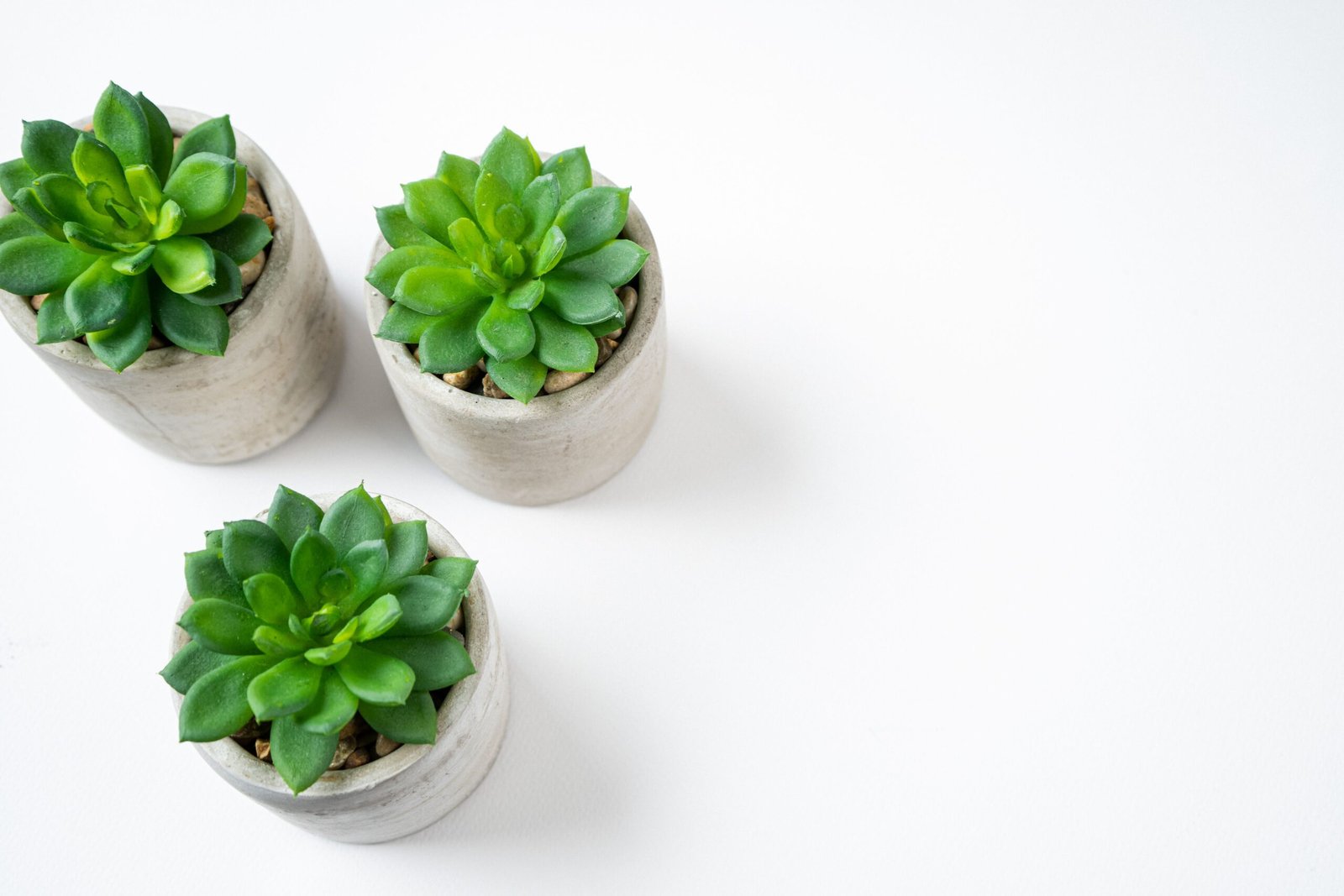
Odd numbers help, and so does variation in height. A tall one at the back, a medium one beside it, something trailing at the front. Vary the leaf shape too. A spiky snake plant next to a round leafed pothos gives contrast, whereas three similar plants together just look crowded.
Keep the pots more consistent than the plants. When containers share a material or a colour family, a mixed group still reads as one arrangement. When every pot is different, the eye sees clutter instead of a garden, which is the same restraint that makes a small change feel like one of those small upgrades that quietly make a home easier.
⭐ Pots, Baskets and the Drainage Problem Nobody Mentions
Here is the thing that kills more houseplants than forgetting to water them. Watering them into a pot with nowhere for the water to go.
Beautiful ceramic pots and woven baskets frequently have no drainage hole. Water collects at the bottom, the roots sit in it, and they rot quietly over several weeks while the leaves look fine. By the time the plant droops, the damage is done, and it looks exactly like underwatering, so most people respond by adding more water.
The fix takes no effort. Leave the plant in the plastic nursery pot it came in, which has holes, and drop that inside the decorative container. Lift it out to water, let it drain in the sink for a few minutes, then put it back. You get the look you wanted and the plant gets what it needs.
A layer of pebbles at the bottom of a sealed pot does not solve this, despite how often it is repeated. It raises the waterline rather than removing it. If you are choosing containers to match a room rather than the other way around, our home décor inspiration section is a reasonable place to browse first.
⭐ Hanging and Trailing Displays Without the Wobble
Hanging greenery draws the eye upward and makes a low ceiling feel taller. It also needs a moment of thought about weight.
A medium pot with damp soil is heavier than it looks, often several kilos, and that load hangs from a single point. A ceiling hook needs to go into a joist rather than plasterboard alone. If you cannot find one, a wall bracket fixed into a stud is easier and just as good.
Watering is the practical catch. Anything above head height gets watered less often simply because reaching it is annoying. Macramé hangers that lift out easily solve this, and so does choosing plants that prefer to dry out between drinks. Trailing succulents such as string of pearls suit hanging spots partly for this reason.
Shelves are the low effort alternative. A trailing pothos on a high shelf gives you the same downward movement, and you can reach it without a chair.
⭐ Kitchens, Bathrooms and Bedrooms Each Need Something Different
These three rooms have conditions unlike the rest of the house, and treating them the same is why greenery struggles in them.
Kitchens are warm, often bright, and full of surfaces that are already busy. A small herb pot on the sill is the usual choice and the usual disappointment, because supermarket herbs are grown fast for a short life. Buy a proper potted rosemary or mint from a garden centre instead and it will last seasons rather than weeks.
Bathrooms swing between steamy and dry, and many have very little natural light. Ferns and pothos handle the humidity happily. If the room has no window at all, the honest answer is that nothing will thrive there, and a rotation works better than a permanent resident. Move a plant in for a few weeks, then swap it for another.
Bedrooms are usually the dimmest room in the house. Keep it to one or two low light plants on a dresser rather than a jungle, and skip anything with a strong scent near the bed. More room by room thinking sits in our guide to cosy, modern and rustic décor ideas.
⭐ What Should You Do When One Starts Looking Sad
Every plant owner has a struggling one. The useful skill is reading what it is telling you before reaching for the watering can.
Yellow leaves near the base, with soil that feels damp, almost always means too much water. Crispy brown edges with dry soil means too little, or air that is very dry. Long stretched stems reaching sideways mean the plant wants more light and is going to find it with or without your help.
The most reliable watering method is weight, not schedule. Lift the pot after watering and remember how heavy it feels. Lift it again a week later. Light means thirsty. This works better than any fixed routine, because the same plant drinks differently in July than it does in January.
Wipe dust off broad leaves every month or so. It is a small thing that keeps foliage glossy and helps the plant use what light it gets. If something dies anyway, that is information about that spot, not a verdict on you. Working out what a room can support is part of the same patient approach we take across our smart living guides.
⭐ Best Sellers
Top Products and Picks
Four items cover most of what this guide describes, and all are widely available on Amazon.
- A set of ceramic pots with drainage holes and matching saucers, which removes the rot problem entirely rather than working around it.
- A soil moisture meter, the simplest tool for anyone who is unsure whether they are watering too much or too little, and cheap enough to be worth the certainty.
- An adjustable plant stand, which lifts a small plant to the height a corner actually needs without buying a larger plant to get there.
- A set of woven basket planters, used as outer covers over nursery pots, which is the easiest way to make mismatched plants look like one arrangement.
⭐ Final Thoughts
Greenery changes a room in a way that furniture cannot, because it is the only thing in the house that grows while you are not looking.
That is also why it asks for a little patience. A room does not become green in an afternoon, and the version you see in magazines took someone years and a number of quiet failures they did not photograph. Starting with two easy plants in spots that suit them will get you further than filling every surface at once.
Some will not make it. A corner you were sure about turns out to be too dark, a pot holds water you did not know was there. Each of those tells you something specific about your own home, and that knowledge is what makes the next one easier.
What you end up with, after a season or two, is a house that feels a little softer and a little more alive than it did. Not a showroom. Just somewhere that quietly grows alongside you, which was the point all along.
⭐ Additional Resources
For plant by plant guidance on light, watering and common problems, the University of Minnesota Extension publishes a detailed houseplant care section written for home growers rather than professionals.
The Royal Horticultural Society keeps a free houseplant advice library covering repotting, feeding and the usual troubleshooting questions.
Households with cats or dogs may want to check a plant before buying it. The ASPCA maintains a searchable list of plants that are toxic and non toxic to pets.