
Organic Food Pantry: How to Build One Shelf at a Time
As an Amazon Associate I earn from qualifying purchases. Some links in this post go to Amazon and may earn me a small commission at no extra cost to you.
Last Updated on September 5, 2026 by Smarteryouu
⭐ Organic Food Pantry: How to Build One Shelf at a Time
An organic food pantry is not something you buy on a Saturday. It is something that assembles itself over a few months, mostly by replacing what runs out with a slightly better version of the same thing. That is a far less exciting story than the shopping lists you usually see, and it is the only version that actually survives past the first month. This guide covers the part most articles skip. Not just what to put on the shelf, but the order to do it in, how long each thing really keeps once it is open, and how to store it so you are not throwing away half a bag of flour in April. Some of it comes from getting it wrong. Nuts that went off, a bag of grains that attracted something, a bottle of good oil left next to the stove. All of that is in here too.

⭐ Start With What You Actually Cook
Before buying anything, spend a week noticing what you reach for. Not what you think you should be cooking, but what actually gets made on a Tuesday when nobody has the energy. For most households that list is short and boring. Rice or pasta. Some kind of bean or lentil. Oats. Oil, salt, two or three spices. Maybe canned tomatoes.
That short list is the pantry. Everything else is decoration, and decoration is what goes stale at the back of the shelf. If you upgrade six things you use constantly, you have changed most of what you eat. If you buy forty things you use twice a year, you have mostly bought storage problems.
There is a second reason to start here. Cost lands very differently when it is spread across a few months of ordinary shopping rather than one large trip. Nothing feels like a project, so nothing gets abandoned like one. The post on eating organic on a budget goes further into the money side if that is the part holding you back.
⭐ The Shelf Basics Worth Buying First
Grains and legumes are the easiest place to begin, because they are cheap, they keep for a long time, and the certified versions are only slightly more expensive than the ordinary ones. Rolled oats, brown or white rice, a couple of shapes of dried pasta, lentils, chickpeas and black beans will carry an enormous number of meals between them.
Buy these in the largest size you will realistically get through in six months, not the largest size available. A very big bag looks like good value right up until the last third goes stale or attracts pantry moths, which is a problem you only need to have once before you start buying smaller.
Dried beans and lentils keep almost indefinitely in the sense that they stay safe to eat, but they get harder as they age and eventually stop softening properly no matter how long you cook them. A year is a sensible working limit. Write the month on the container with a marker when you open it. It takes two seconds and it saves a genuinely irritating dinner later.
Flour is the exception to the long life rule. Whole grain flours contain the oil from the germ, and that oil goes rancid. Three months in a cool cabinet, or six in the freezer, is about right. White flour lasts considerably longer. If flour smells faintly like old crayons, that is the oil, and no amount of baking will hide it.
⭐ Oils and Vinegars, and the One That Goes Off Quietly
Vinegar is the easiest thing in the pantry. It keeps essentially forever, it costs very little, and the only thing worth paying attention to is whether you like the taste. Cider vinegar, a red wine vinegar and a plain white for cleaning will cover almost everything.
Oil is the opposite, and it is where most pantries quietly lose money. Good oil degrades from three things: heat, light and air. Which means the worst place in the entire kitchen for it is the spot most people use, which is the shelf directly above the stove, in a clear bottle, with the cap left loose.
Buy the size you will finish in two or three months. Keep it in a dark bottle or a cabinet away from the heat. If a bottle smells sharp or faintly like putty rather than green and grassy, it has turned, and cooking with it will put that flavor into whatever you make. There is a full guide to choosing and using olive oil, including what the grades on the label actually mean.
⭐ Spices, Which Are Mostly About Age
Spices are one of the categories where certification genuinely earns its money, because they are a concentrated dried crop and you eat them without any washing or peeling in between. They are also, in most kitchens, far older than anyone realizes.
Ground spices hold their character for six months to a year. Whole spices last two or three years and can be ground as needed, which is why buying whole cumin, coriander and peppercorns is worth the small extra effort. Dried herbs are the shortest lived of all, and a jar of oregano that has faded to a dull gray green is contributing color and nothing else.
The test is simple. Rub a pinch between your fingers and smell it. If it smells like the spice, it is fine. If it smells like dust, it is finished, no matter what the printed date says. Buying small jars of the four or five you actually use beats a rack of twenty that are all slowly fading together.
⭐ Reading the Back of the Package
The front of a package is designed. The back is regulated. That is the whole trick, and once you get in the habit of turning things over, a lot of shopping decisions make themselves.
Ingredients are listed by weight, heaviest first. If sugar or an oil appears in the first three on something you did not expect it in, that tells you more than any claim on the front. Certified products can still be high in sugar. The seal is a statement about farming, not about the recipe, and the post on where the switch is worth it and where it is not covers that distinction properly.
Two phrasings are worth learning to tell apart. A product described simply as organic is almost entirely certified. One described as made with organic ingredients contains less, and the certified part is named in the ingredient list rather than implied by the front of the box.
⭐ Keeping It All Fresh Once It Is Home
Storage is where a carefully built shelf either holds up or slowly falls apart, and it is almost entirely about three things: air, light and temperature.
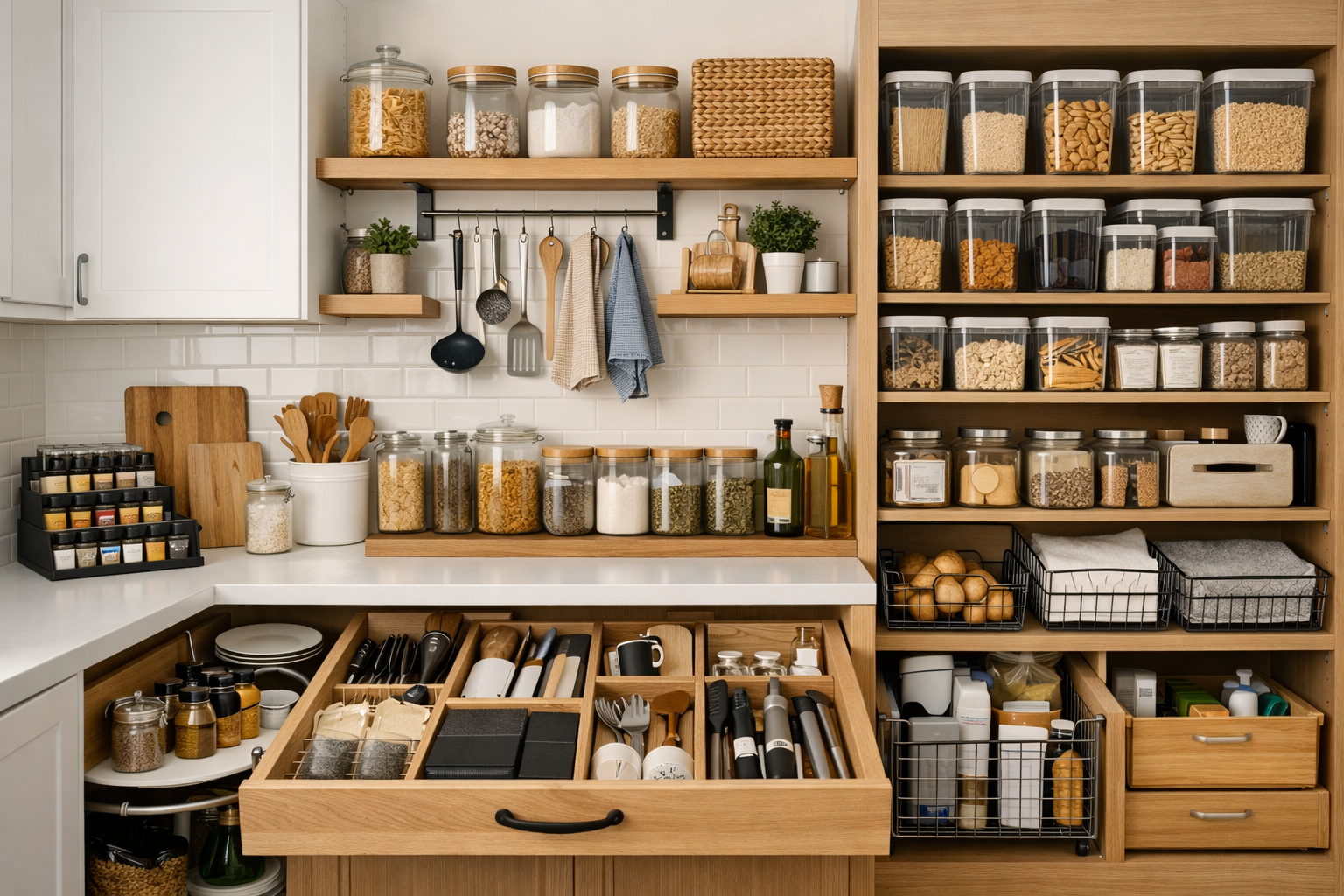
Move dry goods out of their original bags into sealed containers. A folded over paper sack held shut with a clip is not a seal, and it is an open invitation to pantry moths, which are far easier to prevent than to remove. Glass and good quality plastic both work. What matters is the lid.
Nuts, seeds and nut butters belong in the refrigerator once opened, for the same reason as whole grain flour. They are full of oil and that oil turns. Whole nuts freeze well and thaw in minutes, which is the easiest fix if you buy them in quantity. The guide to choosing dried fruit and nuts goes into what to look for on the bag.
Keep the pantry itself cool and away from the oven wall if you can. A shelf that sits at kitchen temperature all evening shortens the life of everything on it. If your storage is the problem rather than the food, the post on kitchen storage and organisation deals with the layout side, and the containers themselves are covered in organic kitchen essentials.
⭐ Three Meals That Come Entirely From the Shelf
A pantry proves itself on the evening when nobody has shopped. These three need nothing fresh, and between them they use most of what is on the list above.
Lentils cooked with a chopped onion, garlic, cumin and canned tomatoes, finished with a spoon of vinegar and a good pour of oil. It takes half an hour, most of which is unattended, and it improves the next day.
Pasta with chickpeas, oil, garlic and whatever dried herb is still worth using, with a little of the cooking water stirred through at the end to bring it together. Fifteen minutes.
Oats cooked with water and salt rather than made sweet, topped with nuts and dried fruit. This is the one that quietly replaces a lot of packaged breakfasts, and it costs very little per serving.
⭐ Best Sellers
Top Products and Picks
- A set of airtight glass canisters for dry goods, which is the single item that stops a slowly built shelf turning into a row of half open bags.
- Organic dried lentils and chickpeas in resealable bags, the cheapest thing on this list per meal and the base of two of the three dinners above.
- A small spice grinder, which is what makes buying whole spices worth doing instead of replacing faded ground jars twice a year.
- Chalk markers or a roll of label tape, so the month an item was opened is written on it. Unglamorous, and it saves more food than anything else here.
⭐ Final Thoughts
A well stocked shelf is a quiet kind of comfort. It means the evening you did not plan for is still fine, that a change of mind about dinner costs nothing, and that you are not making a decision about food at seven o’clock on an empty stomach.
It also takes far less effort to reach than the shopping lists suggest. Nothing here needs to happen this week. Replace the oats when the oats run out. Move the rice into a jar the next time you are tidying. Write a date on the flour. In three months the shelf looks completely different and you never once made a project of it.
That is the whole method, and it is worth trusting. The kitchens that stay good are the ones built slowly, by people who paid a little more attention each time something needed replacing, and then went back to cooking.
⭐ Additional Resources
For how long things really keep at room temperature and what changes once a package is opened, the Food Safety and Inspection Service guidance on storing food at room temperature is more useful than the printed dates on most packaging.
If you want to compare what is actually in two versions of the same staple rather than trusting the front of the box, FoodData Central is the public database behind most nutrition labels and it is free to search.