
How to Set Up a Calm Home When You’re Starting From Scratch
As an Amazon Associate I earn from qualifying purchases. Some links in this post go to Amazon and may earn me a small commission at no extra cost to you.
Last Updated on October 3, 2026 by Smarteryouu
⭐ How to Set Up a Calm Home When You’re Starting From Scratch
Moving into a new place, or just deciding to finally start over with how a home feels, can be overwhelming if you try to fix everything at once. There is no shortage of advice about lighting, decor, and organization, but very little of it tells you where to actually begin. This is meant to be that starting point, a room by room look at the one or two things worth prioritizing first, rather than a long list of ideas with no clear order.
None of this needs to happen in a weekend, and none of it requires a big budget. The goal is just to know what to tackle first in each space, so setting up a calm home feels manageable instead of like an overwhelming project with no clear starting line. Most of the advice available online treats every part of a home as equally urgent, which is part of why starting from scratch feels so paralyzing. In practice, some choices matter far more early on than others, and knowing which ones those are makes the whole process considerably less daunting.
⭐ Start With the Entryway, Even Though It’s Easy to Ignore
The entryway is usually the last room anyone thinks about, and the first one you actually walk through every single day. A cluttered entryway sets a slightly chaotic tone before you have even made it into the rest of your home, and a clear one does the opposite, even if it is a small space.
The starting point here is simple: a place for shoes, a spot for keys, and a clear floor. A basic shoe rack and a small tray or bowl near the door covers most of it. This is not about decorating the entryway, it is about removing the first small obstacle you encounter every time you come home. It is easy to deprioritize this space because it is small and passed through quickly, but that quick, repeated exposure is exactly why it matters, you experience it more often in a day than almost any other single spot in your home.

⭐ In the Living Room, Prioritize Seating and Light Before Decor
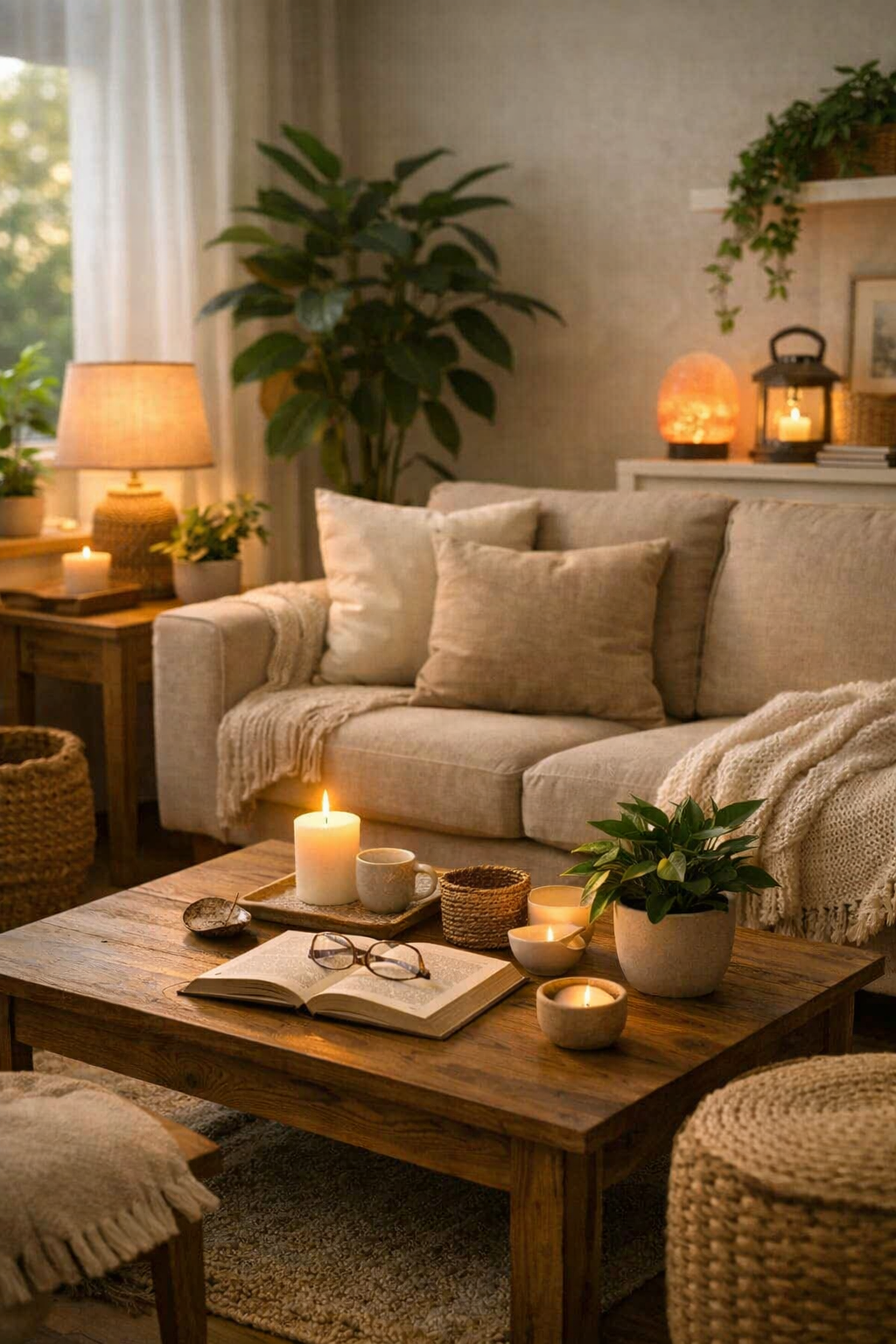
It is tempting to think about decor first when setting up a living room, art, throw pillows, a rug. Those matter eventually, but the two things that actually determine whether a living room feels calm are comfortable seating and good lighting, and both are worth getting right before anything else.
For lighting specifically, prioritize at least one warm, softer light source beyond the main overhead light, a table lamp or a floor lamp works well. Overhead lighting alone tends to feel more functional than relaxing. For seating, comfort matters more than matching a particular style, a couch or chair you actually want to sit in will do more for how the room feels than any decor choice layered on top of it.
It is worth resisting the urge to fill the room with decor early on. A living room with just a comfortable place to sit and decent lighting already feels more livable than a room full of decorative objects arranged around uncomfortable furniture. Decor is the layer that gets added once the room already functions, not the thing that makes it function in the first place.
⭐ In the Bedroom, Start With What You Actually Sleep On
The bedroom is the one room where function and comfort are the same thing, so it makes sense to prioritize the basics before anything decorative. Comfortable bedding matters more here than almost anywhere else in the home, since it directly affects how well you sleep, which affects nearly everything else.
Beyond that, keep the room simple at first. A calm bedroom does not need much decor to feel finished, a made bed and a couple of soft, warm toned elements, a lamp instead of harsh overhead light, a soft throw at the foot of the bed, go further than a lot of additional decor would. It is worth thinking of the bedroom as the room where restraint pays off the most, a few well chosen, comfortable elements will always outperform a room full of decorative additions that do nothing for how well you actually rest.
- ⭐ In the Kitchen, Focus on What You Reach for Daily
A kitchen can feel chaotic even when it is technically clean, usually because the things you use daily are not easy to access. Start by identifying the handful of items you actually reach for constantly, a particular mug, your everyday cooking utensils, your most used spices, and give those a clear, obvious spot. Everything else can stay wherever it lands for now.
This matters more than deep organizing every cabinet on day one. A kitchen that supports your actual daily habits, rather than an idealized version of how you think a kitchen should be organized, will feel calmer faster with far less effort. It is easy to feel pressure to fully organize a kitchen right away, alphabetized spices, perfectly labeled containers, but that level of detail rarely matters for how calm the space actually feels day to day. What matters is whether the things you use constantly are easy to find without thinking about it.
⭐ Add Plants and Fresh Air Once the Basics Are in Place
Once the essential furniture and function of a room are sorted, small additions like plants and better air flow make a noticeable difference without much effort. A single beginner friendly plant, a pothos or a snake plant, adds some life to a room without demanding much care.
Opening windows regularly, even for a short stretch each day, keeps a new space from developing the slightly stale feeling that closed up rooms tend to get. Neither of these costs much, and both are easy to add once the more foundational pieces of a room are already in place. These are genuinely the finishing touches, worth doing, but not worth prioritizing over furniture and lighting in the early stages of setting up a space.
⭐ Build One Small Daily Habit Before Adding More
Setting up a space is only half of what keeps a home feeling calm, the other half is a habit that maintains it. Rather than trying to adopt a full daily routine right away, pick one small habit to start with, a quick surface wipe before bed, or putting things back in place at the end of the day, and let that become consistent before adding anything else.
Trying to build an entire routine on day one usually falls apart within a week. A single habit that actually sticks is worth more than an ambitious list that gets abandoned by the second week. Once that first habit feels automatic, adding a second one tends to be far easier than trying to start with several at once.
⭐ Give Each Room Time Before Deciding It’s Finished
One mistake worth avoiding is deciding too quickly that a room is done. It usually takes living in a space for a few weeks to notice what is actually missing, whether that is a bit more lighting, a different seating arrangement, or simply more time to settle in. Rushing to finish every room immediately often means overspending on things that turn out not to matter, while underinvesting in the few adjustments that would have made a real difference.
⭐ It’s Fine If This Takes a While
Setting up a calm home does not need to happen all at once, and trying to force it usually backfires, either through burnout or through spending money on things that turn out not to matter as much as expected. Prioritizing the entryway, the seating and lighting in the living room, the basics of the bedroom, and the daily essentials in the kitchen covers the foundation. Everything else, the decor, the color choices, the finishing touches, can be added gradually once the basics are already working.
⭐ Best Sellers : A Few Starting Points
A few simple products are worth considering as you set up the basics in a new space.
- Small Entryway Shoe Rack : A simple way to keep the first space you see each day from feeling cluttered.
- Warm White Table Lamp: An easy first step toward softer, more relaxing lighting in a living room or bedroom.
- Beginner Friendly Indoor Plant : A low effort way to add some life to a new space once the basics are in place.
⭐ You may also enjoy reading:
- Smart Living Tips for Everyday Comfort
- Cozy Home Décor Ideas for a Warm Living Space
- How to Build a Calm Morning Routine
⭐ Helpful resources:
⭐ Final Thoughts
Setting up a calm home does not require doing everything at once, and it rarely happens that way even for people who try. Starting with the entryway, the seating and lighting in the living room, the essentials in the bedroom, and the daily items in the kitchen gives you a solid foundation without requiring a big budget or a single overwhelming weekend.
Everything else can be added slowly, once the basics are actually working for how you live. A home does not need to be finished to feel calm, it just needs the fundamentals in place, with the rest filled in over time.