
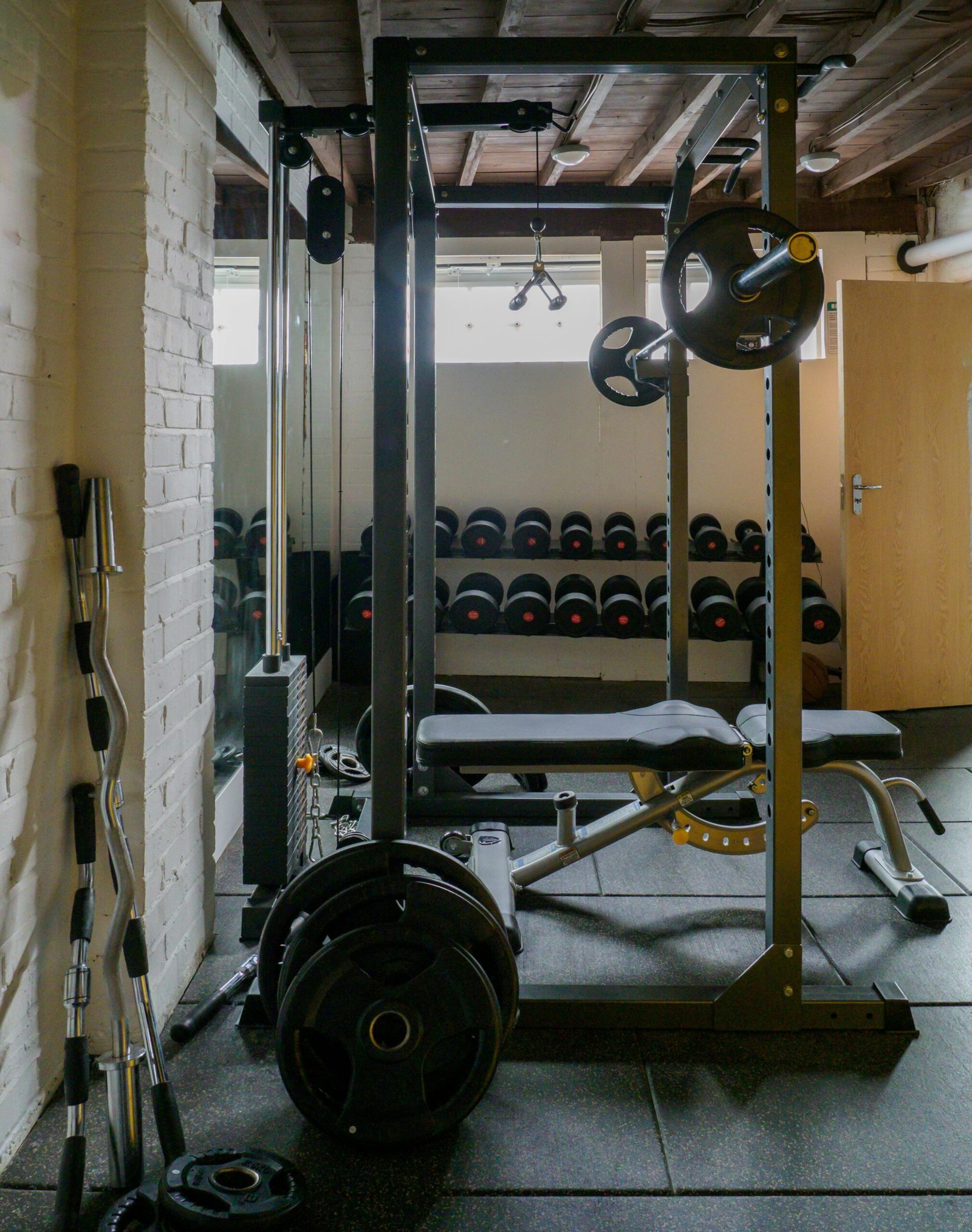
Affordable Home Gym Equipment, What Each Budget Buys
As an Amazon Associate I earn from qualifying purchases. Some links in this post go to Amazon and may earn me a small commission at no extra cost to you.
Last Updated on October 3, 2026 by Smarteryouu
⭐ Affordable Home Gym Equipment, What Each Budget Buys
Nearly every guide to affordable home gym equipment gives you a list and no prices, which is not much use when money is the reason you are reading. So this page is about the money. What a hundred dollars actually buys, what changes at three hundred, what six hundred adds, and the point past which spending more stops improving anything. I have been exercising at home for over a decade, and the pattern I keep seeing in other home setups is not underspending. It is spending in the wrong order, early, on the wrong things. The equipment sitting unused in spare rooms was almost never cheap.

⭐ How Much Does a Home Gym Actually Cost?
A functional home setup costs between fifty and three hundred dollars for most people. Fifty gets you a mat and bands, which covers a genuine full body routine. Three hundred adds adjustable dumbbells, which is where most people should stop. Beyond that you are buying convenience rather than capability.
Those numbers surprise people because home gym content is usually written around equipment that costs thousands. That equipment exists and it is lovely, and almost nobody needs it to get fit at home.
The gap between fifty dollars and three thousand is not a gap in results. It is a gap in comfort, variety and how the room looks, all of which are real but none of which are why you started.
Spend on the room before the last of the equipment, too. Our guide to setting up the room covers flooring and light, which cost little and change more than a fourth piece of kit would.
⭐ What Can You Get for Under a Hundred Dollars?
A non slip mat, a set of graded resistance bands with a door anchor, and a skipping rope. That covers pushing, pulling, legs, core and cardio, which is every movement pattern a beginner needs. This tier is not a compromise, it is a complete setup.
The bands are the important part. They are the only thing at this price that lets you train pulling movements, which is the gap nothing else at home fills, and a graded set gives you months of progression built in.
If the budget is tighter still, buy the bands alone and use a folded towel or a carpet instead of a mat. Twenty five dollars of bands beats a hundred dollars of anything else for a beginner.
Most people who spend a hundred dollars and then stop training did not run out of equipment. They ran out of routine, which is free. Our post on home exercises that actually work is the routine this tier supports.
⭐ The Three Hundred Dollar Setup, Where Most People Should Stop
Add adjustable dumbbells to the tier above and you have arrived. That is genuinely it for the vast majority of people training at home, and the next dollar spent will do less than any dollar before it.
Adjustable is the whole point at this price. A rack of fixed pairs covering the same range costs more, takes a wall, and does nothing extra. One adjustable pair is the single best value purchase in home fitness.
Buy them after four consistent weeks with the hundred dollar tier rather than at the same time. Equipment bought to create motivation ends up stored. Equipment bought because your current setup stopped being hard gets used.
If you are choosing which dumbbells, our guide to equipment for a small space covers what to check on the storage cradle, which is where the space saving is quietly lost.
⭐ The Six Hundred Dollar Setup, and What the Extra Buys
At six hundred you add either a bench, a folding machine, or a walking pad. Notice the word either. Adding all three is how a spare room fills up with equipment that gets used once a fortnight.
A bench is the cheapest of the three and it unlocks the most. Chest presses, supported rows and step ups all become available, and a folding one stores against a wall.
A walking pad is the right choice if your actual problem is sitting all day rather than a lack of workouts. It is the only item at this tier that changes your whole day rather than your training session.
A folding machine suits someone who wants supported back work and will not use free weights. Our Total Gym 1000 review is honest about who that is and who should buy dumbbells instead.
⭐ What Is Worth Buying Secondhand?
Buy dumbbells, kettlebells, benches and frames used. They are metal, they do not wear out, and January purchases hit the resale market every spring at half price. Do not buy bands, mats or anything with a motor secondhand, since bands perish, mats absorb, and motors are the part that fails.
Fixed dumbbells in particular are close to indestructible. A twenty year old pair works exactly like a new pair, and the only difference is the price and some paint.
Adjustable dumbbells are the exception among free weights. They have moving parts and locking mechanisms, so check every weight setting locks properly before handing money over.
Timing helps. Late winter and early spring are when unused resolution equipment appears, and a bench or a rack bought then often costs a third of retail.
⭐ Cost Per Use, the Only Number That Matters
A thirty dollar set of bands used three times a week for a year costs about nineteen cents a session. A six hundred dollar machine used twice a month costs twelve dollars a session. That is the comparison worth making before any purchase.
It also explains why cheap equipment usually wins at home. The things that get used most are the things that need no setup, and those are almost always the least expensive items you own.
Before buying anything large, estimate honestly how many times a month you will use it. Then divide. If the number embarrasses you, that is the answer.
Against a gym membership the maths is straightforward. Most memberships cost more in a year than the entire three hundred dollar setup, and the setup does not expire.
⭐ Where the Money Usually Gets Wasted
The biggest waste is buying everything at once. A full setup ordered in one evening means nothing was bought in response to an actual need, and most of it will sit unused while you work out which two things you like.
The second is buying heavier than you can lift. Weights bought for a future version of yourself are unusable now and often still unusable in a year.
The third is subscriptions attached to equipment. A screen with a monthly fee turns a one off purchase into a recurring cost, and the fee usually outlives the enthusiasm by a considerable margin.
The fourth is spending on equipment while training in a cold, dark corner. Light and flooring cost very little and affect whether you turn up, which no dumbbell can do.
⭐ When Is It Worth Paying More?
Pay more when the cheap version would be dangerous, or when you have already worn one out. A wobbly bench holding your body weight and an unstable frame are worth spending on. A slightly nicer mat is not.
Anything you get under or hang from deserves the money. Stability is a safety feature rather than a luxury, and the cheapest versions of load bearing equipment are the ones to avoid.
Anything with a motor is the other case. Cheap motors are loud, they struggle under sustained use, and replacing one costs more than buying the better version first.
Everything else, buy cheap and replace it if you wear it out. Wearing something out is a good problem, and it means you have earned the upgrade.
⭐ Best Sellers
Top Products and Picks
These four are listed in spending order, with a rough price and the reason to buy each one at that point rather than earlier.
- A set of graded resistance bands with a door anchor, around twenty five dollars. Buy first. It is the only cheap item that adds pulling movements, and a graded set has months of progression built into it.
- A non slip exercise mat, around thirty dollars. Buy second, or first if your floor is hard and cold. Around 6mm is the useful thickness, and grip matters more than padding.
- A pair of adjustable dumbbells, around two hundred. Buy at week four, not week one. This is the best value purchase in home fitness and also the easiest one to buy too early.
- A folding bench, around a hundred. The cheapest way to expand what dumbbells can do, and it stores flat against a wall. Choose stability over padding, since this one holds your body weight.
⭐ Final Thoughts
A hundred dollars buys a complete home setup. Three hundred buys a comfortable one. Everything past that is convenience, and convenience is worth paying for only once the habit exists.
Buy in order and buy late. Four consistent weeks before each purchase means you spend less and use more of what you own, which is the opposite of how most home gyms get assembled.
Work out the cost per use before anything large. It is an uncomfortable number and it is the most honest one available to you.
Start with bands this week and nothing else. If you are still using them in a month, you have earned the next purchase and you will know exactly what it should be. There is more across home exercising and the rest of Smart Living Essentials.
⭐ Additional Resources
For how much activity is generally recommended by age group, the World Health Organization publishes a fact sheet on physical activity that gives the numbers without prescribing a program.
The Canadian Society for Exercise Physiology takes a wider view across the whole day in its 24 hour movement guidelines, which cover activity alongside sitting time and sleep for each age group.