
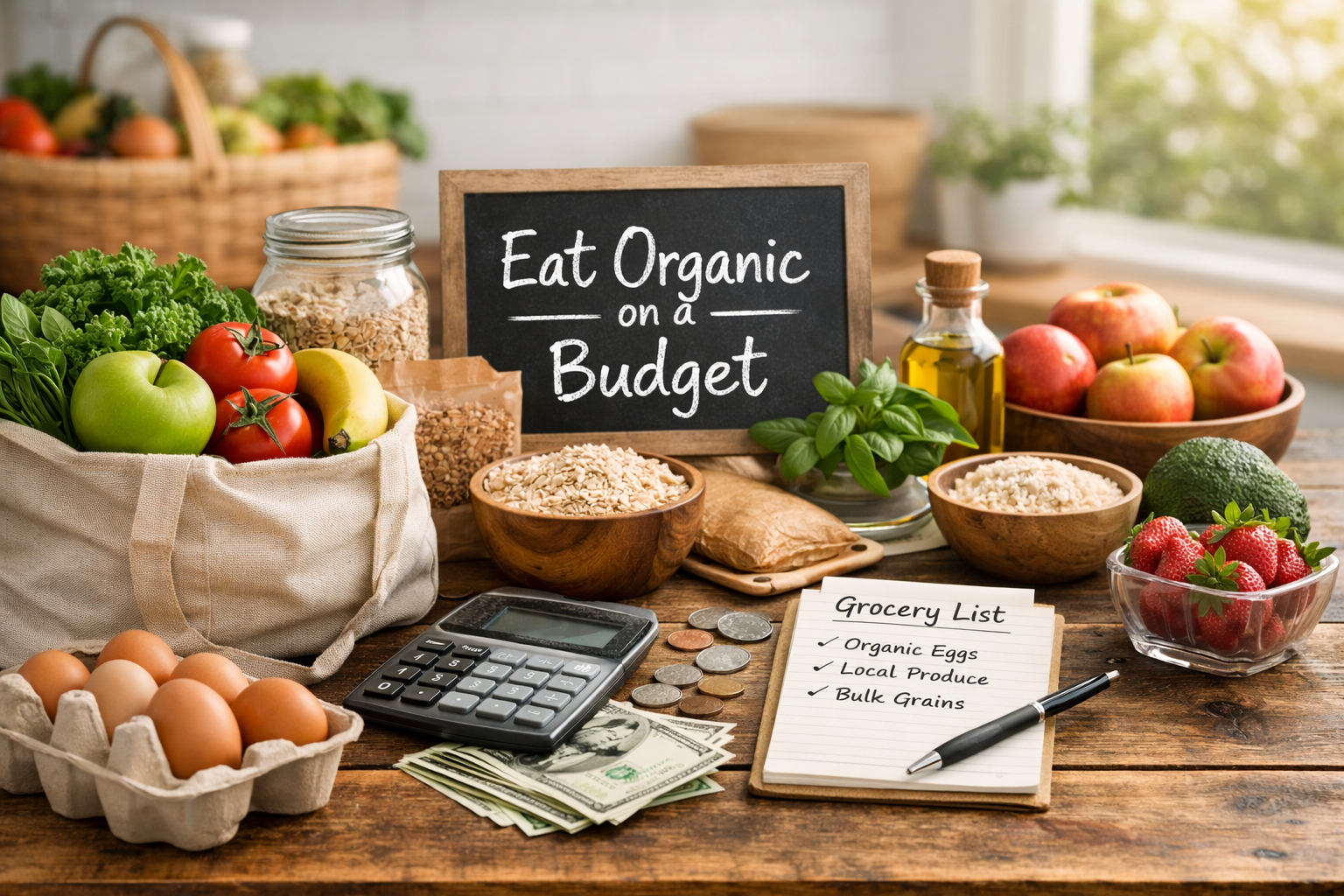
Eating Organic on a Budget: What Is Worth the Extra
As an Amazon Associate I earn from qualifying purchases. Some links in this post go to Amazon and may earn me a small commission at no extra cost to you.
Last Updated on September 25, 2026 by Smarteryouu
⭐ Eating Organic on a Budget: What Is Worth the Extra
Eating organic on a budget sounds like a compromise and it is really just a set of decisions. Buying everything organic is expensive, unnecessary for most of a shopping list, and the main reason people try it for a month and then quietly stop.
The useful version is narrower. A handful of items where the premium is defensible, a longer list where it plainly is not, and a clear understanding of what the logo on the package legally means, which is the piece most guides leave out.
What follows is that version. It assumes you would rather spend thirty dollars a month more than two hundred, and that you want to know where those thirty go.
This page contains affiliate links. If you buy through one of them we may earn a small commission at no extra cost to you.

⭐ What the Logo Actually Guarantees
Worth knowing before deciding anything, because most people are unclear on it and it is not complicated.
In Canada, the organic claim is regulated. A product carrying the Canada Organic logo must contain at least ninety five percent organic content and has been certified against a national standard. Products between seventy and ninety five percent can say so in the ingredient statement but cannot carry the logo.
What the standard covers is the method. How it was grown, what could be applied to it, how animals were kept. The Canadian Food Inspection Agency page linked at the foot of this one sets it out plainly and is worth five minutes.
What it does not do is make a statement about nutrition, taste or safety. Those are separate questions and the logo is silent on all three, which is the single most useful thing to understand here.
⭐ Where the Honest Answer Stops
Two claims get made in both directions and neither survives closely.
That organic food is more nutritious. The research on this is mixed and the differences found are generally small, inconsistent between studies, and smaller than the difference between eating a vegetable and not eating one. Nobody should buy organic expecting a nutritional upgrade.
That conventional produce is unsafe. It is not, and pesticide residues in Canadian food are regulated and monitored. The argument for organic is about which methods you would rather pay for, not about rescuing yourself from something.
What holds is simpler. It is a method preference, it has a real environmental case attached, and it is a legitimate thing to spend money on. It is just not a health decision, and any page telling you otherwise is selling something. Our separate page on what organic does and does not mean goes further into that.
⭐ Where the Premium Is Defensible
If the budget only stretches to a few items, these are the ones we would spend it on, and the reasoning is consistent rather than fear based.
Things you eat the outside of and eat a lot of. Apples, berries, leafy greens, tomatoes, peppers. Not because the conventional versions are dangerous, but because if you are paying for a growing method, paying for it on the things you eat most often gets you the most of what you are buying.
Anything eaten whole, skin and all, for the same reason. And dairy or eggs if the animal welfare side is part of why you care, since that is where the standard has the most to say.
That is a list of five or six items rather than a whole shop, and it is where a realistic monthly premium goes.
⭐ Where It Is Not
The shorter and more useful list, because this is where the money leaks.
Anything you peel. Bananas, avocados, onions, citrus you are not zesting, melon. You are discarding the part the method applied to.
Processed food carrying an organic claim. Organic biscuits are biscuits. Organic crisps are crisps. The logo on a packet of something you were buying as a treat is doing marketing work and nothing else, and that shelf is where a great deal of the category’s profit comes from.
And anything where the organic version costs three times the conventional one. At that point you are better buying twice as many conventional vegetables, which is a real nutritional improvement rather than a theoretical one.
⭐ Frozen Is the Budget Answer
Frozen organic produce is the single most underused thing in this whole subject.
It is usually cheaper than fresh organic, often substantially. It is picked and frozen quickly rather than shipped and stored. And the thing that makes it genuinely cheaper is that none of it rots in a drawer, which is where a lot of expensive fresh produce ends up.
Frozen organic berries, spinach, peas and corn are the obvious starting points and they cover most of the items from the defensible list above.
Waste is the hidden cost in every grocery budget, organic or not, and cutting it is worth more than any shopping trick. We go into that properly in our notes on where household waste actually is.
⭐ Buy the Dry Goods in Bulk
The other place the maths works cleanly, and it is where the price per unit difference is largest.
Oats, rice, lentils, dried beans, nuts and seeds all keep for months and all cost dramatically less by the kilogram than by the small bag. A kilogram of nuts bought once is often close to the price of three small bags bought across a season.
These are also the items where the organic premium tends to be smallest in percentage terms, which makes them the easiest place to switch without noticing the bill.
The constraint is storage. Bulk only saves money if it stays good and gets used, which means airtight containers and somewhere cool, and it is the reason our short list of kitchen things worth owning is mostly storage.
⭐ Cooking Is the Real Saving
Everything above is small compared with this one, and it is the part nobody wants to hear.
The largest cost in most grocery budgets is not whether the carrots were organic. It is how much of the shop is prepared food, which carries a price you are paying for somebody else’s labour. A pot of soup made from a bag of lentils costs about a fifth of the equivalent from a chilled cabinet.
Which means the honest route to affording the items on the defensible list is usually cooking two more meals a week, not shopping more cleverly.
Two repeated meals beats a varied plan every time, and the practical version of that is in our notes on building a plate that holds.
⭐ A Realistic Monthly Version
Putting it together as something somebody could actually do from next Saturday.
Pick three items from the defensible list that you genuinely eat every week and switch only those. Buy the frozen version of two more. Move one dry good to bulk. Leave everything else exactly as it is.
That is a change of perhaps twenty or thirty dollars a month, it is sustainable, and it gets you most of what somebody spending two hundred extra is getting.
And revisit it in six months rather than agonising now. Prices move, and the item that was three times the price last spring is sometimes not this autumn.
⭐ Best Sellers
Top Products and Picks
Two bulk dry goods and the storage that makes bulk buying work. A supermarket bag and a clean jar do the same job, and the page is not pretending otherwise.
The cheapest way to test the bulk argument
Yupik Raw Pumpkin Seeds, No Shell, 450 g
Ten dollars, keeps for months, and goes into salads, yoghurt and soup without any planning. A good first switch because the price per gram difference against small bags is obvious immediately.
Check price on AmazonBulk nuts, with a caveat worth reading
Yupik Roasted Unsalted Almonds, 1 kg
A kilogram rather than a bag, which is the whole argument. Two honest notes: this has only 231 ratings, and it read 4.5 a few weeks ago and 4.2 today. A supermarket kilogram bag is a perfectly good substitute.
Check price on AmazonWhat makes cooking twice a week survivable
M MCIRCO Glass Meal Prep Containers, 5 Pack
Glass, oven and dishwasher safe, and five is the number that turns a Sunday pot of something into a week of lunches. The cooking is where the real saving is, and this is what stops it collapsing by Wednesday.
Check price on Amazon⭐ Final Thoughts
The version of this that fails is the all or nothing one, where somebody decides to shop entirely differently, spends a great deal in the first month, and quietly reverts by the third.
The version that lasts is three items switched and everything else left alone. It is unimpressive, it costs about what a takeaway costs, and it is still being done a year later.
Work out which three things you genuinely eat every week, switch those, and stop reading about it. That is the whole plan and it fits on the back of a receipt.
⭐ Additional Resources
The Canadian Food Inspection Agency explains organic claims on food labels, including the ninety five percent threshold and what the Canada Organic logo is allowed to appear on. It is the definitive source here and it sells nothing.
Canada’s Food Guide publishes its healthy eating recommendations, which are about what you eat rather than how it was grown, and are the more important of the two questions.
The rest of the wellness and organic living section takes the same approach to the other parts of a weekly shop.