
Pumpkin Seed Oil Benefits: An Honest Look at the Claims
As an Amazon Associate I earn from qualifying purchases. Some links in this post go to Amazon and may earn me a small commission at no extra cost to you.
Last Updated on September 24, 2026 by Smarteryouu
⭐ Pumpkin Seed Oil Benefits: An Honest Look at the Claims
Search pumpkin seed oil benefits and you will find a long list covering the kidneys, the hair, the skin, the heart and sleep. It is a familiar shape by now, and it is what happens when a good cooking ingredient gets picked up by the supplement aisle.
Because that is what this is. In Austria and Slovenia it has been a normal kitchen item for a couple of centuries, poured over salads and soups and occasionally vanilla ice cream, and nobody there thinks of it as medicine.
So this page treats it as an oil. What it actually is, the one rule that decides whether the bottle was worth the money, how to buy it and keep it, and an honest section on the claims that brought you here.
This page contains affiliate links. If you buy through one of them we may earn a small commission at no extra cost to you.

⭐ What Is Actually in the Bottle
Pumpkin seed oil is pressed from the seeds of a particular variety of pumpkin whose seeds have no hard shell. That variety is the reason the oil exists at all, because shelling ordinary pumpkin seeds at scale would make it impossible.
The traditional version is made from seeds that are roasted before pressing, which is where the deep nutty flavour comes from. It is a very dark green, close to black in the bottle, and shows red or green depending on how the light hits it. A thin drizzle on a white plate looks almost inky.
It also tastes strongly of something. This is not a neutral oil and it is not a substitute for one. People who buy it expecting a mild seed oil are usually surprised.
Cold pressed versions exist too and are lighter in both colour and flavour. Neither is better. They are different ingredients.
⭐ Where the Honest Answer Stops
This section sits second rather than last, because the page that was here before was mostly a list of things this oil was said to do.
Pumpkin seed oil has been studied, mostly in small trials, often using concentrated preparations rather than the bottle on a supermarket shelf. The findings are mixed and none of them support the confident statements that circulate online. That is the whole honest summary.
So this page makes no claim about the kidneys, the urinary system, hair, skin, the heart, inflammation or sleep. Those were the seven headings on the old version and they are gone rather than softened. Anything to do with a specific organ or a specific symptom belongs in a conversation with a doctor or a pharmacist, not on a lifestyle page.
What can be said plainly is smaller. It is a fat, it contains the sorts of compounds you would expect in a seed oil, and it tastes very good on the right things. That is enough reason to own a bottle and it is the reason most of Central Europe does.
If you are taking it because somebody suggested it for a specific problem, please have that conversation with them rather than with a website.
⭐ Never Heat It
This is the single most useful sentence on the page and it was not on the old version anywhere.
Pumpkin seed oil has a low smoke point and the flavour is delicate despite being strong. Putting it in a hot pan destroys the thing you paid forty dollars for and leaves you with an expensive frying oil that is worse than the cheap one.
It is a finishing oil. It goes on at the end, off the heat, or on something cold. Over a soup once it is in the bowl. Over roasted vegetables after they come out. Into a dressing. On a salad of tomatoes with nothing else on it.
The traditional use worth trying at least once is a spoonful over plain vanilla ice cream. It sounds wrong and it is the reason people in Styria keep a bottle.
⭐ Light Is the Other Enemy
Almost everything that goes wrong with this oil after purchase is storage, and almost nobody is told.
Unrefined seed oils go rancid faster than olive oil does, and light speeds that up considerably. A clear bottle on a sunny windowsill is the worst case and is also, oddly, how a lot of it is sold and displayed.
Keep it in a dark cupboard, sealed, away from the stove. Some producers recommend the fridge once opened, which is worth doing if you use it slowly. It may cloud in the cold and that is harmless.
Buy a small bottle and finish it. A large one bought for value is false economy in a category where the product degrades, which is the same argument we make about most of what ends up at the back of a cupboard.
Rancid oil smells faintly of old crayons or putty. If you are not sure, it has probably gone.
⭐ Or Just Eat the Seeds
Worth saying plainly on a page with an affiliate link to a forty dollar bottle on it.
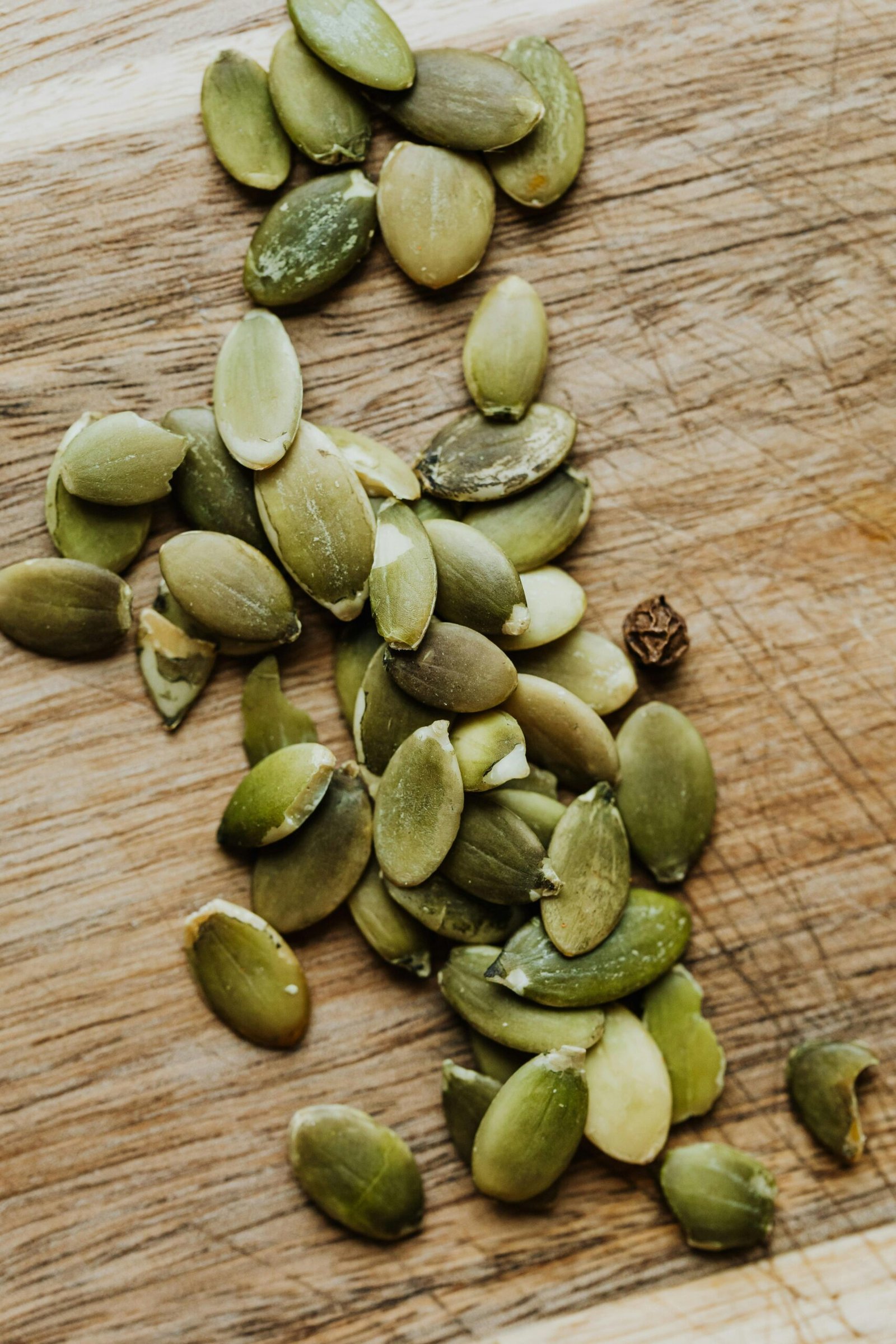
If what appeals to you is the nutritional side rather than the flavour, the seeds themselves are the sensible purchase. They cost about a quarter as much, they keep far longer, they do not need protecting from light, and they are a genuinely useful thing to have in a cupboard.
A handful on a salad, into a yoghurt, toasted briefly in a dry pan and scattered over soup. They also make a good snack that is not a biscuit, which is the harder problem for most people and one we cover in our notes on eating for steady energy.
Buy the oil because you want to taste it. Buy the seeds for everything else.
⭐ What You Are Paying For
Forty dollars for a bottle of oil invites the question, and the answer is mostly reasonable.
It takes a large quantity of seeds to produce a small quantity of oil, the shell free pumpkin variety is a specialist crop, and the good stuff is pressed in small batches rather than refined at scale. That is a genuine cost rather than a markup.
What is not reasonable is paying a premium for the wellness framing on top of it. Two bottles with similar contents can differ by twenty dollars because one of them has a list of benefits on the label, and that list is the thing you are paying extra for.
Read the back rather than the front, which is the same advice we give about every other label in a kitchen. Cold pressed or roasted, one ingredient, a harvest or best before date, and a dark bottle.
⭐ The Supplement Question
Pumpkin seed oil is also sold in capsules, and the argument for those rests entirely on the claims this page has declined to make.
One thing genuinely worth knowing if you buy any supplement in Canada. Natural health products sold here are supposed to carry an NPN or an NHP number on the label, which means Health Canada has assessed the product. It is not a guarantee that it works. It does mean somebody checked what is in it, and a product without one is being sold outside that system.
That single check is more useful than anything printed on the front of the box, and the Health Canada page explaining it is linked at the foot of this one.
Our own position is that a capsule of a cooking oil is a strange purchase when the cooking oil is pleasant to eat.
⭐ Getting Through a Bottle
The most common outcome with this oil is a bottle bought with enthusiasm, used twice, and found again two years later at the back of a shelf.
Keep it where the everyday oil lives rather than with the special things, because the special shelf is where good intentions go. If it is behind the vinegar you will not use it.
Pick two dishes you already make often and put it on those every time rather than looking for new recipes. A tomato salad and a bowl of soup will finish a bottle in a couple of months without anybody having to think about it.
And treat it as an ingredient rather than a routine. Nothing on this page needs to be done daily, and a page telling you otherwise is selling something. The same is true of most of what gets recommended for a kitchen.
⭐ Best Sellers
Top Products and Picks
The cheapest item is listed first on purpose, because for a lot of people it is the better buy. Nothing here is required.
If the nutrition is what appeals to you
Yupik Raw Pumpkin Seeds, No Shell, 450 g
Ten dollars, and they keep for months without any of the light and heat problems the oil has. A handful on a salad or into yoghurt does more for an ordinary week than a bottle used twice a year.
Check price on AmazonBecause the bottle it arrives in is usually clear
TrendPlain Dark Glass Oil Dispenser, 470 ml
Fourteen dollars to stop light ruining a forty dollar oil, which is the cheapest insurance on this page. Pours in a controlled line rather than a glug, which matters for something used a teaspoon at a time. Ships from Amazon.
Check price on AmazonIf you want to taste the thing itself
US Organic Pumpkin Seed Oil, USDA Certified
One ingredient, certified organic, and nearly fourteen thousand ratings, which is unusual in a category full of small sellers. Use it cold, keep it dark, and try it on vanilla ice cream once. Ships from Amazon.
Check price on Amazon⭐ Final Thoughts
There is a version of this ingredient that is genuinely worth having, and it has nothing to do with the list of organs it is supposed to help. It is a dark green oil with a deep roasted flavour that turns three plain ingredients into something people ask about.
That version does not need a health claim attached, and attaching one is what pushes it into a cupboard next to the other bottles bought with good intentions.
So if you buy it, buy a small one, keep it dark, never put it in a hot pan, and put it on something this week rather than saving it. It is food. It is meant to be eaten.
⭐ Additional Resources
The National Center for Complementary and Integrative Health has a short guide to using dietary supplements wisely, which is the best general piece we know of on how to read a claim on a bottle. Free, and it sells nothing.
Health Canada explains how natural health products are regulated in Canada, including what an NPN number on a label does and does not tell you. Worth ten minutes before buying any supplement at all.
The rest of the wellness and organic living section applies the same test to the other foods sold as more than food.