
Weed Control in Canada: Identifying Lawn Weeds and Treating Them Properly
As an Amazon Associate I earn from qualifying purchases. Some links in this post go to Amazon and may earn me a small commission at no extra cost to you.
Last Updated on September 5, 2026 by Smarteryouu
⭐ Weed Control in Canada: Identifying Lawn Weeds and Treating Them Properly
Most advice about weed control in Canada starts with what to spray, which is the third question rather than the first. The first is what you actually have growing, because dandelion, clover, crabgrass and creeping charlie all want different responses and two of them are usually telling you something about the lawn rather than about weeds. The second is whether the lawn itself is thick enough to keep them out, since bare ground is what weeds colonize and a dense lawn is the only control that works while you are not looking at it. This guide covers identifying the common ones, the mowing and watering habits that do most of the work, when pulling is worth the effort, how to treat a patch rather than a whole yard, and what the rules actually are where you live, because they differ more across Canada than most people realize.

⭐ A Thicker Lawn Does Most of the Work
Weeds are opportunists rather than invaders. They arrive where there is light reaching bare soil, and almost every weed problem is really a thin lawn problem wearing a disguise.
That reframes the whole job. Instead of asking what kills the dandelions, the more useful question is why there was room for them, and the answer is usually one of four things. The grass is cut too short. The soil is compacted. The lawn is thin from drought or wear. Or there is shade where grass cannot compete.
Fix any of those and the weed pressure drops on its own, permanently, without a bottle. Treat without fixing them and you will be treating again next year and the year after, which is the honest reason lawn treatment becomes an annual subscription for so many households.
None of this means never treating anything. It means treatment works far better as a finishing step than as the whole plan.
⭐ Knowing What You Actually Have
Five weeds cover most Canadian lawns, and telling them apart takes about a minute once you know what to look at.
Dandelion is the obvious one, with a deep taproot that snaps if you pull carelessly and regrows from what is left. Clover has three round leaflets and white flowers, spreads across the surface, and is worth a second thought before removing, since it stays green in drought and feeds the soil. Plenty of people are now deliberately keeping it.
Crabgrass is a coarse pale grass that sprawls outward from a central point in flat star shapes, and it is an annual, so it dies with the first frost and returns from seed. That matters, because the useful moment with crabgrass is spring, before it germinates, rather than August when you notice it.
Creeping charlie, also called ground ivy, has scalloped round leaves and square stems, smells strongly when crushed, and spreads by runners across the surface. It thrives in shade and damp, which is the clue: where it is winning, the grass was already struggling. Plantain, with its broad flat rosette, is the other honest signal, because it turns up in compacted soil almost exclusively.
⭐ Mowing Height Changes More Than Anything Else
If you do one thing from this post, raise the mower deck. It is free, it takes ten seconds, and it does more for weed pressure than anything you can buy.
Longer grass shades the soil surface. Weed seeds, crabgrass especially, need light to germinate, so grass kept a couple of notches higher than most people cut it simply prevents a large share of the problem from starting. Taller grass also grows deeper roots, which means it holds up better in a dry August, which in turn means fewer thin patches for anything to move into.
Cut often enough that you are never removing more than about a third of the blade at once. Letting it get long and then scalping it stresses the plant badly, and a stressed lawn is a thin lawn a few weeks later.
Leave the clippings where they fall. They return nitrogen, they do not cause thatch, and bagging them is work you are doing to make your lawn slightly worse. There is more on mowers and decks in the guide to outdoor garden power tools.
⭐ Pulling, and When It Actually Works
Hand pulling has a reputation for being futile, which is only true when it is done badly.
The rule is to pull after rain or a good watering, when soil is soft, and to use a narrow forked weeder rather than fingers for anything with a taproot. Dandelion regrows from a fragment left behind, so the whole root has to come, and that only happens in soft ground with a tool that goes down beside it.
It works well for scattered dandelion and plantain, and it is genuinely the best option for a small lawn or for anyone who would rather not use anything at all. It works poorly on creeping charlie, which regrows from any node left in the ground, and it is pointless on crabgrass in late summer, since the plant has already set seed by then.
Fill the hole afterward. A pulled weed leaves bare soil, which is an invitation to the next one, so a pinch of seed and a little compost finishes the job properly.
⭐ Treating Patches Rather Than Whole Lawns
Where a product is used, spot treating is better than covering the whole lawn on every count. It uses far less, it costs less, it leaves the healthy grass alone, and it forces you to look at what you are actually treating.
Timing matters more than product choice. Broadleaf weeds are most vulnerable in early fall, when they are moving energy down into their roots and carry treatment down with it, which is why a fall application often outperforms a spring one on the same lawn. Crabgrass is the opposite and is dealt with in spring before it germinates.
Do not treat in the heat. Most labels give a temperature above which not to apply, and going past it is how grass gets damaged. Do not treat a lawn that is already stressed from drought either. Wait for a mild stretch with no rain forecast for a day or so.
Whatever you use, the label is the instruction and in Canada it is a legal one. Rates, temperatures, waiting periods before children and pets go back on the grass, and where a product may be used are all on it, they differ between products, and this post deliberately does not repeat them. There is a general selection of lawn products on Amazon Canada if you want to compare what is available where you are.
⭐ The Rules Are Different Where You Live
This is the part most lawn advice written for a North American audience skips entirely, and it is the part that decides what you are even allowed to buy.
Pesticides are approved federally by Health Canada, but provinces and municipalities can and do restrict them further. Several provinces limit or prohibit cosmetic pesticide use on lawns, meaning use for appearance rather than for a health or structural reason. Ontario and Quebec have had restrictions for years, and other provinces and individual municipalities have their own rules on top.
The practical consequence is that a product widely recommended online, or sold in a neighboring province, may not be permitted for lawn use where you are. Availability on a shelf is not the same as permission to use it for this purpose.
So check your province and your municipality before buying anything, which takes a couple of minutes. The Health Canada guidance in Additional Resources is the sensible starting point, and it points you at the provincial rules that apply to you.
⭐ Overseeding, and the Weeks That Matter
Overseeding is the step that turns a temporary improvement into a permanent one, and it is the one people skip because it is unglamorous and nothing happens for two weeks.
Late summer into early fall is the best window across most of Canada. The soil is still warm enough for germination, nights are cooling, there is usually more rain, and the new grass has weeks to establish before winter without competing against summer weeds.
Scratch up the surface of any bare patch first so seed meets soil rather than sitting on thatch, spread seed, cover very lightly with compost, and then keep it damp. That last part is the whole job. New seed cannot be allowed to dry out, so light watering once or twice a day for two or three weeks is the price, and it is the only time frequent shallow watering is the right approach.
Do not use a weed treatment and seed at the same time. Most will prevent your new grass germinating just as effectively as they prevent weeds. Read the interval on the label and wait it out.
⭐ Questions Worth Asking Anyone You Hire
Plenty of people would rather pay someone, which is a perfectly reasonable choice. These are the questions that tell you whether a company and your lawn are a good fit, and none of them require you to know anything technical.
Which products they use, and whether those are permitted for lawn use in your municipality. Whether they spot treat or cover the whole lawn, and what decides that. What the aftercare is, specifically how long before children and pets should be back on the grass, and whether that will be left in writing. Whether they will look at mowing height, compaction and shade, or only treat what is visible.
On the commercial side, ask what a season includes, whether it renews automatically, and how to cancel. Paying month by month for the first year is a reasonable request and a company comfortable with its work will not mind.
A good contractor will answer all of that without hesitation and several will raise the cultural points before you do. The rest of the outdoor category is in the outdoor and garden section, and the equipment side is covered in the guide to garden tools that last.
⭐ Best Sellers
Top Products and Picks
Availability and permitted use differ by province and municipality. Check what applies where you live, and read the label before buying.
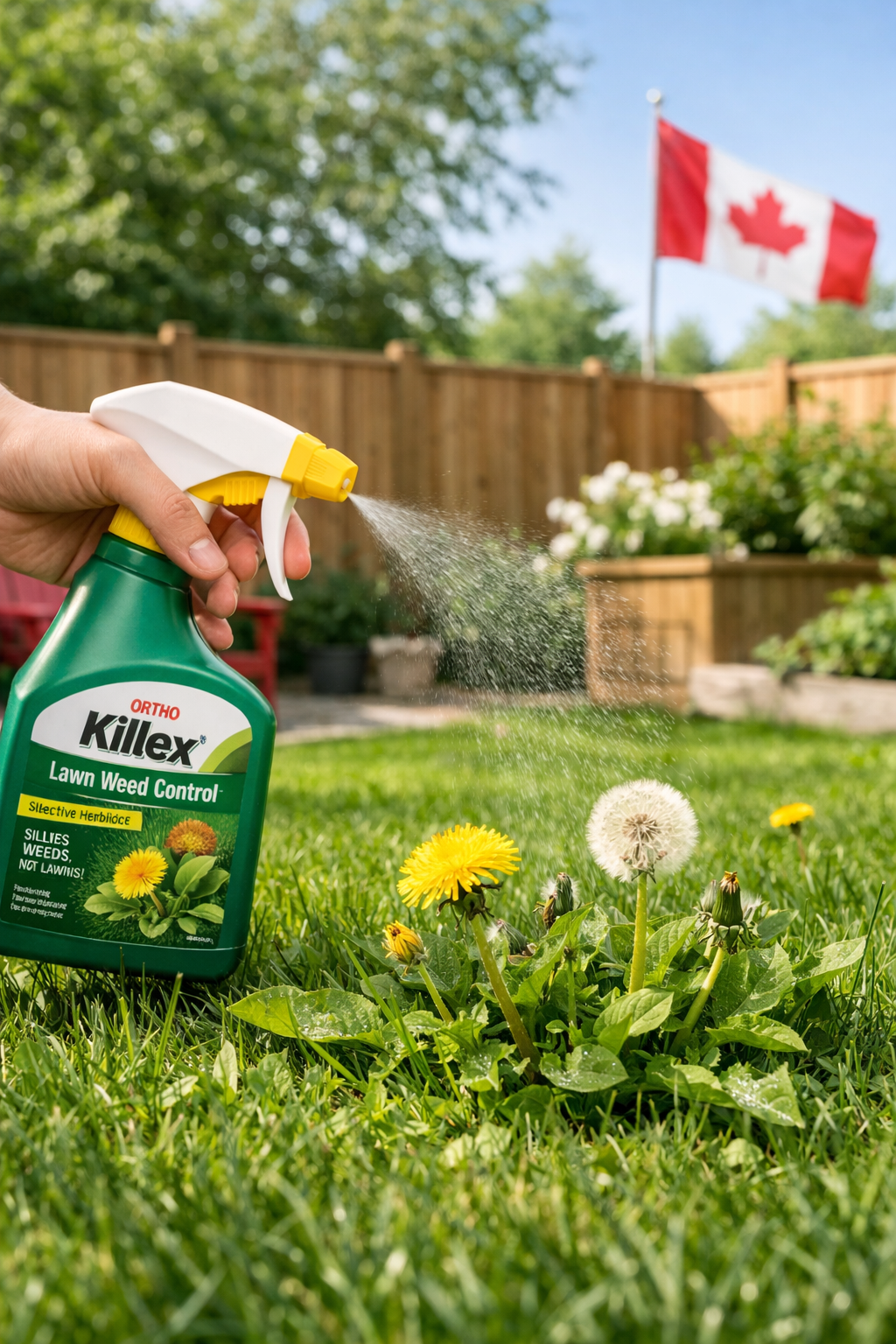
- Ortho Killex, a selective broadleaf product widely sold in Canada, intended for spot treatment rather than whole lawns.
- Weed B Gon, another selective option for broadleaf weeds in an existing lawn.
- Ortho WeedClear, sold in a ready to use form, which suits treating a handful of patches rather than mixing a batch.
- Scotts Turf Builder Weed and Feed, a combined product, worth knowing it treats the whole lawn by design rather than spots.
⭐ Final Thoughts
A lawn with some clover and a few dandelions in it is a normal lawn, and the standard most people are measuring themselves against is a photograph rather than anything in their neighborhood.
So it is worth deciding what you actually want before spending anything. Somewhere for children to play, something green that looks cared for, a surface that survives a dry August. All of those are achievable with a raised mower deck, a bag of seed in September and a bit of patience.
Perfection is a different project and a much more expensive one, and it is worth being honest that it needs sustained effort every year rather than a single good season. Most people, once they say that out loud, decide they wanted the first thing all along.
⭐ Additional Resources
Before buying or applying anything, Health Canada guidance on healthy lawns sets out the prevention first approach, how products are approved, what the label obliges you to do, and where to check the treatment thresholds and restrictions that apply in your own province.