
Brain Boosting Games Instead of Another Hour of Scrolling
As an Amazon Associate I earn from qualifying purchases. Some links in this post go to Amazon and may earn me a small commission at no extra cost to you.
Last Updated on September 25, 2026 by Smarteryouu
⭐ Brain Boosting Games Instead of Another Hour of Scrolling
Brain boosting games are sold on a promise that does not hold up especially well. Do the crossword, the argument goes, and your memory sharpens, your focus improves and something is preserved for later.
The research on that is considerably weaker than the marketing. What tends to happen when you practise a puzzle is that you get better at that puzzle, and the improvement does not reliably spread to anything else you do.
Which would be the end of the page, except that there is a much better argument for doing them and almost nobody makes it. It has nothing to do with your brain and everything to do with what the hour was otherwise going to be.
This page contains affiliate links. If you buy through one of them we may earn a small commission at no extra cost to you.

⭐ Where the Honest Answer Stops
Placed first, because the old version of this page led with the claim and it would be strange to bury the correction.
The thing researchers call transfer is the problem. Practising sudoku makes you better at sudoku. Whether that carries over into remembering names, following a conversation or thinking clearly at work is the question, and the evidence for it carrying over is thin.
Commercial brain training programmes have been through this argument publicly and at some expense, and the broad conclusion is that people improve at the trained tasks and not much else.
So this page makes no claim about memory, focus, cognitive decline or anything happening inside your head. If you are worried about memory changes in yourself or somebody close to you, that is a doctor’s appointment rather than a puzzle book, and it is worth making sooner than people usually do.
What is genuinely worth saying is that the activities most consistently associated with keeping well as people age are the unglamorous ones: moving regularly, sleeping, and staying socially connected. None of those come in a box.
⭐ The Real Argument Is What It Replaces
Here is the case that does hold, and it is a comparison rather than a claim.
An hour with a puzzle book is not competing with an hour of meditation or an hour of study. It is competing with an hour of scrolling, which is what the evening actually contains. And almost everybody reports finishing an hour of scrolling feeling slightly worse than when they started, while almost nobody says that about a crossword.
That difference is the whole product. Not a sharper mind, but an evening that ends somewhere better than it would have.
It is also one of the few remaining activities with a natural end. A page of sudoku finishes. A feed does not, which is the design, and that is most of what makes the hour disappear.
⭐ Absorbing Beats Difficult
If the point is the hour rather than the training, that changes which puzzle to pick.
The right one is whichever holds your attention without frustrating you. Slightly too hard is the sweet spot, because too easy is boring and too hard becomes another thing you failed at, which is not what an evening needs.
People are also more different here than you would expect. Some find crosswords relaxing and sudoku maddening. Some find the opposite. A jigsaw is the most forgiving of all because there is no wrong move, only a slower one.
Try two or three cheaply before committing to anything, and abandon the one you dread without feeling you have failed at it.
⭐ Paper Beats a Screen Here
Every one of these exists as an app, and for this particular purpose the app defeats the point.
The whole argument above is that the hour is better spent away from a screen. A sudoku app puts you back on the device, two taps from the feed you were avoiding, with notifications arriving over the top of it.
Paper also has no timer, no score and nobody to compare yourself to, which matters more than it sounds. A puzzle with a leaderboard is a small competition rather than a quiet hour.
And if the evening screen is the bigger problem, that is worth addressing directly, which is what our notes on the hour before bed are about.
⭐ The Ones You Play With Somebody
This is where the strongest version of the whole idea sits, and the puzzle books do not reach it.
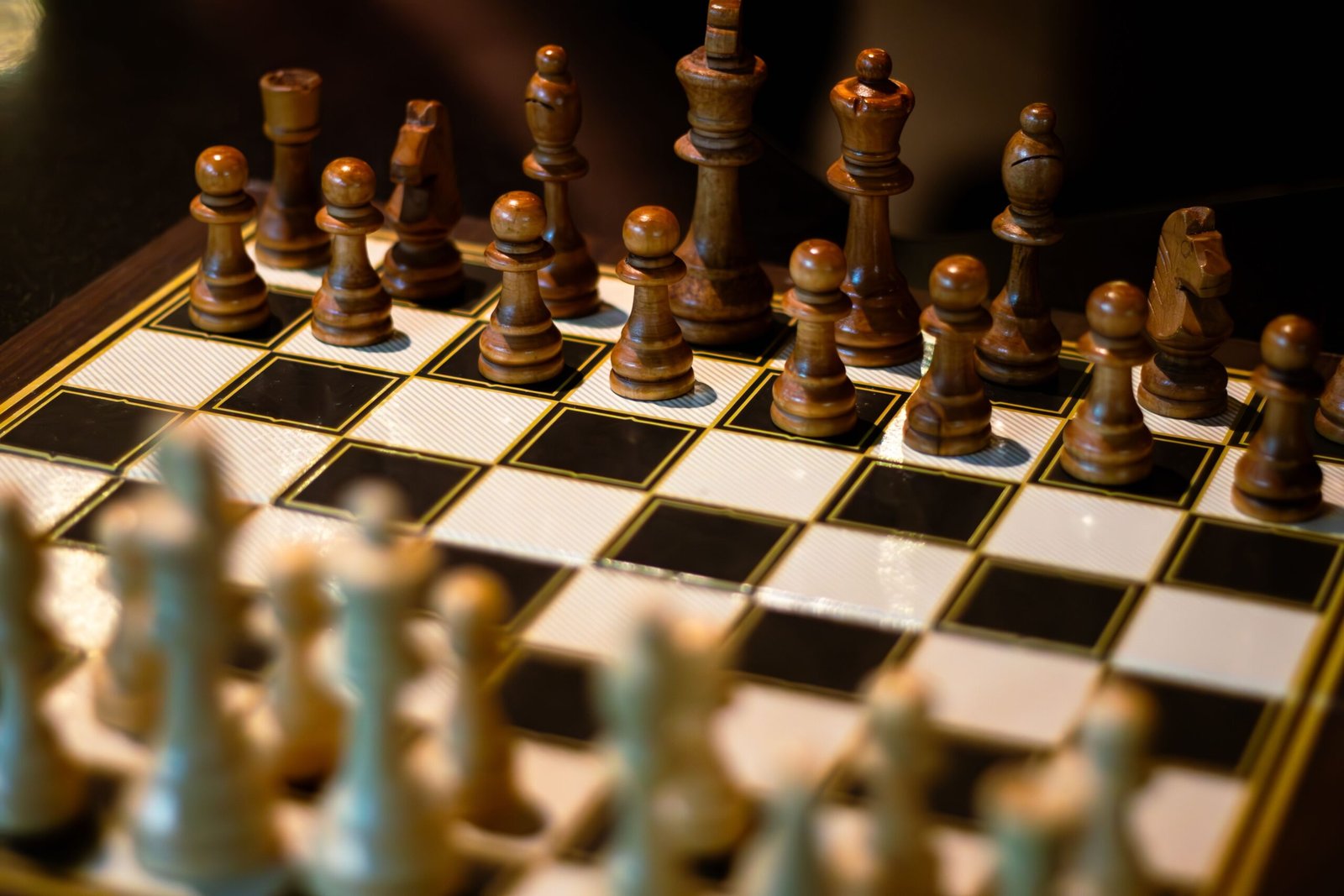
Chess, cards, backgammon, anything across a table from another person, does a second thing that solitary puzzles cannot. It is an hour of somebody’s company with a structure around it, which is a good deal easier for a lot of people than an hour of conversation without one.
Of everything written about keeping well over a long life, staying connected to people is the part with the least controversy attached. A board on a table is a low effort way to make that happen on a Tuesday.
It is the same reason a walk with somebody beats a walk alone for most people, which we cover in our notes on building a daily walking habit.
⭐ Where to Put the Hour
Like anything else, this survives if it has a place and dies if it does not.
The slot that works for most households is after dinner and before the television goes on, because that is precisely when the evening is decided. Once the screen is on, nothing else happens.
Leave the book or the board out rather than putting it away. A puzzle book in a drawer is an intention. One on the kitchen table gets picked up while the kettle boils, which is how most of these actually get used.
Twenty minutes counts. The hour is not the target, and treating it as one turns a pleasant thing into another item on a list, which is the opposite of what an evening is for.
⭐ What Not to Spend Money On
An honest list, given that the old version of this page was a shopping list.
Subscription brain training programmes. They cost more than a shelf of books, they are the exact product the transfer research was about, and the streak mechanics work against the calm the evening was supposed to have.
Expensive puzzle boxes and collector sets, at least at first. Buy the twelve dollar book, find out whether you like the format, and upgrade later if you do. Most people discover they prefer a different puzzle entirely.
And anything sold with a promise about your memory attached. That promise is the part this page spent its first section declining to repeat.
⭐ A Sensible Way to Start
One book, chosen by format rather than by difficulty, left somewhere visible for a fortnight.
If you pick it up without deciding to, that is your format. If it sits there untouched for two weeks, that is also a clear answer and the book cost twelve dollars, which is the cheapest experiment on this whole site.
Then, if it works, add one thing you play with another person, because that is where the version with real value sits.
Everything else is decoration, and the time you get back from the evening is worth more than any of it, which is a point we make at more length in our notes on where the hours in a day actually go.
⭐ Best Sellers
Top Products and Picks
Two books and a board, which is the cheapest set on this site. A library card and a pack of cards you already own would also do the job.
The twelve dollar experiment
Tricky Logic Puzzles for Adults, 130 Puzzles
Logic grid puzzles, which are the format most likely to absorb somebody who finds sudoku dull and crosswords frustrating. Enough of them that a fortnight’s trial costs nothing much.
Check price on AmazonIf the format you want is numbers
Brain Games Large Print Sudoku Puzzles
Large print, which sounds like a detail and is the reason a book gets used in the evening under a lamp rather than abandoned. Rated 4.8 across more than four thousand ratings, the highest of anything in this group.
Check price on AmazonFor the version played with somebody
FREYBLI Magnetic Wooden Chess Board Set
Magnetic and folding, so it can be left set up on a side table and moved without losing the game, which is what decides whether it gets used twice. Under three hundred ratings, flagged, and the whole chess category on Amazon.ca reads the same way. Ships from Amazon.
Check price on Amazon⭐ Final Thoughts
It would be easy to write this page the other way round and tell you that a crossword a day keeps something at bay. Plenty of pages do, and the promise is the reason people buy the books.
The truer version is smaller and, we think, more appealing. This is a pleasant way to spend an evening hour that would otherwise have gone somewhere you did not enjoy, and it has a clear end, which almost nothing on a phone does.
That is reason enough. Buy one book, leave it on the table, and see whether you pick it up. If you do, the hour is already better spent than it was.
⭐ Additional Resources
The Public Health Agency of Canada’s overview of being physically active for your health is worth reading alongside this page, since movement has considerably better evidence behind it than puzzles do.
The same department publishes a short sheet of practical activity tips for adults, including reducing time spent sitting, which is the other half of the evening described here.
The rest of the wellness and organic living section is equally blunt about which of its own suggestions are supported and which are simply pleasant.