
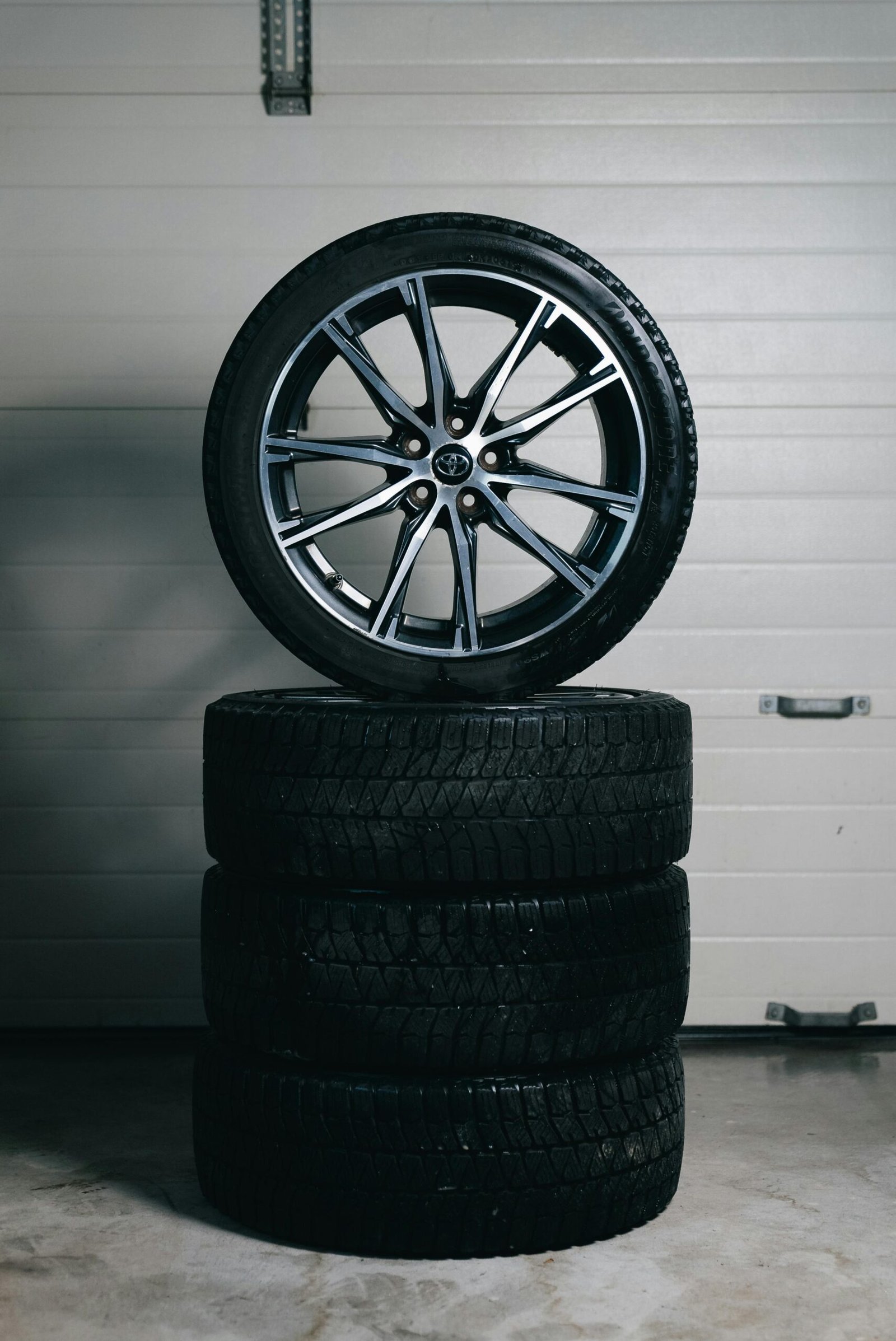
Tyre Maintenance and Alloy Wheels, After 20 Canadian Winters In
As an Amazon Associate I earn from qualifying purchases. Some links in this post go to Amazon and may earn me a small commission at no extra cost to you.
Last Updated on September 27, 2026 by Smarteryouu
⭐ Tyre Maintenance and Alloy Wheels After 20 Canadian Winters
Every car I have owned has run alloy rims, and I have never taken the cheap option on rubber. That combination, across more than twenty years of Canadian driving, has taught me which parts of tyre maintenance genuinely change how a car behaves and which parts are advice people repeat without knowing why. The short version is that pressure and the right seasonal set account for most of it, and everything else is worth doing but will not rescue a car running the wrong tyres at the wrong pressure. What follows covers choosing between the four categories, why alloys have been worth it every time, balancing, alignment, rotation, pressure, and where I would actually buy in Canada.

⭐Choosing Between Summer, Winter, All Season and All Weather
Tyres decide braking distance, fuel economy, comfort and safety, and that matters more here than almost anywhere, because the conditions swing so far across a single year. There are four categories worth understanding properly.
Summer tyres are built for warm dry roads and generally work best above roughly seven degrees. Better grip on dry pavement, shorter stopping distances, sharper steering. Below that temperature the compound hardens and they stop doing what they are for.
Winter tyres are close to essential for a real Ontario winter or anything like it. The compound stays soft when it is cold, and that softness is the entire mechanism behind their traction on snow and ice. It is not the tread pattern doing most of the work, which is the thing most people get wrong about them.
All seasons are a compromise and should be treated as one. Reasonable in a mild climate, or for someone who genuinely will not manage two sets. They are not a substitute for proper winter tyres in harsh conditions and no amount of marketing changes that.
All weather tyres are the newer category and are worth knowing about. They carry the winter rating but run year round, which makes them a sensible answer for urban driving and lighter winters. If you are choosing one set and you do not face severe weather regularly, this is the category to look at first.
What you drive changes this less than people assume. The extra weight of a battery pack does not remove the need for a winter set, and in some ways makes it more relevant, since the torque arrives instantly. I have run proper winters on everything, including the electric and hybrid vehicles we have owned, and the traction difference was the same on all of them.
⭐ Why Every Car I Have Owned Has Had Alloy Rims
Having lived with them consistently, I would not go back to steel.
They are lighter, which helps fuel economy in a small but real way. They shed heat better, which matters for brakes on a long descent or in heavy traffic. Handling is noticeably better because there is less unsprung weight for the suspension to control. They resist corrosion where steel rusts. And they look finished rather than functional, which is not nothing on a car you paid for.
The one honest caveat is that a kerbed alloy is more annoying to repair than a dented steel wheel, and a cracked one is a write off. Twenty years in, that has not happened to me, but it is the trade you are making.
They also want cleaning more often than steel does, because brake dust bakes onto the finish and eventually etches it. Doing the wheels separately, with their own bucket and their own cloths, is the habit that keeps a set looking right after five years. Our walkthrough of a full wash in order covers where wheels fit in the sequence and why they never go first.
⭐ Running Two Full Sets, and Why It Pays for Itself
A dedicated winter set and a dedicated summer set, both on their own alloy rims, is the setup I have used for years and the one I would recommend to anyone facing real seasonal changes.
The changeover becomes a twenty minute job, because you are swapping complete wheel assemblies rather than having tyres pulled off rims and remounted twice a year. That alone is worth it in a busy November when every shop has a two week wait.
It also means the bead is not being worked twice a year, which is genuinely better for the tyres over their life. Balancing tends to hold, because you are not disturbing it. And you remove the risk of a rim being scratched during a rushed seasonal swap, which is easy to dismiss until it has happened to you once.
The second set of rims costs money upfront. Spread across the years you keep the car, and set against the labour saved and the longer tyre life, it has come out ahead for me every time. Tyres kept this way have lasted noticeably longer, and winter sets in particular have held up across several full seasons.
⭐ Balancing, Which I Never Skip
Balancing distributes the weight of the wheel and tyre evenly so it spins true. The signs it is needed are easy to recognise once you know them. Vibration through the steering wheel, uneven wear appearing on the tread, and noise that shows up specifically at highway speed and not around town.
Done properly you get a smoother ride, longer tyre life, marginally better economy and less work for the suspension over years.
As a rough guide, every ten to twelve thousand kilometres, whenever new tyres go on, and whenever you switch between sets. That last one is the important one and it is the one people skip to save twenty minutes.
⭐ Alignment, and the Signs That Tell You It Is Out
Alignment sets the angles of the wheels to the manufacturer’s specification. Four signs are worth watching for. The car pulling to one side on a flat road. Wear appearing unevenly across the width of a tyre. A steering wheel sitting crooked while you drive straight. And a noticeable drop in fuel economy with no other explanation.
Correct alignment extends tyre life, improves handling, genuinely improves safety and takes stress off suspension components.
Worth checking after a serious pothole, after any suspension work, roughly every twelve to eighteen months as routine, and whenever new tyres go on. Potholes are the common cause here and the damage is done in a second, which is why the yearly check catches things you had forgotten about.
⭐ Rotation, and Why the Pattern Matters
Rotating keeps wear even across all four, which matters more than people think, because uneven wear changes how the car handles and shortens the life of the set rather than of one tyre.
Every eight to ten thousand kilometres works, and the easiest way to remember is to tie it to the oil change so it never gets forgotten. Some warranties actually require documented rotation to stay valid, which is worth checking in your own paperwork rather than assuming either way.
The pattern depends on your drivetrain. Front to back, a cross pattern, or something specific for all wheel drive. This is genuinely worth leaving to the shop rather than guessing, because the wrong pattern works against you and directional tyres cannot be swapped side to side at all. Our beginner guide to car maintenance sets out a simple schedule that folds this in with everything else.
⭐ How Often Should You Check Tyre Pressure
Roughly every two weeks, before any long trip, and after any significant temperature swing. That covers it.
This is the easiest thing on the whole list to get right and the one I see skipped most. Correct pressure helps prevent blowouts, shortens braking distance, extends tyre life and saves fuel. Four real benefits from a job that takes five minutes with your own gauge.
The temperature point is the one worth emphasising here. Pressure moves with the weather more than people expect, which is why the warning light tends to appear on the first properly cold morning of the year in a car that was fine the week before. That light is usually telling you the truth.
The correct number is on the sticker inside the driver’s door or in the manual. Never the number moulded into the tyre itself. That figure is the maximum the tyre can take, not what your car wants, and inflating to it is a common and genuinely unhelpful mistake.
Check them cold, before driving, because a few kilometres will already have warmed them and raised the reading. If you keep a gauge and a small inflator in the car, as covered in our automobile essentials section, the whole thing stops depending on whether the air pump at the station is working.
⭐ Where I Would Actually Buy in Canada
Buying from a proper retailer gets you fresh stock, a real manufacturer warranty and installation done correctly. Those three things are where the corners get cut on a cheap deal.
A few worth knowing, and it is worth checking their current terms directly since these change. Costco tends to price well and often bundles balancing and rotation. Kal Tire has a strong reputation across the country specifically for tyres. Canadian Tire carries a wide selection with regular seasonal sales. Tire Rack is a solid online option if you are comfortable ordering and arranging fitting yourself. A dealership makes sense if you specifically want the original equipment tyres backed by the manufacturer, which is more relevant on a newer car.
Going through an authorised seller also protects you from counterfeit stock, tyres that have been sitting in a warehouse for years, absent warranty coverage and incorrect load or speed ratings. Those are real risks on an unverified deal rather than theoretical ones. Authorised sellers also dispose of your old set properly, which is worth more than most people account for.
One last thing. Check the date code on the sidewall before you accept a set. It is four digits giving the week and year of manufacture. Rubber ages whether or not it is driven on, and a bargain on tyres made four years ago is not a bargain. If you are keeping a second set through the off season, store them somewhere cool and out of sunlight, which for most people means a corner of the garage set aside for it rather than a sunny side of the shed.
⭐ Best Sellers
Top Products and Picks
Three cheap tools that cover everything you can sensibly do yourself between shop visits. Ratings and review counts were read from each listing on the day this was written, and they move.
So you stop relying on the station pump
Lamicall Portable Tire Inflator
Cordless, lives in the boot, and means a low tyre on a cold morning is a five minute job in your own driveway. Around forty dollars, rated 4.4 from 5,852 reviews. Charge it occasionally or you will find it flat on the morning you need it.
Check price on AmazonMore accurate than the inflator’s own display
ETENWOLF T300 Digital Tire Pressure Gauge
Sixteen dollars, and consistently more accurate than the built in gauges on cheap inflators, which is the reason to own both. Rated 4.6 from 8,882 reviews. Keep it in the glovebox and check the tyres cold.
Check price on AmazonFor deciding whether a set has one winter left
GODESON 88702 Colour Coded Tread Depth Gauge
Eight dollars and it answers the only question that matters at the end of a season. Colour coded so you do not have to interpret a number. Rated 4.6 from 16,693 reviews. More reliable than the coin trick and it costs about the same as lunch.
Check price on Amazon⭐ Final Thoughts
Getting this right makes a bigger difference to how a car feels than most of the things people spend money on instead. I have seen it consistently across every vehicle I have owned, all of them on alloys and none of them on bargain rubber.
When it is all dialled in the car is quieter, smoother and more settled at speed, and it stops and turns better in exactly the conditions where that counts. A wet exit ramp in November is not the moment to discover the set is four years old and underinflated.
If you take one thing from all of this, make it the pressure check. Five minutes a fortnight, with your own gauge, on cold tyres. It costs nothing, it is the item on this list with the best return, and it is the one almost everybody skips.
The rest is easy to underrate until you have felt the difference. Then it becomes hard to go back.
⭐ Additional Resources
Transport Canada publishes a plain guide to tyres and tyre safety, covering ratings, ageing and the winter tyre marking, which is the neutral reference worth reading before a purchase.