
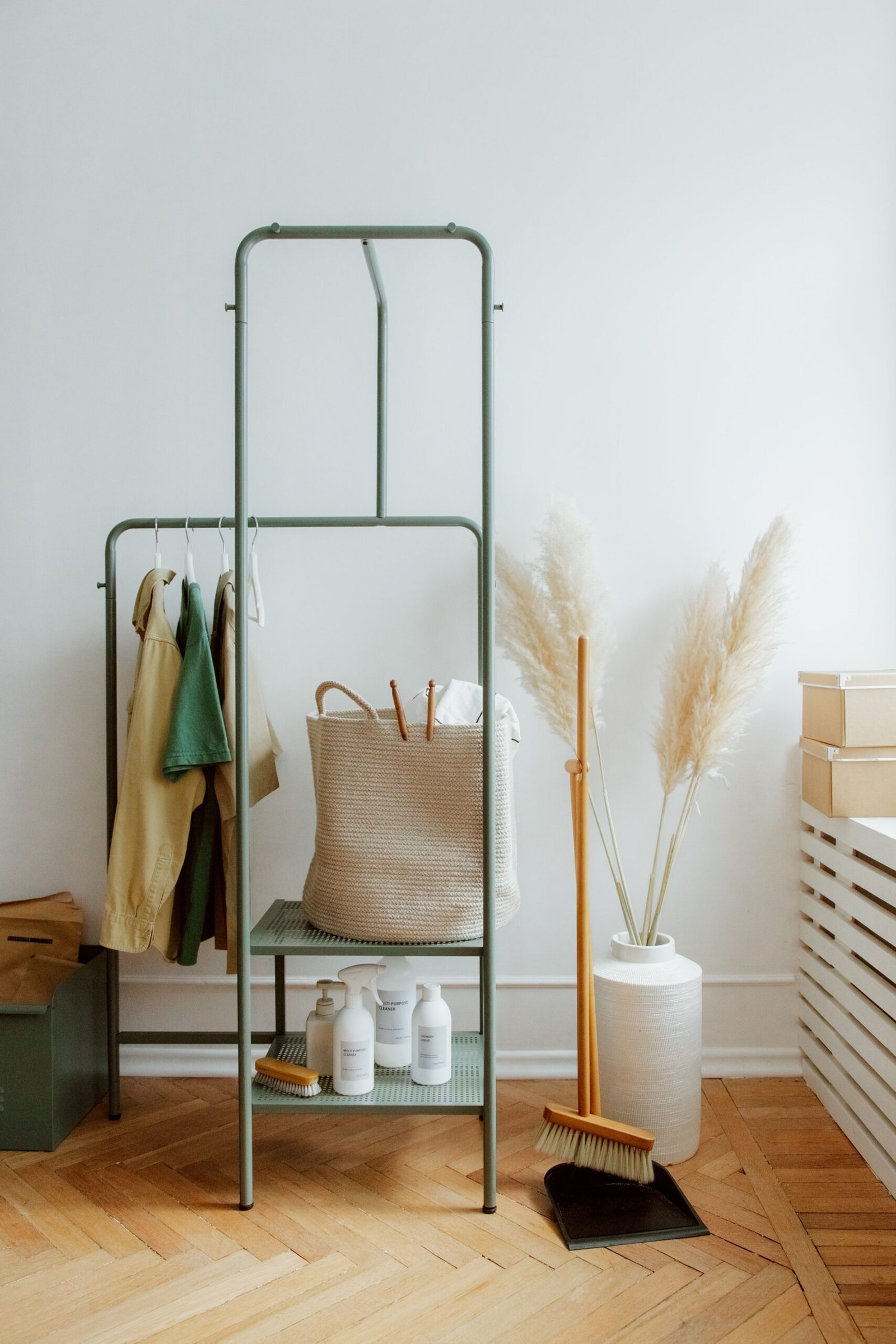
Home Organization Ideas for the Rooms Nobody Tackles
As an Amazon Associate I earn from qualifying purchases. Some links in this post go to Amazon and may earn me a small commission at no extra cost to you.
Last Updated on September 24, 2026 by Smarteryouu
⭐ Home Organization Ideas for the Rooms Nobody Tackles
Most home organization ideas are written about the kitchen and the living room, which are the two rooms people are least likely to need help with. They are used constantly, they are visible to guests, and they therefore get sorted out without anybody writing a guide about it.
The rooms that quietly cost you time are elsewhere. The bathroom cabinet where four half used things are hiding the one you want. The closet you can see into and still cannot find anything in. The desk with a nest of cables under it that nobody has looked at since the router arrived.
Each of those fails for a different reason, which is why one universal system does not fix them. What follows is what actually goes wrong in each, and the smallest change that sorts it.
This page contains affiliate links. If you buy through one of them we may earn a small commission at no extra cost to you.

⭐ The Bathroom Fails Because Everything Is Small
A bathroom is the only room where almost every object is under six inches tall, which means anything at the back is invisible and anything invisible gets bought again.
The usual result is four opened bottles of the same thing, a cabinet where the front row hides the back row, and a drawer of small items that has to be excavated rather than searched.
Two changes fix most of it. Group by when you use something rather than by what it is, so the morning things live together and the once a month things go on the high shelf. And use shallow containers rather than deep ones, because depth is where a bathroom loses things. Something you can pull out and look into beats something you have to reach behind.
While the cabinet is empty, check what is actually under the sink. That is usually where the cleaning products live and it is worth knowing what half of them are and whether you need them.
⭐ A Closet Needs a System, Not More Space
People ask for a bigger closet when what they have is a closet without an order to it.
The first thing to fix is the hangers, which sounds trivial and is the largest single gain available. Mismatched plastic and wire hangers waste several inches across a rail and hold clothes at different heights, which is most of why a full closet looks chaotic. Switching to one thin type recovers real space and costs less than thirty dollars.
After that, arrange by type and then by how often you wear it, with the daily things at the easy end. Not by colour, which looks wonderful for a week and is unrelated to how anybody gets dressed.
The off season half goes elsewhere. A closet holding two seasons at once is doing twice the work it needs to, and rotating twice a year takes twenty minutes.
⭐ A Desk Needs Less Storage, Not More
This is the one place where the usual advice is backwards. Adding storage to a home office reliably makes it worse.
A desk with six drawers fills all six. A desk with one drawer forces a decision about what belongs within arm’s reach, and the honest answer for most people is about five things. Everything else can live in another room entirely and be fetched on the rare occasion it is needed.
Paper is the other half. Most of what accumulates on a desk is paper that needed a decision and did not get one. A single tray for anything undecided, emptied weekly, turns a permanent pile into a ten minute Friday task.
Restraint is the whole principle here, and it is the opposite of what the organising aisle sells.
⭐ The Cables Under the Desk
Worth its own section because it is the single most avoided job in a house and one of the quickest.
The reason it never gets done is that it looks like it requires unplugging everything, and it does not. Unplug one cable, label it with tape and a pen, route it, plug it back in. Repeat. Twenty minutes, no downtime, and you can stop at any point.
Getting the power bar and the excess cable off the floor is most of the visible improvement, and it also means the floor can be cleaned without a negotiation.
Label the plugs while you are down there. Future you, trying to work out which of seven identical black bricks belongs to the monitor, will be grateful.
⭐ Where the Honest Answer Stops
Three things worth saying plainly about this whole subject.
Buying organisers before decluttering is the most common and most expensive mistake. Containers bought for a space you have not emptied are bought for a guess, and half of them will be the wrong size. Empty first, decide what stays, measure, then buy.
A tidy house is not a claim about your mind. People often feel better in an ordered space and that is worth respecting as a preference, but the confident statements linking clutter to mental health go well past what is actually known, and we are not going to repeat them to sell storage boxes.
And matching containers are a preference, not a function. They photograph beautifully and they do not make anything easier to find. If they make you happy, buy them. Just do not expect them to do a job.
⭐ The Awkward Spaces
Every home has three or four spaces that are the wrong shape for anything. Under the stairs. The gap beside the fridge. The cupboard with the boiler in it. The corner of a bedroom that is too small for furniture and too big to ignore.
The mistake is trying to make them general purpose. An awkward space works when it has exactly one job. All the shoes. All the bags for life. The tools. Give it a single category and it becomes useful; give it miscellaneous and it becomes the place things go to disappear.
Vertical is usually the answer in a narrow space, and stackable beats fixed shelving because the requirement will change.
And whatever comes out of these spaces mostly should not come back in. Some of it is genuinely rubbish, a lot of it is donatable, and a surprising amount is packaging that arrived with something and never left, which is a waste question as much as a storage one.
⭐ Keeping It Is Harder Than Doing It
Anybody can organise a room on a Saturday. Six weeks later is the real test, and most systems fail it.
They fail for one reason. Putting something away is harder than putting it down. If the lid has to come off, the drawer has to be opened and something moved aside, the object goes on the side instead and the system quietly dies.
So design for the laziest version of yourself. Open basket rather than lidded box for anything daily. The hook where the coat already lands. One movement to put something away, not three.
Then add a five minute reset at a fixed time, which is the maintenance half and is covered properly in our notes on where the time in a day actually goes.
⭐ If You Only Have an Hour
Do the bathroom drawer. It is the smallest job on this page, it takes about twenty minutes, and the result is visible every single morning.
With the second twenty minutes, do the hangers in one section of the closet rather than the whole thing. The recovered space is obvious immediately and it makes the rest of the closet look wrong, which is the motivation you need for next weekend.
With the last twenty, get under the desk. Nobody ever regrets this one.
Then stop. The rest of the house will still be there, and doing one room properly is the method we would use on any of it.
⭐ Best Sellers
Top Products and Picks
There is almost no price range here, which is unusual. Organising is one of the few areas where the things that work are all cheap. Empty the space before buying any of them.
The closet, and the biggest single gain
Utopia Home Velvet Hangers, 50 Pack
Thin, non slip, and all the same, which is the entire point. Fifty of them recovers real rail space in an average closet and costs less than a takeaway. Nearly sixty thousand ratings. Ships from Amazon.
Check price on AmazonThe twenty minute job under the desk
Under Desk Cable Management Tray, No Drill
Steel, and it clamps rather than screwing into the desk, which matters if the desk is not yours or you would rather not drill it. Gets the power bar and the slack off the floor, which is most of the improvement.
Check price on AmazonFor the bathroom, once it is empty
Vtopmart Stackable Storage Drawers, Set of 5
Drawers rather than bins, which is the distinction the bathroom section is making. You pull one out and look into it instead of reaching behind the front row. Stackable, so the arrangement can change when the requirement does.
Check price on Amazon⭐ Final Thoughts
The rooms in this piece have something in common. None of them are the rooms people photograph, and all of them are rooms you use before eight in the morning.
That is the whole argument for starting there. A bathroom drawer that works saves you two minutes a day forever, which quietly outweighs a living room that looks better in a photograph you will take once.
So empty one small space this week, decide what genuinely goes back in, and only then buy anything. The order matters more than the products, and the products are cheap anyway.
⭐ Additional Resources
Health Canada’s page on using household chemicals safely is worth five minutes before reorganising anything under a sink, and it covers storage and what should not be kept together.
Environment and Climate Change Canada publishes an overview of plastic waste and pollution reduction, which is the useful reference for deciding where the contents of a cleared cupboard should actually go.
The rest of the smart living section covers the other rooms in the same order of priority, which is to say the ones you use before breakfast come first.