
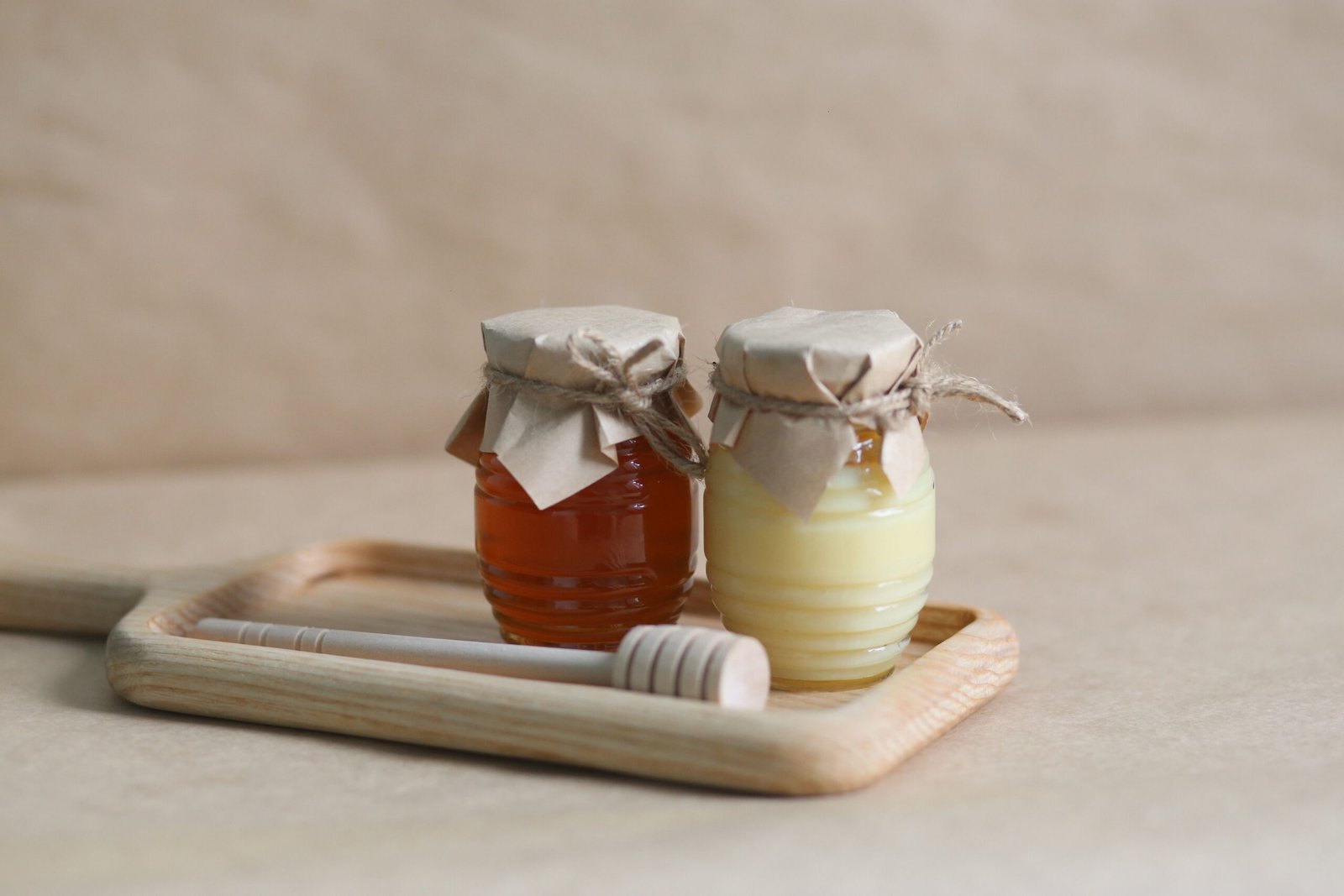
Manuka Honey vs Regular Honey: Is It Worth the Price?
As an Amazon Associate I earn from qualifying purchases. Some links in this post go to Amazon and may earn me a small commission at no extra cost to you.
Last Updated on September 24, 2026 by Smarteryouu
⭐ Manuka Honey vs Regular Honey: Is It Worth the Price?
The manuka honey vs regular honey question usually gets answered with a list of differences and no verdict. Origin, colour, texture, ratings, a table, and then the reader is left exactly where they started, standing in a shop holding two jars.
So here is the verdict first. A small jar of certified manuka costs roughly what a full kilogram of good Canadian raw honey costs. You are paying about four times as much per spoonful, and what that premium buys you is a genuinely distinctive honey with a tested certification behind it. What it does not buy you is anything demonstrated to happen inside your body.
Whether that is a good deal depends entirely on which of those two things you thought you were buying. The rest of this page is about telling them apart, reading the competing numbers on the labels, and working out which jar actually belongs in your cupboard.
This page contains affiliate links. If you buy through one of them we may earn a small commission at no extra cost to you.

⭐ The Price Gap, in Actual Numbers
Comparisons of this kind usually stay vague about money, which conveniently hides the size of the gap. So, concretely: a 250 gram jar of entry grade certified manuka and a one kilogram tub of Canadian raw honey currently sit within a few dollars of each other.
Four times the honey for the same money. Put another way, every spoonful of manuka costs roughly what four spoonfuls of very good local honey cost, and the gap widens sharply if you move up the grades.
That is not an argument against buying it. Plenty of food is expensive because it is scarce and distinctive, and nobody demands that good olive oil justify itself against the supermarket own brand on a cost per millilitre basis. It is an argument for knowing the number before you decide, rather than after.
It also reframes the question usefully. The real choice is rarely manuka against nothing. It is one jar of manuka against four jars of something else, or against a month of better coffee, or against whatever else that money was going to do.
⭐ What Actually Makes Manuka Different
It comes from bees working the manuka bush, which grows in New Zealand, and the resulting honey contains a compound called methylglyoxal in far higher concentrations than ordinary honey does.
That compound is what the numbers on the jar are measuring, and it is also why the honey tastes the way it does. Manuka is darker, thicker and noticeably more savoury than a clover or wildflower honey. Some people love it. A fair number find it medicinal and slightly bitter, and are surprised, having expected an upgraded version of the honey they already like.
Worth knowing before you spend the money: it is a different honey, not a better one. If you already know you prefer a light floral honey, a premium jar of something dark and strong is not going to convert you, and it is an expensive way to find that out.
The full detail of how the grading works sits in our guide to what the UMF and MGO numbers mean, which is the place to start if you are buying for the first time.
⭐ Do the Numbers on the Jar Mean the Same Thing?
No, and this is the single most useful thing on this page. There are competing rating systems on manuka jars, they measure different things, and the numbers are not interchangeable. A 16 on one label and a 16 on another can mean completely unrelated things.
MGO is the most direct. It states how much methylglyoxal is in the honey, in milligrams per kilogram, so a bigger number straightforwardly means more of the compound. UMF is a certification scheme that includes that measure alongside checks on authenticity, origin and shelf stability.
Then there are proprietary systems, where a brand grades its own honey on its own scale. Wedderspoon’s KFactor is the one you will meet most often in Canada. It is a real system and the honey is real manuka, but the number is not measuring the same thing as a UMF number, so reading KFactor 16 as roughly UMF 16 is simply a mistake.
The practical rule is short. Compare like with like, or do not compare at all. If two jars use different systems, the only honest thing to say is that they are two different products, and the one with the larger printed number is not thereby the stronger one.
⭐ Where the Honest Answer Stops
Every comparison of these two honeys eventually reaches the part where manuka is said to do more for you, and that is where the evidence runs out.
There is laboratory work on what methylglyoxal does in controlled conditions. There is not good evidence that eating manuka honey produces health outcomes ordinary honey does not. Those are different claims, and the marketing depends on the first quietly standing in for the second.
If you want to get better at spotting that substitution, and it turns up across this entire category, the National Institutes of Health runs a free plain language series called Know the Science that is largely about this exact move.
So on health grounds the comparison is a draw, because neither honey has much to show. Which means the decision comes down to taste, budget and whether you value the certification, and those are all things you can actually judge for yourself.
⭐ What Ordinary Honey Is Genuinely Good At
Being honey, cheaply, in useful quantities, and often from a producer near enough to name.
Raw unpasteurized honey from a Canadian beekeeper is a genuinely good product that gets overlooked because it has no story attached and no number on the jar. It tastes of where it came from, it varies by season, and you can use it freely rather than measuring it out like something precious.
That last part matters more than it sounds. An expensive jar changes how you behave around it. People ration manuka, save it for when they feel unwell, and find it crystallised at the back of a cupboard a year later. A kilo of local honey gets used, which is the only way any food does you any good at all.
For cooking and baking the case is even clearer. Heat and sugar flatten the things that make manuka distinctive, so putting a premium honey into a recipe is close to pouring it away. That principle runs through a lot of the pantry guide as well.
⭐ How Do You Know It Is Really Manuka?
Because there is a legal definition behind it, which is more than most premium foods can say. New Zealand Food Safety introduced a science based definition in 2018 after a three year research programme, and every batch exported as manuka has to meet it.
The New Zealand Ministry for Primary Industries explains the testing and what sits behind it on its page about ensuring manuka honey is authentic. A review completed in 2023 concluded the definition did not need changing, which is a reasonable sign the thing is holding up.
That is genuinely reassuring, and it is the strongest argument in manuka’s favour. Unlike most of this category, somebody official is checking. When you buy a certified jar you are getting what the label says, which is not something you can assume about a bottle marked “premium” or “artisan”.
Practically: buy a jar with a tested number and a named scheme on the label, and buy from a seller you can identify. Skip anything whose only claim to being manuka is the word manuka.
⭐ Which One Belongs in Your Cupboard?
Both, if you can stretch to it, and ordinary honey if you cannot. They are not really competing for the same job, which is why choosing between them feels awkward.
Local raw honey is the everyday jar. It goes in porridge, in baking, in tea, on toast, in quantity, without anybody thinking about it. That is the one that should always be in the house.
Manuka is the occasional jar, bought because you like the taste of it, eaten off a spoon or on something plain where you can actually notice it. Treated that way, at the entry grade, it is a reasonable small luxury rather than a health purchase that quietly failed to deliver.
What is not worth doing is buying a high grade jar for a reason nobody can substantiate and then feeling obliged to finish it. That is how a nice thing turns into a chore, and the same logic applies to half the shelf, which is what the piece on where the organic switch is worth it works through.
⭐ Best Sellers
Top Products and Picks
Three honeys at roughly the same price. One of them is four times the size of the others, which is the comparison this whole page is about.
The everyday jar, and the better value
Dutchman’s Gold Raw Canadian Honey, 1kg
Unpasteurized, Canadian, and a full kilogram for roughly what a small manuka jar costs. This is the one to cook with, bake with and use without thinking. If you only buy one honey, buy this.
Check price on AmazonIf you want certified manuka
New Zealand Honey Co. UMF 10+, 250g
UMF certified at the grade where the price still makes sense. Buy it as a distinctive honey you enjoy off a spoon, not as a health purchase, and it is a fair small luxury.
Check price on AmazonA different rating system, read it carefully
Wedderspoon Raw Manuka, KFactor 16, 250g
Real manuka, widely stocked, shipped and sold by Amazon. KFactor is Wedderspoon’s own scale and it does not mean the same thing as UMF, so do not read 16 here as comparable to a UMF 16 elsewhere.
Check price on Amazon⭐ Final Thoughts
The comparison only feels difficult because it is usually framed as a contest between a special honey and an ordinary one. Once you drop that framing it resolves quickly.
One of them is a staple you should always have and should use freely. The other is a distinctive, well regulated, fairly expensive food that is pleasant to have around if you like how it tastes. Neither is going to do anything for you that the other will not, and anybody telling you otherwise has something to sell.
Buy the big jar of local honey. Add the small jar of manuka if it appeals. Then stop reading about honey and go and eat some, which is more than most of the internet will ever suggest.
⭐ Additional Resources
New Zealand’s Ministry for Primary Industries explains how manuka honey authenticity is tested, including the science based definition introduced in 2018 and the 2023 review that confirmed it. It is the regulator rather than the industry, which is why it is worth reading.
For judging health claims on food labels generally, the National Center for Complementary and Integrative Health publishes Know the Science, which is free and written for people without a science background.
More on stocking a cupboard sensibly sits in organic products and across the wellness and organic living section.