
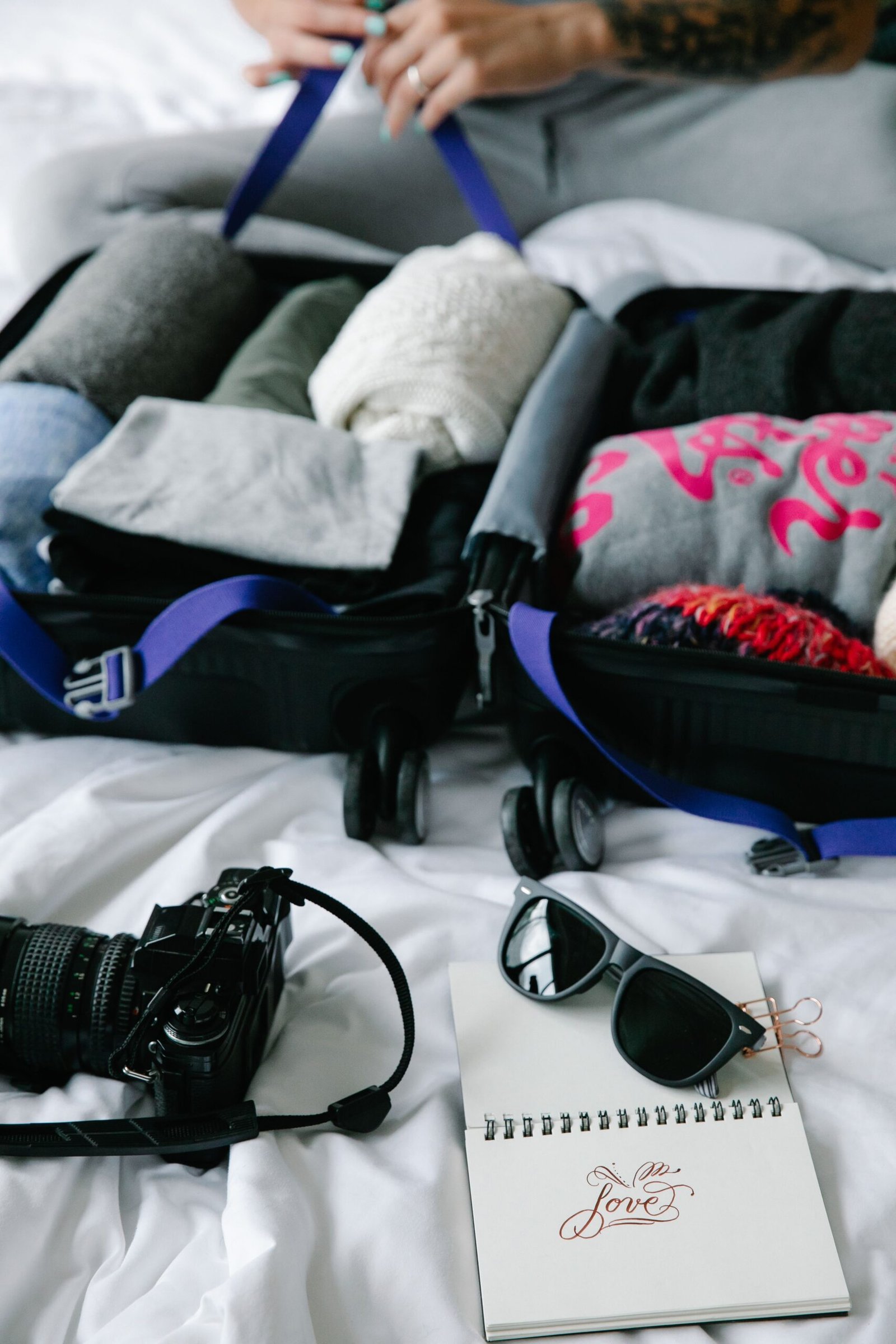
Carry On Essentials: What to Pack in the Bag You Keep With You
As an Amazon Associate I earn from qualifying purchases. Some links in this post go to Amazon and may earn me a small commission at no extra cost to you.
Last Updated on September 13, 2026 by Smarteryouu
⭐ Carry On Essentials: What to Pack in the Bag You Keep With You
Some links in this post are affiliate links. If you buy through one, this site may earn a small commission at no extra cost to you.
Most packing advice treats a suitcase as one problem. It is really two. There is the bag that goes into the hold and disappears for a few hours, and there is the bag that never leaves your shoulder. Only one of those is guaranteed to be with you when you land.
Carry on essentials are the things that belong in the second bag. Not the things you want on the plane, though there is overlap. The things that would genuinely make the first day or two difficult if they were sitting in a container somewhere else.
This is a short list, and it stays short on purpose. A heavy shoulder bag is its own kind of misery on a connection, and the point of getting this right is not to carry more. It is to carry the correct few things so that the rest can go in the hold and stop being your problem.

⭐ The One Worth Buying Before a Long Flight
The one item on this list that changes how you feel when you land. It is the constant engine noise that wears you down on a long flight rather than the hours themselves, and cutting it out is the difference between arriving tired and arriving useless. Over ear rather than buds, because buds start to ache around hour four and you still have eight to go.
Check price on Amazon⭐ What Should Never Go in the Hold?
Four things, and the list genuinely stops there. Documents, medication, anything expensive enough that losing it would matter, and one change of clothes. Everything else can go in the checked bag, because everything else can be replaced within a day at almost any destination.
Documents is the obvious one and people mostly get it right. Medication is the one people get wrong, usually because it lives in a wash bag and the wash bag lives in the suitcase. If you take anything daily, it moves. Not some of it, all of it, plus a couple of extra days worth, because a delayed bag and a missed pharmacy are a bad combination in a country where you do not speak the language.
Expensive means laptops, cameras and anything with a lithium battery, which airlines increasingly want in the cabin anyway. The one change of clothes is the item people skip, and it is the one that turns a delayed bag from a crisis into an inconvenience.
None of this assumes your bag will go missing. It mostly will not. It assumes that if it does, the cost of having prepared was almost nothing.
⭐ The Connection Is Where Bags Get Lost
Direct flights rarely lose luggage. Connections do, and the tighter the connection the more likely it is, because your bag has less time to make the same transfer you are running to make.
This matters because of which trips involve connections. Flying from Canada to India or Nepal almost always means changing planes somewhere, often in Europe or the Gulf, sometimes with a tight window. Those are also the trips where a missing bag hurts most, because you are furthest from home and least able to replace things quickly.
A resort week in Mexico or Cuba is usually a direct flight, and even if the bag is late it catches up the next day. So the honest rule is that the carry on matters roughly in proportion to how many times your luggage has to change planes.
It is worth photographing your checked bag before you hand it over. If you do have to describe it at a lost luggage desk at two in the morning, a photograph is considerably easier than a description.
⭐ How Much Should You Actually Carry On?
Less than the allowance. The allowance is a maximum, not a target, and a full sized cabin bag plus a full personal item is a lot to move through an airport, lift into an overhead locker, and keep track of during a layover when you are tired.
A good working shape is one small bag that fits under the seat and holds the four essentials plus whatever you want during the flight. That bag stays at your feet, which means you never have to stand up and open a locker, and you never have to worry about it being moved three rows back when the cabin fills.
If you are flying with a larger cabin bag as well, keep the split clear. The big one holds clothes and bulk. The small one holds everything you actually need to reach. Mixing them is how people end up blocking an aisle looking for a charger.
Weight is the other thing people underestimate. A bag that feels fine in your hallway feels different after half a mile of airport.
⭐ Liquids, and Why People Still Get Caught
The liquids rule has been in place for years and it still holds up the queue at every airport, almost always for the same reason. It is not that people do not know the rule. It is that the bottle is buried somewhere in the bag and they have to unpack to find it.
Keeping liquids in one clear bag at the very top of the carry on solves the whole problem. Not in a pocket, not beside the laptop, at the top where it comes out in one movement.
The other thing worth knowing is that the rule varies more than people expect. Some airports want electronics out and some do not. Some are relaxed about a water bottle bought after security and some are not. Rules also differ on a return leg, so the airport you fly home from may run things differently from the one you left from, which catches people who assumed it would be the same.
Buy the water after security rather than before. It is the single easiest thing to get right and most people still throw a full bottle away at the scanner.
⭐ Does Charging Belong in the Small Bag?
Yes, all of it. Chargers, cables and a power bank live in the carry on, never the hold. A phone with no battery at the end of a long flight is not a minor inconvenience, because it is also your boarding pass, your map, your translation and your way of contacting whoever is collecting you.
Seat power is unreliable in a way the booking page never admits. Some aircraft have it at every seat, some have it only in certain cabins, and on plenty of long haul routes the socket at your particular seat simply does not work. Planning around it is optimistic.
A power bank removes the question entirely. It also covers the airport, where the charging points are always occupied, and the taxi at the other end. Keep it in the small bag rather than the cabin bag, because airlines require lithium batteries in the cabin and you do not want to be unpacking on a jet bridge.
Plug shape is a separate question and it belongs to the destination rather than the flight, so it is worth reading up on before a trip somewhere new. The overview on the travel essentials hub covers which adapters actually cover which regions, including the ones the word universal quietly leaves out.
⭐ What People Pack That They Never Touch
Books, mostly. A physical book in a carry on is heavy, takes real space, and competes with a screen that has films on it. People bring one because they intend to read more on holiday than they usually do, which is a lovely idea and almost never survives the flight.
Travel pillows are the other one, and they split people cleanly. If you can sleep sitting upright, a pillow is one of the best things in the bag. If you cannot, it is a large soft object you carry around an airport for no reason. Be honest about which you are before buying one.
Snacks are worth bringing, but far fewer than people pack. One or two things that will not melt or leak covers the gap between a missed meal service and landing. A full bag of food is a customs problem waiting to happen, since fresh items are restricted in most countries and cheerfully confiscated.
If the bag is chaotic rather than overfull, that is a different problem, and it is the same one that makes a kitchen drawer unusable. The thinking in our home storage and organisation guides applies directly, because it is all about giving things one place to live so you stop searching.
⭐ Does the Destination Change the Bag?
Less than you would think for the carry on, and a great deal for the checked bag. The four essentials stay the same whether you are landing in Lisbon or Kathmandu, because documents and medication do not care where you are going.
What changes is how confident you can be about replacing things. In Portugal or Italy, a forgotten charger is a ten minute errand. In a smaller town in Nepal, it may not be an errand at all. The further you get from easy shops, the more the carry on earns its place, and the more worthwhile it is to spend a minute checking it before you leave.
Cash is the one genuinely destination dependent item. Some places run almost entirely on cards now, and others still need small notes for taxis, tips and anywhere that has no terminal. A little local currency in the small bag saves a bad half hour on arrival.
Trips where you carry everything and replace nothing are a different discipline again, and the camping guides go into that side properly.
⭐ Best Sellers
Top Products and Picks
Three things that earn their place in the small bag, in the order most people buy them.
Worth it if your passport currently travels loose in a bag pocket. Everything that gets asked for at a border sits in one place, which means one thing to find rather than three. Handy on trips with a connection, where you show documents several times in a day and a folder beats a search.
Check price on AmazonBuy this before you next fly long haul. Seat power is unreliable, and a phone that dies before landing takes your boarding pass, your map and your way of reaching whoever is collecting you with it. Small enough to live in the bag permanently rather than being packed each time, which is the reason it actually gets used.
Check price on AmazonOne goes in the checked bag. It will not stop a bag going astray, but it does mean you know where yours is rather than waiting for someone at a desk to tell you. That is the whole value, and it matters most on the trips that change planes, which is where bags actually get separated from people. Four covers a couple traveling together with spares.
Check price on Amazon⭐ Final Thoughts
The small bag is the part of packing that rewards attention, and it is the part most people rush at the last minute. Ten minutes the night before, spent deciding what genuinely has to stay with you, tends to be worth more than an hour agonising over the suitcase.
What you are really doing is buying yourself calm. A bag that holds the right few things means a delay is annoying rather than serious, and a lost suitcase is a phone call rather than a ruined first day. That is a quiet kind of confidence, and it makes the whole trip feel more relaxed from the moment you leave the house.
It also gets easier. After a few trips you stop deciding and start knowing, and the bag more or less packs itself. More things worth carrying are collected on the best sellers page, where the items that keep earning their space end up.