
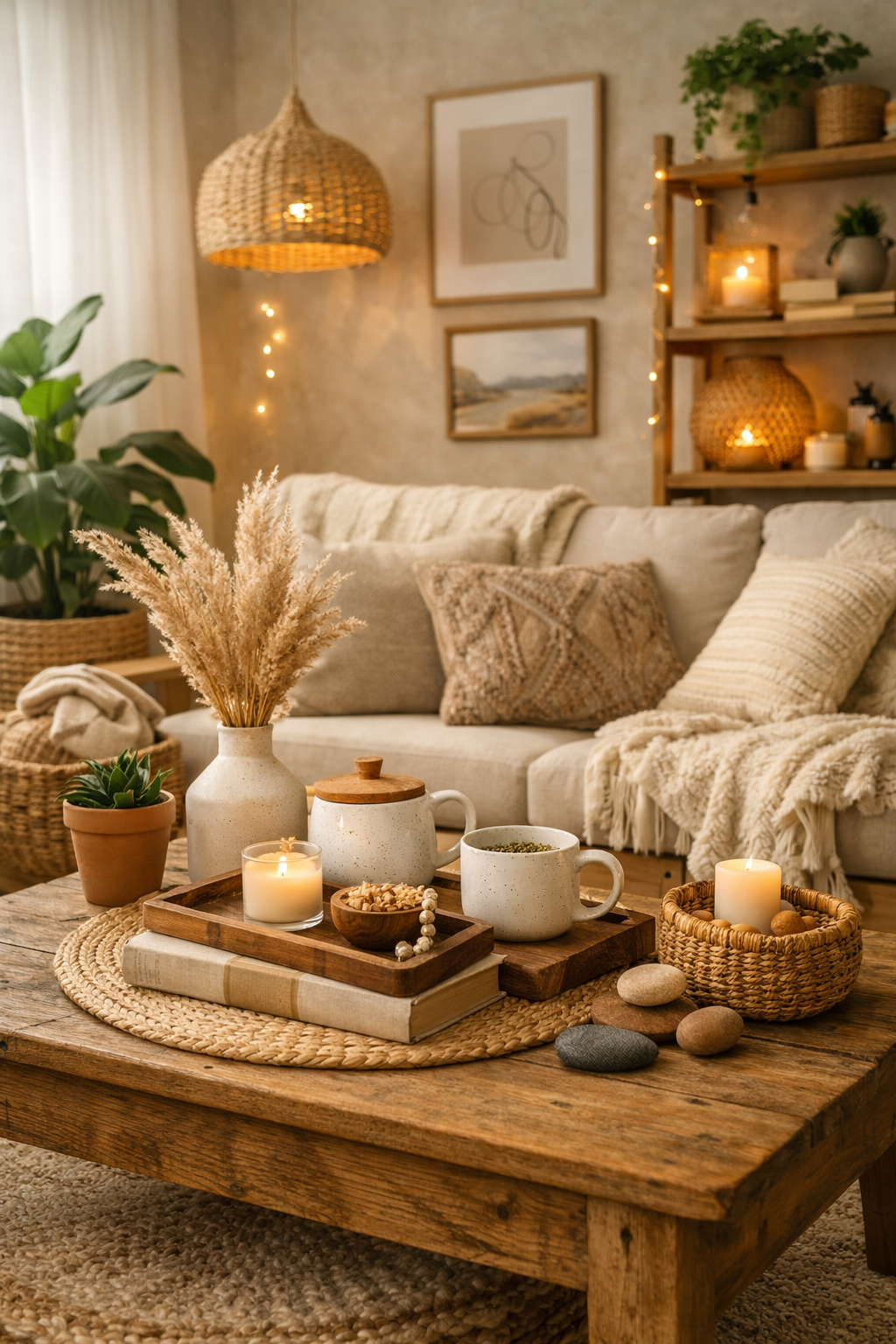
Affordable Home Decor Ideas That Make Any Room Feel Warmer
As an Amazon Associate I earn from qualifying purchases. Some links in this post go to Amazon and may earn me a small commission at no extra cost to you.
Last Updated on October 3, 2026 by Smarteryouu
⭐ Affordable Home Decor Ideas That Make Any Room Feel Warmer
Affordable home decor ideas are less about buying more and more about noticing what a room is actually missing. Most homes do not feel cold because they lack furniture.
They feel cold because the light is harsh, the surfaces are bare, or everything sits flat against the walls. None of that needs a big budget to fix.
A softer bulb, a folded blanket, a plant on a shelf, or a sofa turned to face the window can change how a room feels within an hour. A few of the changes below cost nothing at all, because they are about moving what you already own.
Read this as a menu rather than a checklist. Start with the room you sit in most, change one thing this week, and let the rest follow slowly.

⭐ Start With Soft Texture Before You Buy Furniture
Texture is the fastest way to warm up a room, and it is almost always cheaper than furniture. A room with hard surfaces only, wood floors, painted walls, a sofa and nothing else, will feel unfinished no matter how good the pieces are.
Two or three cushions and one throw blanket is genuinely enough for most sofas. Choose cotton, linen, or a chunky knit, and keep the colours within a narrow range so the room reads as calm rather than busy. Cream, oatmeal, warm grey, and soft rust sit together well and forgive mistakes.
Weight matters as much as the fabric. A thin fleece throw folded over an armchair looks like laundry. A heavier woven one holds its shape and looks deliberate even when it has just been dropped there.
If you already own blankets you like, pull them out of the linen closet before buying anything new. There are more ideas along these lines in our home decor inspiration collection.
⭐ Change the Lighting Before You Change Anything Else
If only one thing on this page gets done, make it this one. A single overhead light with a cool white bulb will make a beautifully decorated room feel like a waiting area.
Look for bulbs around 2700 kelvin, usually labelled warm white or soft white. Anything above 4000 kelvin reads as daylight and belongs in a garage or a workspace. Swapping every bulb in the house takes about twenty minutes and the difference is obvious the same evening.
Then move light down from the ceiling. One fixture overhead flattens everything under it. Three smaller sources at different heights, a table lamp beside the sofa, a floor lamp in the corner, something low on a shelf, create the depth that makes evenings feel warm.
Dimmable bulbs are worth the small extra cost, because they let one room work for reading in the afternoon and relaxing at night. Lamp bases in wood, ceramic, or linen add texture even when they are switched off.
⭐ Bring In Plants That Survive Real Life
Plants add colour, height, and movement for very little money, but only if they stay alive. A wilting plant makes a space feel neglected, so the choice matters more than the quantity.
Pothos, snake plants, ZZ plants, and cast iron plants are the reliable ones. They tolerate low light, forgive missed watering, and keep growing through winter. Peace lilies are slightly fussier but they visibly droop when thirsty, which helps if you tend to forget.
Height is where plants earn their place. A tall plant in a corner fills vertical space that furniture cannot reach. Trailing plants on a high shelf soften hard lines. Small plants grouped in threes look intentional in a way a single pot does not.
The pot does as much work as the plant. Plastic nursery pots read as temporary, and a terracotta or woven cover placed around them costs a few dollars. Our outdoor and garden section has more on keeping the easier varieties healthy.
⭐ Use Mirrors to Open Up a Small Room
Mirrors are one of the few decor pieces that change how a room functions rather than just how it looks. In a small or dark space they push light around and give the eye somewhere to travel.
Placement decides whether it works. A mirror opposite or beside a window doubles the daylight you already get. One on a narrow wall makes a corridor feel wider. A mirror facing a cluttered corner simply gives you twice the clutter, so look at what it will reflect before hanging it.
Size is where people hold back unnecessarily. A small mirror on a large wall looks lost. One larger mirror usually does more than several small ones, and leaning a full length mirror against the wall costs nothing in hardware.
Simple frames age better than ornate ones. Thin black metal, warm wood, or brushed brass will still look right in five years.
⭐ Rearrange What You Already Own
The cheapest change available is moving things. Most homes are arranged around where the furniture landed on moving day rather than around how the room is actually used.
Pull the sofa a few inches away from the wall. It sounds minor and it consistently makes a room feel larger, because the eye reads the gap as depth. Angle a chair toward a window instead of the television. Move a side table to create a small reading corner with a lamp beside it.
Think about the path people walk through the room. If anyone has to step around a table to reach the sofa, the layout is fighting you. Clear routes make a home feel calmer when nothing else has changed.
Shop your own house while you are at it. A vase from the bedroom, a stack of books from the office, a bowl from the kitchen cupboard. Anyone settling into a new place will find more on sequencing this in our guide on what to do first in a new home.
⭐ Put Something on the Walls Without Spending Much
Bare walls make a room feel unfinished more than anything else, and wall art is usually where budgets break. It does not have to.
Printable art is the obvious route. Digital files cost a few dollars, print at a local shop for very little, and slot into inexpensive frames. Your own photographs work just as well, particularly printed larger than feels natural and kept to one consistent tone.
Frames matter more than the artwork inside them. Matching frames across a wall make a mixed collection look deliberate. A generous white mat around a small print makes it read as considered rather than cheap.
Hang art lower than instinct suggests. The centre of the piece should sit at about eye level, and lower again above a sofa so the art relates to the furniture rather than floating above it. If you want to build your own frames or shelves, the beginner projects in our home improvement writing are a reasonable place to start.
⭐ Choose Storage You Are Happy to Leave on Display
Clutter undoes good decor faster than anything, and most homes do not need less stuff so much as better places to put it.
Woven baskets are the workhorse here. One by the sofa for blankets, one by the door for shoes, one in the bedroom for laundry. They hide the mess and add natural texture at the same time, which is unusual for anything practical.
Check the construction before buying. Seagrass and water hyacinth hold their shape for years. Very cheap woven baskets sag and fray at the rim within a season, especially the ones holding anything heavy.
A single floating shelf does similar work on the wall. Keep it sparse, a plant, three books, one small object, and leave visible empty space. Overloaded shelves read as storage, sparse ones read as styling. There is a full breakdown of what has held up in our post on racks and organizers.
⭐ Where Is It Worth Spending a Little More
Cheap is not the same as good value. Some things can be as inexpensive as you like, and some will cost you twice if you buy at the bottom of the range.
Spend on what you touch daily and what takes weight. Bedding, the rug in the main living area, and the lamp you switch on every evening are worth a little more. Good sheets stay soft through years of washing. A cheap rug flattens under a coffee table within months and never recovers.
Save on the decorative layer. Vases, trays, candle holders, frames, and seasonal pieces can come from anywhere. Nobody can tell the difference, and you will likely swap them out as your taste shifts.
Buying slowly is the real saving. A room assembled over a year from pieces you actually wanted will cost less and please you longer than one filled in a weekend to make the emptiness go away. More of this thinking sits in our smart living essentials collection.
⭐ Best Sellers
Top Products and Picks
Four items cover most of what this guide describes, and all are easy to find on Amazon.
- A set of warm dimmable bulbs around 2700 kelvin, which remains the cheapest change with the largest effect after dark.
- A chunky knit or woven throw with real weight to it, ideally one rated machine washable, since the hand wash ones stop being used by February.
- A set of seagrass storage baskets, usually sold in twos or threes, sturdy enough to hold blankets or laundry without sagging at the rim.
- A full length leaning mirror with a metal frame, which opens up a bedroom or hallway with no drilling required.
⭐ Final Thoughts
A home that feels good to be in rarely comes from one big purchase. It comes from a series of small decisions made over time, most of them quiet, some of them free.
Warmer light. A blanket where you actually sit. A plant that survives. A chair turned toward the window instead of the screen. The gap between how a room looks now and how you want it to feel is usually smaller than it seems.
There is no deadline on any of this. Rooms are allowed to be unfinished while you work out what belongs in them, and the gaps you leave are often what stop a space feeling crowded later.
Start with the room where you spend the most hours and change one thing this week. Not the biggest thing, the easiest one. Then live with it a while before deciding what comes next.
⭐ Additional Resources
For choosing bulb brightness and colour temperature room by room, Natural Resources Canada publishes practical guidance on home lighting that explains the numbers on the box in plain language.
For indoor plant care by light level, the Royal Horticultural Society maintains an accessible houseplant advice section covering the easier varieties mentioned above.
Anyone hanging mirrors or heavier art may find the general power tool safety information from the Canadian Centre for Occupational Health and Safety a useful read before starting.