
How to Hang Heavy Things on Drywall So They Stay Up
As an Amazon Associate I earn from qualifying purchases. Some links in this post go to Amazon and may earn me a small commission at no extra cost to you.
Last Updated on September 29, 2026 by Smarteryouu
⭐ How to Hang Heavy Things on Drywall So They Stay Up
A large mirror, a heavy shelf or a big framed print can change a room completely. It can also leave a crumbling hole and a broken frame on the floor if it is hung the wrong way.
Learning how to hang heavy things on drywall mostly comes down to two decisions. Where will the weight go, and what is actually holding it? Drywall on its own is not strong. It is a layer of gypsum between two sheets of paper, and a nail or screw in plain drywall can pull out under load.
The good news is that the fix is simple and cheap. Find a stud when you can, use a proper anchor when you cannot, and check everything is level before the second hole goes in. This guide walks through each step in order, with the few tools that make it easy.
Some links on this page are affiliate links. If you buy through one, this site may earn a small commission at no extra cost to you.

⭐ What Counts as Heavy on a Drywall Wall?
As a rough guide, anything heavier than a small framed picture deserves more than a nail. Mirrors, shelves that will hold books, coat racks, curtain rods and televisions all count as heavy. If you would not want it falling on someone, treat it as heavy.
Weight is only part of the story. A shelf that holds books adds its own load on top of the shelf itself, and the weight grows every time something new is added. A coat rack gets pulled downward and outward every time someone grabs a jacket.
It helps to think about how an item will be used, not only what it weighs on day one. Something that is pulled, leaned on or loaded up over time needs a stronger fixing than a mirror that just hangs there quietly.
When in doubt, choose the stronger option. An anchor rated for more than you need costs a few extra dollars. A shelf that comes down costs far more.
⭐ How Do You Find a Stud in a Wall?
Use a stud finder, sliding it slowly across the wall until it signals, and mark both edges of the stud with a pencil. The centre is between your two marks. In most Canadian homes, studs sit about 16 inches apart, so once you find one, the next is usually close by.
Start by checking near an electrical outlet or light switch. These are usually fastened to the side of a stud, so they give you a helpful starting point.
Confirm what the tool tells you before you drill. Many people tap lightly with a knuckle, listening for a solid sound instead of a hollow one. Another simple check is a very small finishing nail in a spot that will be hidden behind the item. If it hits wood firmly, you have found the stud.
Be careful around outlets, switches and the area directly above or below them, since wires often run there. Some stud finders also detect live wiring, which is a useful extra check.
Our list of the ten tools every home actually needs explains why a stud finder earns its place long before most people buy one.
⭐ Screw Into the Stud Whenever You Can
A screw driven into a wooden stud is the strongest and simplest way to hang something heavy. The weight goes into the frame of the house rather than the drywall.
Use a wood screw long enough to pass through the drywall and bite well into the stud. The drywall itself is usually about half an inch thick, so a short screw may only just reach the wood.
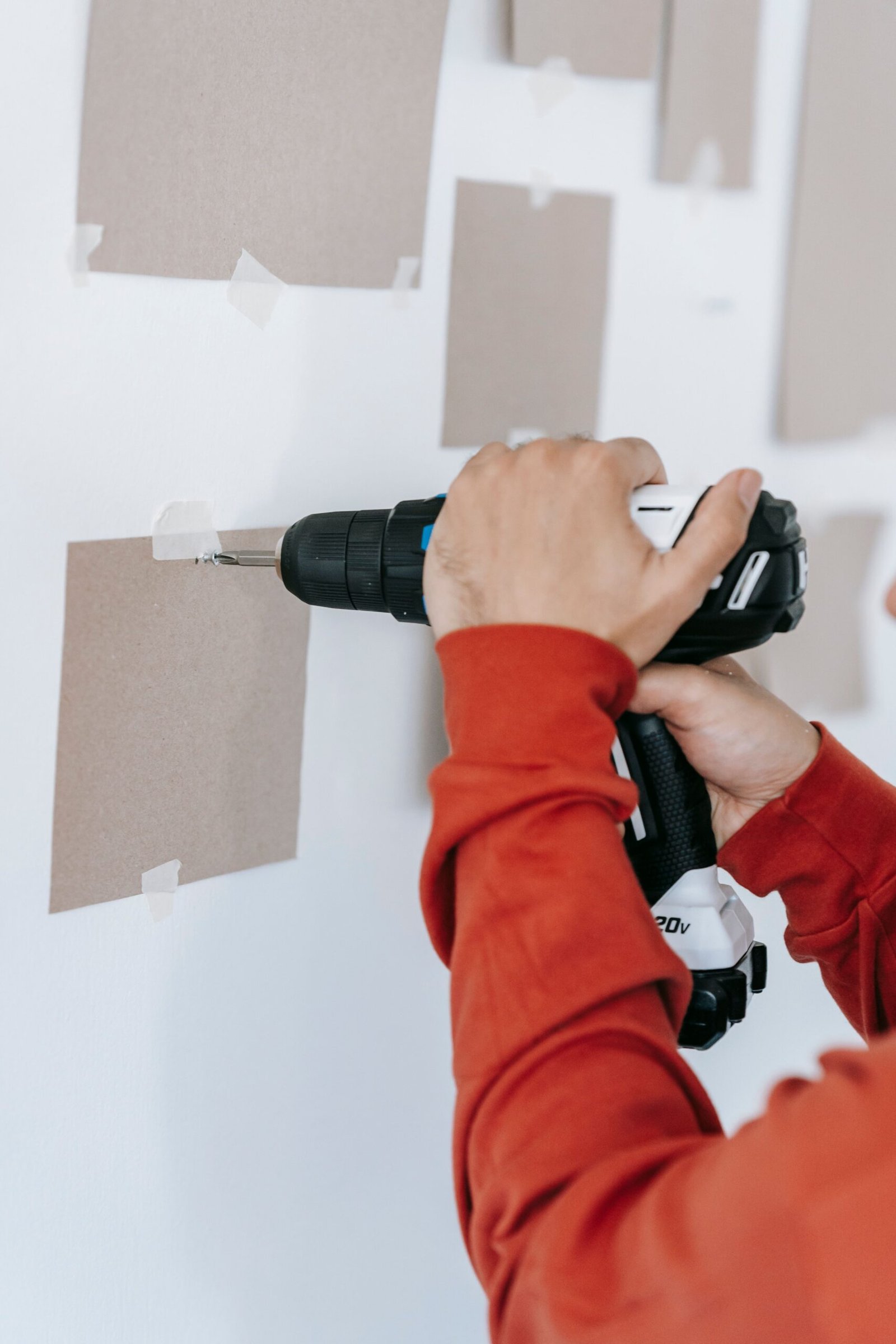
Drill a small pilot hole first. It stops the wood from splitting and makes the screw much easier to drive straight. A cordless drill makes this quick, and our guide to which power tools a beginner should actually buy covers choosing one.
For long items such as shelves and televisions, aim for at least two studs. That spreads the weight across more of the wall and stops the item from twisting.
The only problem with studs is that they are rarely exactly where you want the item to go. That is where anchors come in.
⭐ Which Drywall Anchor Should You Use?
For genuinely heavy items away from a stud, use a toggle style anchor that opens behind the drywall and spreads the load across a wider area. Small plastic plugs are fine for light pictures but are the wrong choice for anything heavy. Always check the weight rating printed on the package.
There are a few common types. Plastic expansion plugs are the small ribbed sleeves that come free with many products. They are fine for light pictures, but not for heavy loads.
Self drilling anchors screw straight into the drywall with a screwdriver and are good for medium loads such as a small mirror or a towel bar.
Toggle anchors are the strongest option for hollow walls. A metal channel or wing passes through a hole and then opens flat against the back of the drywall. The load is spread across a wide area, which is why they hold so much more.
Whatever you use, read the weight rating on the package and stay comfortably under it. Ratings assume ideal conditions, and real walls are rarely ideal. Our DIY Tools section covers the rest of the kit that makes small jobs like this easier.
⭐ Check It Is Level Before the Second Hole
The most common small mistake is drilling both holes and then finding the item sits at a slight angle. A level solves this in seconds.
Drill the first hole and fix one side loosely. Then hold the item in place, set a level on top, and adjust until the bubble sits in the centre before marking the second hole. A short torpedo level works well for most shelves and frames.
For items that hang from a wire on the back, like many mirrors, use two hooks or screws spaced apart rather than one in the middle. Two points of support keep the item straight and share the weight.
Painter’s tape is surprisingly useful here. Put a strip on the wall, mark your holes on the tape, and it stops the pencil marks from smudging the paint and protects the surface when you drill.
⭐ The Mistakes That Bring Things Down
Most wall failures come from a handful of avoidable mistakes. The most common is trusting a plain screw in drywall with no anchor and no stud behind it. It may hold for a while, then slowly work loose.
Another is using the small plastic plug that came in the box for something much heavier than it was designed for. Those plugs are meant for light items, and the packaging rarely makes that clear.
Overtightening is a quieter problem. Driving a screw too hard can crush the drywall around an anchor so it no longer grips. Tighten until it is snug and stop.
The last is forgetting what is inside the wall. Avoid drilling directly above or below outlets and switches, and in bathrooms and kitchens be aware of where plumbing is likely to run. When a job involves a very heavy television on a moving arm, or a wall you are unsure about, it is worth asking someone with experience. The same thinking applies to other small jobs around the house, and our guide to simple home repairs covers several of them.
⭐ How Do You Patch the Holes When You Move Something?
Small holes from screws and plugs are easy to fill with a little spackle, a putty knife and a light sanding once it dries. Larger holes left by toggle anchors need a small patch or mesh first. Touch up with paint afterward, and the wall usually looks untouched.
This matters most for renters, who often worry about making holes at all. In practice, a few neat, properly placed holes are much easier to repair than a shelf that has torn out of the wall and left a crumbling crater behind. If you would rather avoid holes altogether, our guide to decor ideas for renters that leave no marks has plenty of options for lighter items.
Keep a small tub of spackle with your tools. It is cheap, it lasts for years, and it turns a mistake in the wrong spot into a five minute fix instead of a reason to leave something crooked.
If you enjoy this kind of job, a floating shelf is a natural next step, and it is one of the projects in our list of beginner home projects you can finish in under an hour.
⭐ Best Sellers
Top Products and Picks
The few tools that make hanging something heavy a calm ten minute job, ordered from the cheapest place to start.
If you hang things now and then
CRAFTSMAN Stud Finder
For the occasional mirror or shelf. It is simple to use and finds the edge of a stud through ordinary drywall. Slide it slowly and mark both edges so you can find the centre.
Check price on AmazonFor every job on this list
WORKPRO 12 Inch Magnetic Torpedo Level
For checking shelves and frames before you drill the second hole. Short enough for a small shelf, and the magnetic edge sticks to a metal bracket so your hands stay free.
Check price on AmazonWhen there is no stud
TOGGLER SNAPTOGGLE Drywall Anchors, 12 Pack
For heavy items where a stud is not where you need it. The metal channel opens behind the drywall and spreads the load. Read the weight rating on the package and stay well under it.
Check price on AmazonIf you hang things often
Franklin Sensors ProSensor M210 Stud Finder
For people who hang things regularly or have a whole house to furnish. A row of sensors lights up across the full width of the stud at once, so there is no sliding back and forth.
Check price on Amazon⭐ Final Thoughts
Hanging something heavy is one of those jobs that feels intimidating until you have done it once. After that, it becomes a quick and satisfying task.
The whole process fits into a few simple habits. Find a stud when you can. Choose a proper anchor when you cannot. Check that it is level before the second hole goes in, and never trust a lonely screw in plain drywall with anything that matters.
Take your time with the first one. A few extra minutes of measuring and marking means the mirror or shelf goes up once and stays there for years, and the next one will feel easy. There is a quiet satisfaction in walking past something you hung yourself and knowing it is not going anywhere.