
Camping Gear for Beginners: What to Buy, What to Borrow and What to Skip
As an Amazon Associate I earn from qualifying purchases. Some links in this post go to Amazon and may earn me a small commission at no extra cost to you.
Last Updated on September 7, 2026 by Smarteryouu
⭐ Camping Gear for Beginners: What to Buy, What to Borrow and What to Skip
Every list of camping gear for beginners has the same problem. It is written as a shopping list, when what a first timer actually needs is a sorting rule, because the real question is not what exists but what you should personally spend money on before you know whether you enjoy this. Camping equipment is unusually easy to overbuy. It is cheap enough that each item feels harmless, it all looks obviously useful in the shop, and none of it declares itself a mistake until it has been in the garage for two years. So this is not a list of everything. It is four things worth owning outright, a set of things worth borrowing for the first couple of trips, an honest note on where the cheap version is completely fine, and the short list of items that get bought every spring by hopeful people and then never leave the house again.

⭐ What Should a First Timer Buy First?
Something to sleep on, something to sleep in, a headlamp each and a way to keep food cold. Those four decide whether the weekend is pleasant. A tent matters too, but a borrowed tent is nearly always fine, whereas a borrowed sleeping setup that does not fit you is what ruins a trip.
That ordering surprises people because the tent is the item everyone pictures. It is also the most visible thing at a campsite, which is why it gets bought first and why so many households own a large tent and a terrible sleeping arrangement.
The test that sorts everything else is simple. Ask whether the item touches you personally, whether it is the difference between sleeping and not sleeping, and whether a borrowed one would fit. If all three point the same way, buy it. If not, borrow it once and find out.
⭐ The Four Things Worth Owning Outright
A sleeping pad is the first and it is the least glamorous purchase in camping. Its job is to put insulation between you and the ground, and the number that matters is how well it insulates rather than how thick it is. An air mattress is thick and is a large volume of cold outdoor air sitting under you all night, which is why people wake up cold on one and cannot work out why.
A sleeping bag is the second, and the temperature on the label is the point at which an average person survives the night rather than enjoys it. Assume you will feel cold several degrees before the number on the tag, and pick accordingly. In Ontario a bag rated for around freezing covers almost the whole season including the chilly nights in May and September.
A headlamp each is the third, and the word each matters. Sharing one is how everybody ends up sitting in the dark waiting for the person washing up. They are cheap, they are small, and they are the item most often described as the biggest surprise by people on their second trip.
A cooler is the fourth, and it is the one where spending more actually shows. Cheap coolers hold fine for a weekend and stop holding on day three, which is exactly when food safety stops being theoretical. If you are only ever going for two nights, a basic one is genuinely enough.
⭐ What Should You Borrow for the First Two Trips?
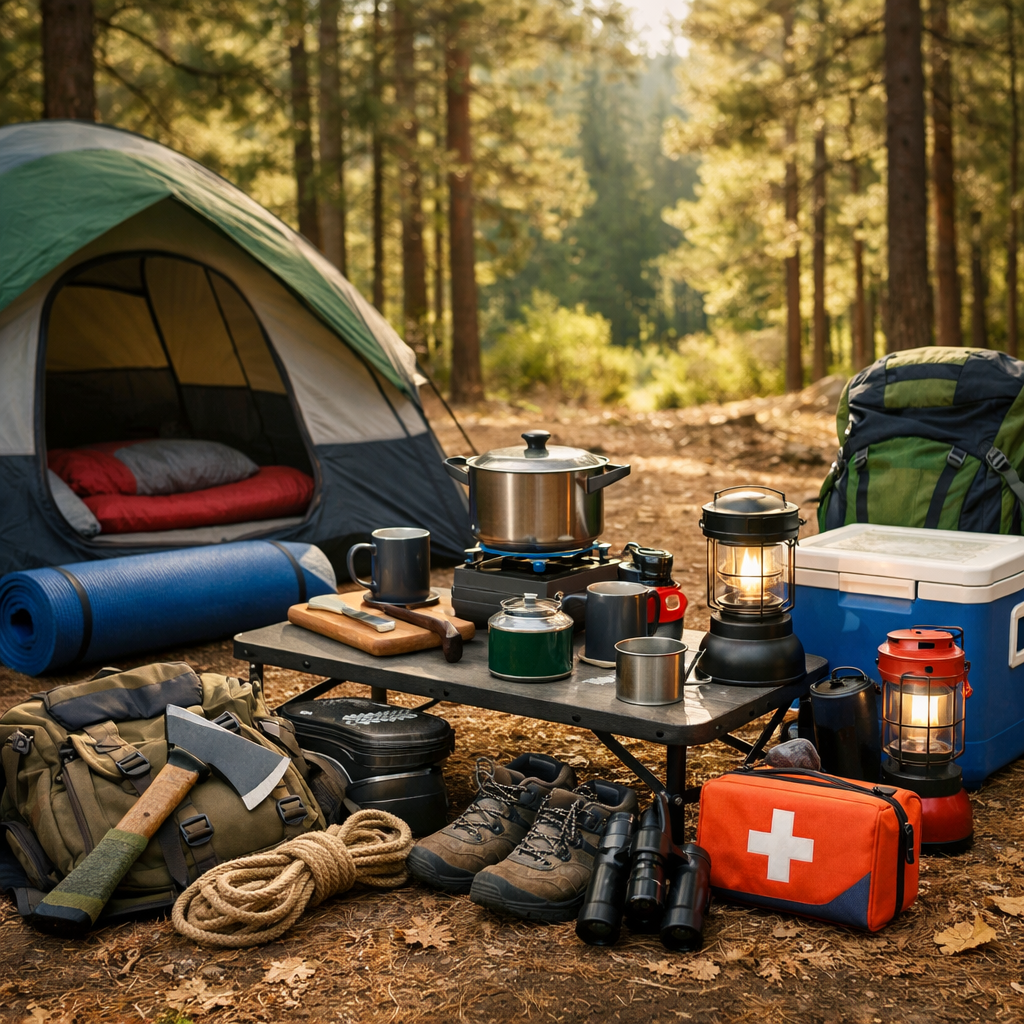
The tent, the stove, the chairs and the lantern. All four are expensive, all four are things friends already own and are happy to lend, and all four are items where two nights of use teaches you more about what you want than any amount of reading.
The tent is the big one. Borrowing lets you find out whether you want the extra room of a larger tent or the speed of a small one, whether you actually use a porch area, and whether anyone in the household is bothered by being close together. Those preferences are strong and completely unpredictable in advance.
The stove is the second. Most people discover they cook far more simply than they imagined, and a two burner stove bought on the assumption of proper meals often ends up boiling water and heating one pan. Finding that out on borrowed equipment saves a real amount of money.
If nobody you know camps, most Ontario parks rent basic equipment and some run programs aimed at first timers where the gear is provided. That is a cheaper trial than any purchase, and the guide to the best camping sites in Ontario covers which parks are set up for beginners.
⭐ Where Cheap Gear Is Completely Fine
Most of it, which is not what the outdoor industry would like you to conclude. The gear that has to perform is the gear keeping you warm and dry. Nearly everything else is a container, a surface or a convenience, and the cheap version does the same job.
Plates, cups, cutlery, a washing up bowl, a bucket, dry bags, storage boxes, a tarp, rope, pegs and a mallet are all fine bought at the lowest price you can find. So are camp chairs, up to the point where you are sitting in one for four hours at a time. So is almost everything in the kitchen box, because a pan is a pan.
Where cheap is a false economy is anything holding weight or holding heat. Pegs that bend on the first stony site, a stove regulator that leaks, a cooler that gives up on day three. And clothing, because being wet and cold is the one problem you cannot solve once you are already out there. The travel essentials section covers packing and layering in more detail.
⭐ What Gets Bought Every Spring and Never Used?
Enormous multi room tents, camp kitchens with folding legs, solar showers, hammocks with no trees to hang them from, and cookware sets with more pieces than anybody uses. All five sell heavily in spring and all five spend the following winter in a garage.
The oversized tent is the most expensive version of this mistake. A tent rated for eight people is bought so four can be comfortable, and it takes forty minutes to pitch, needs a large flat site that many parks do not have, and is miserable to dry out before it goes away. Rated capacity is optimistic everywhere, but two extra spaces is the right amount of extra, not four.
The camp kitchen is the second. It solves a problem that a picnic table already solves, since most serviced sites in Ontario come with one. Look at what your site includes before buying furniture for it.
And the multi piece cookware set is the third. One pan, one pot, a kettle and a sharp knife covers almost everything anybody actually cooks outside.
⭐ The Two Mistakes That Cost the Most
Buying for the trip you imagine rather than the trip you will take is the first. People shop for backcountry canoe trips and then drive to a serviced site forty minutes away, which needs almost none of the same equipment and a lot more extension cord.
Buying everything at once is the second, and it is worse than it looks because it removes your ability to learn. A kit assembled over three trips is shaped by what you actually missed. A kit bought in one afternoon is shaped by what was on the shelf.
The practical version is to spend on the sleep system, borrow the shelter and the kitchen, buy the cheap consumables, and then wait. After two trips you will have a short and very specific list of things you wanted and did not have, and that list is worth more than any guide. What the site itself provides changes that list a great deal, and the campsite kit guide covers power, food storage, bugs and setup.
⭐ What Should a First Kit Cost?
Less than a single night in a hotel, if you borrow the big items. Pads, bags, headlamps and a basic cooler for a family of four is a modest outlay, and everything else on a first trip can be borrowed, improvised from the kitchen or simply left at home.
It is worth saying that plainly, because the perception that camping requires a large upfront investment is the main thing stopping people trying it. That perception comes from equipment marketing rather than from what a weekend at a provincial park actually requires.
The cost also spreads out well. Buy the sleep system this year, a tent next year if you went more than twice, a better cooler the year after that. Nothing in camping needs to be bought as a set, and the households with the best kit almost always assembled it slowly. The outdoor camping section covers the rest of the decisions around a first trip.
⭐ Best Sellers
Top Products and Picks
- A self inflating sleeping pad, the first thing to buy if you have only ever used an air mattress and woken up cold. This one item fixes more bad first trips than anything else on the list.
- A sleeping bag rated to around freezing, which covers the whole Ontario season including the cold nights in May and September. Buy this rather than a summer bag, since the shoulder season trips are the quiet ones worth taking.
- A rechargeable headlamp for each person, not one for the group. Cheap, small, and the item most people name as the biggest surprise after their second trip.
- A hard sided cooler with thick insulation, worth the money only if you go for three nights or more. For a two night weekend a basic cooler and plenty of ice is genuinely enough.
⭐ Final Thoughts
The households that end up camping every year are almost never the ones who bought the most before they started. They are the ones who went with borrowed equipment, had a mediocre first weekend, and went again anyway because one evening of it was better than they expected.
So the useful advice is to spend as little as you reasonably can on trip one, and pay attention instead. Notice what you wished you had, what you carried out of the car and never opened, and which part of the day you enjoyed most. That is a shopping list nobody else can write for you, and it will be shorter and stranger than any list online.
Then buy those things, slowly, over a few seasons. The kit will end up smaller than you expected, better suited to you than anything bought as a set, and it will have cost less spread across three years than one enthusiastic afternoon in a shop would have cost in a single weekend.
⭐ Additional Resources
Before deciding between a stove and a fire for cooking, it is worth checking the provincial guidance on outdoor fire restrictions, since restricted fire zones can appear at short notice in a dry summer and they change what you need to bring.