
Outdoor Camping Gear Essentials: What a Campsite Needs Beyond Your Backpack
As an Amazon Associate I earn from qualifying purchases. Some links in this post go to Amazon and may earn me a small commission at no extra cost to you.
Last Updated on September 7, 2026 by Smarteryouu
⭐ Outdoor Camping Gear Essentials: What a Campsite Needs Beyond Your Backpack
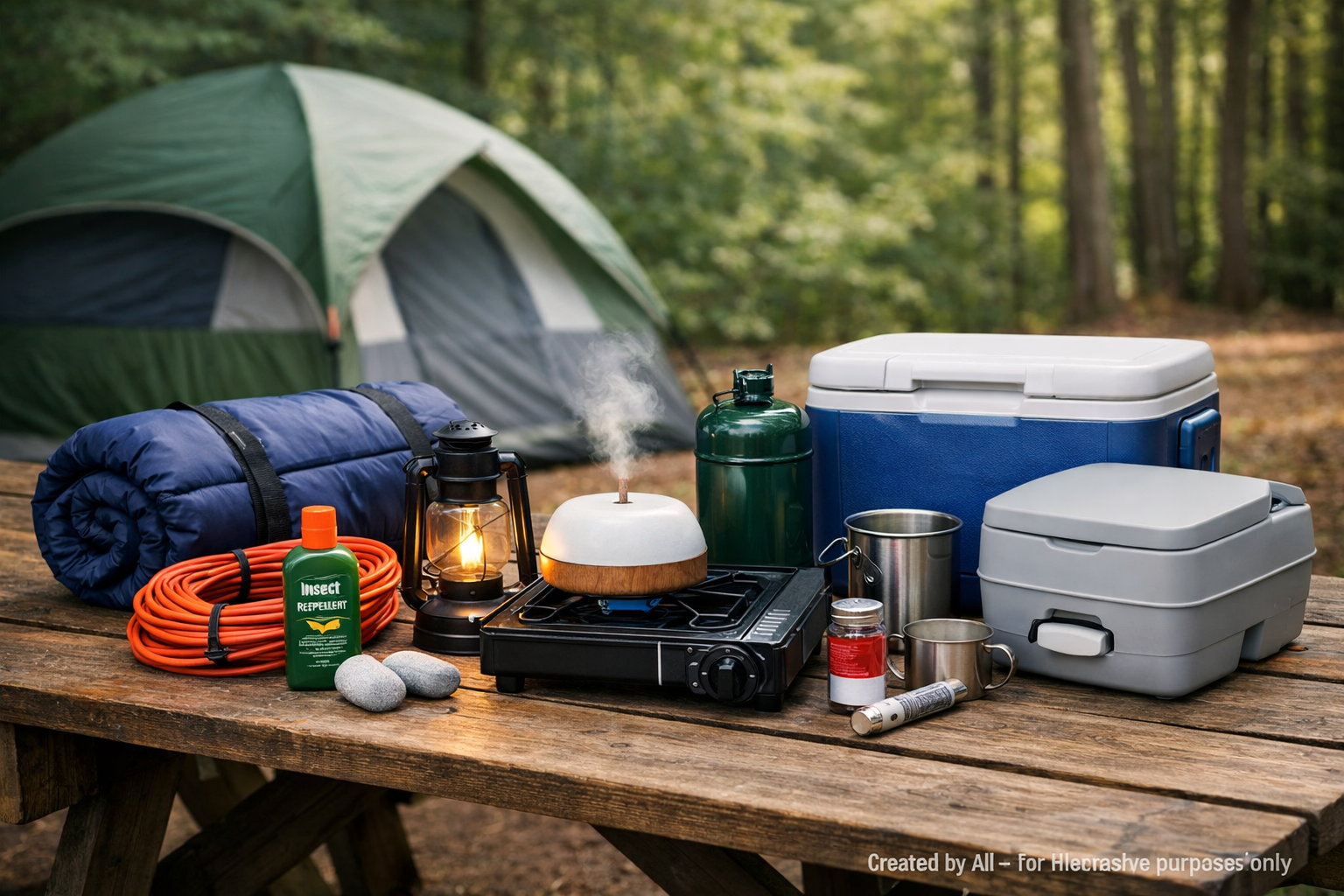
There are two kinds of outdoor camping gear essentials and almost every list mixes them up. The first kind is personal. A bag, a pad, a headlamp, boots. The second kind belongs to the site rather than to you, and it is the half nobody warns a first timer about. An extension cord long enough to reach the post. A cooler that will still be cold on Sunday. Something to do about mosquitoes at eight in the evening. A plan for the walk to the washroom at two in the morning. None of it is exciting and all of it decides whether the weekend is comfortable, because a serviced site in an Ontario provincial park is a small temporary household and it needs the same boring systems any household needs. This is the list for that half.

⭐ What Does a Serviced Site Actually Give You?
A cleared and levelled area, a picnic table, a fire pit, a parking spot and an electrical post. That is usually the whole list. Water comes from a tap shared with several sites, and washrooms are a walk away. Nothing is enclosed and nothing is private.
Knowing that in advance changes the packing list more than any gear choice. The picnic table means you almost certainly do not need the folding camp kitchen. The fire pit means you do not need to build anything. The shared tap means you need a container to carry water, because walking there every time you want to wash a cup gets old inside a day.
What varies most between sites is privacy and shade, and neither shows on a booking map in any reliable way. A site that looks perfect on the diagram can be the one everybody walks through on the way to the washroom. This is worth reading about before booking, and the guide to Ontario camping sites covers which sites are worth paying more for and how to read a park map.
⭐ Power, and What Is Reasonable to Run
If you have booked electricity, the two things worth knowing are how far away the post is and how much you can draw from it. Both are easy to get wrong and both are annoying rather than dangerous.
The distance is the practical one. The electrical post is not necessarily near where your tent goes, and a short cord means pitching in the wrong place to reach it. Take more cord than you think, in an outdoor rated cable rather than an indoor one, because indoor extension leads are not built to lie in wet grass for three days.
What to run is the second. A fan on a hot night is the single best use of a serviced site, followed by charging everything and a light strung under the tarp. A kettle and a small heater are usually fine. What causes trouble is running several heating appliances at once, since a campsite supply is not a kitchen circuit and tripping it in the evening affects your neighbors too.
It is also worth having a plan for no power. Rain, a tripped breaker or a site change all happen, and the trip should not depend on the post working. Headlamps and a stove cover it, which is exactly why the beginner gear guide puts both in the small list of things worth owning outright.
⭐ Keeping Food Cold for Three Days
This is the system most first trips get wrong, and it fails on day two rather than day one, which is why nobody sees it coming.
Two coolers beat one large one, and the reason is opening frequency. Drinks get opened twenty times a day and food gets opened three times, so keeping them separate means the food cooler holds its cold far longer. A cheap second cooler used only for drinks does more for food safety than an expensive single one.
Block ice lasts several times longer than cubes because there is less surface area, and frozen bottles of water do the same job while turning into drinking water as they melt. Pack the cooler full, since empty space is warm air, and fill gaps with anything rather than leaving them.
Then keep it in the shade and off the ground. A cooler sitting in afternoon sun on a gravel pad is being heated from three directions, and moving it under the table costs nothing. Freezing meals at home before you go is the last trick and the best one, because a frozen meal is also a block of ice for the first two days.
⭐ How Do You Keep Bugs Off a Campsite?
Cover up at dusk, use a repellent with a recognised active ingredient, and keep a fan or a breeze moving through the seating area. The hour either side of sunset is when it matters, and shifting dinner earlier or later avoids most of it without any equipment at all.
Clothing does more than people expect. Long sleeves and long trousers in the evening beat repellent on bare skin, and they are more comfortable than they sound because that is also when the temperature drops. A hat helps near water.
A screened shelter over the picnic table is the upgrade worth making if you camp more than twice a year in Ontario, particularly in June near water. It turns the evening from something to be endured into the part of the day people remember, and it is the single most requested item on any second trip.
Ticks are worth a separate thought from mosquitoes, because the prevention is different and it happens at the end of the day rather than during it. A check before bed, especially on children and dogs, takes two minutes.
⭐ The Toilet Question, Answered Plainly
Most people will not raise this and a lot of first trips are quietly decided by it, so here is the honest version. Provincial park washrooms range from full facilities with showers to a vault toilet several hundred metres away, and the booking page tells you which you are getting.
The distance is what matters, not the quality. A comfort station two minutes away is fine. The same station six minutes away, in the dark, with a small child who has woken up, is the thing that ends a camping habit. Check the map before booking rather than after.
A portable toilet in the tent porch is a completely reasonable answer for households with young children or anyone who does not fancy a night walk, and it is much less grim in practice than it sounds. It is also the item people are most embarrassed to buy and most relieved to have. If you would rather not, a torch left by the tent door and shoes that go on without laces solve most of the same problem.
⭐ Setting Up in the Right Order
Arriving is the most stressful hour of a camping trip and almost all of that is avoidable by doing things in a sequence rather than all at once.
Walk the site first, before unloading anything. Find the flattest area, work out where the water runs if it rains, note where the sun will be in the morning and where the post is. Two minutes here saves moving a pitched tent later, which is the worst job in camping.
Then the tent, then the sleeping gear inside it, then the kitchen, then everything else. The reason for that order is daylight. If the light goes and only the first two are done, you can still go to bed comfortably. If you set up the kitchen and the chairs first, you end up pitching a tent by headlamp with everybody tired and hungry.
Give each person one job rather than having everybody do the tent together. And unpack the car onto the picnic table rather than the ground, because things put on grass at a campsite are not seen again until Sunday. Keeping the space workable is the same skill as keeping any small space workable, which the storage and organization section covers in more depth.
⭐ What Should You Do Before You Leave?
Dry everything you can, take everything out including the small things in the grass, and leave the fire pit and the site as you found it. Then deal with the tent at home within a day or two, because a tent packed damp and left in a bag is how a good tent becomes a mouldy one.
The drying point is the one that costs people money. A tent that goes away wet on Sunday and comes out the following June has usually spoiled, and it happens quietly in a garage where nobody sees it. Twenty minutes on a lawn or over a railing prevents it.
The other habit worth building is writing down what you wished you had. Do it in the car on the way home while it is still annoying you, because by Wednesday it will be gone and next year you will make the same omission. That list is more useful than any packing guide, and the outdoor camping section covers the rest of the planning around it.
⭐ Best Sellers
Top Products and Picks
- An outdoor rated extension cord of at least fifteen metres, the first thing to buy once you book a serviced site. Longer than you think, and outdoor rated rather than an indoor lead, since it will lie in wet grass for three days.
- A second small cooler kept only for drinks, which does more for food safety than upgrading your main one. Buy this before an expensive cooler, because opening frequency is what actually warms food up.
- A screened shelter for the picnic table, worth it from your second Ontario trip onward, especially if you camp in June or near water. It is the difference between an evening outside and an evening in the tent.
- A collapsible water container, for any site where the tap is shared. Cheap, packs flat, and it removes the twenty small walks a day that make a campsite feel like work.
⭐ Final Thoughts
None of this half of the packing list is interesting, which is exactly why it gets skipped and exactly why it decides how the weekend feels. Nobody comes home talking about the extension cord. They come home talking about the evening they sat out until dark, which happened because the bugs were handled and the food was still cold.
So it is worth spending the small amount of attention this stuff needs before you go, rather than solving it badly at the site. Almost all of it is a decision made at home in ten minutes, and almost none of it can be fixed once you are two hours away with the car unpacked.
Then leave the rest alone. A campsite does not need to be impressive and the households that seem most relaxed at a park are usually the ones with the least set up. Get the boring systems right, keep everything else simple, and the trip mostly runs itself.
⭐ Additional Resources
Site type, washroom distance and whether a pitch has electricity are all listed on the provincial park reservation service, which is worth reading properly before booking rather than after. It also sets out the reservation window and the rules that differ between parks.