
A Daily Probiotic Routine, and What It Can Actually Do
As an Amazon Associate I earn from qualifying purchases. Some links in this post go to Amazon and may earn me a small commission at no extra cost to you.
Last Updated on September 24, 2026 by Smarteryouu
⭐ A Daily Probiotic Routine, and What It Can Actually Do
Building a daily probiotic routine sounds like a simple decision until you stand in front of the shelf. Thirty products, billions of something printed on each box, names in Latin, and prices from twelve dollars to eighty for what looks like the same thing.
That confusion is not your fault and it is not accidental. It is what happens in a category where the science is genuinely specific and the marketing is deliberately general.
What follows is an attempt to make the shelf legible. What the numbers and the Latin actually mean, why fermented food is the sensible place to start, what the research does and does not support, and why there is no supplement recommended anywhere on this page.
This page contains affiliate links. If you buy through one of them we may earn a small commission at no extra cost to you.

⭐ Reading the Label
Three things appear on every box and only one of them is useful in the way people assume.
The Latin name has three parts. Genus, species, then a strain identifier that is often a short code of letters and numbers. That last part is the one that matters, because research is done on individual strains and the findings do not transfer to the others. Two products can both say Lactobacillus and contain organisms as different from each other as a spaniel and a wolf.
The billions figure is a count of live organisms, usually written as CFU. Higher is not automatically better, the number on the box is normally at manufacture rather than at the end of shelf life, and there is no established target for a healthy adult.
What is genuinely worth checking is whether the full strain codes are listed at all. Products that print them are being specific because they can be. Products that say only a genus are being vague on purpose.
⭐ Where the Honest Answer Stops
The previous version of this page included a section describing personal results. It has been removed and it is worth explaining why rather than quietly deleting it.
One person feeling better after starting something tells you almost nothing, including when that person is us. Digestion varies week to week for a dozen reasons, and a personal account in a health category gets read as evidence when it is a story.
The National Center for Complementary and Integrative Health has reviewed this area and its summary is careful. There is some evidence for specific strains in specific situations. There is much less support for the general idea that a daily probiotic improves gut health in an otherwise healthy person, which is what the category is largely sold on. Its page is linked at the foot of this one.
So this page makes no claim about immunity, mood, skin, energy or digestion. Two practical notes instead. Probiotics are not risk free for everyone, and anyone with a weakened immune system or a serious illness should ask a doctor before starting one. And if a digestive problem has been going on for weeks, that is a doctor’s question rather than a shelf’s.
⭐ Food Is the Cheaper Starting Point
Live cultures have been in ordinary food for thousands of years and cost a fraction of what a capsule does.
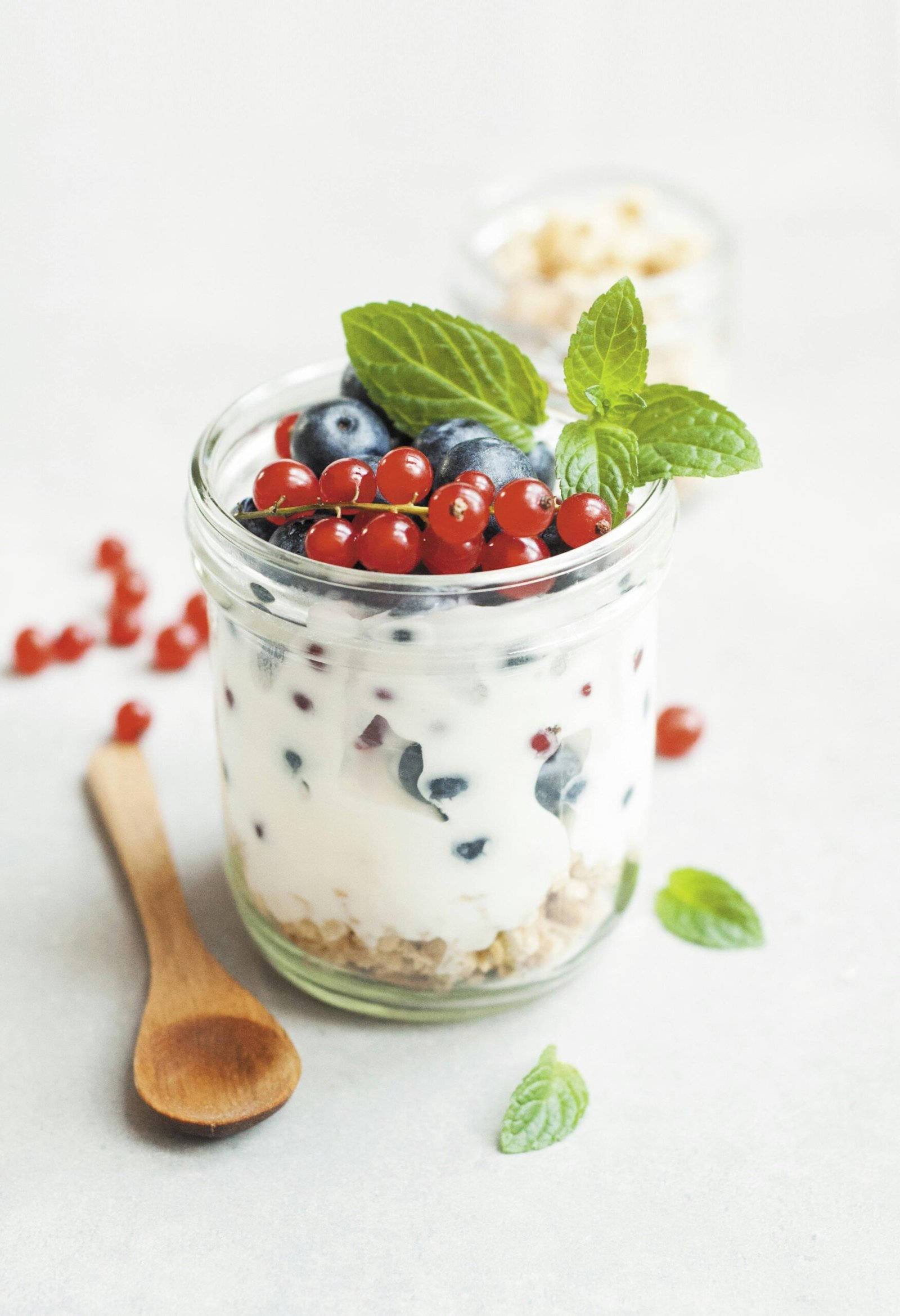
Plain yoghurt with live cultures. Kefir, which is more varied than yoghurt and easier to drink than to eat. Sauerkraut and kimchi from the chilled section. Miso. Some cheeses. None of these require a decision about strain codes and all of them are food you might eat anyway.
One thing to check. Sauerkraut on a shelf at room temperature has been pasteurised, which kills what you came for. The living version is in the fridge, and it is usually the more expensive one, which tells you something.
Start with whichever of those you already like rather than whichever sounds most virtuous. Something eaten three times a week beats something bought once and left, which is the pattern behind most of what people try to change about how they eat.
⭐ Feeding What Is Already There
This gets far less attention than it deserves and it is cheaper than everything above.
You already have an enormous population of bacteria. Adding more from a jar is one approach. Feeding the ones you have is another, and it means fibre, which most people in Canada get well under the suggested amount of.
Health Canada’s own page on fibre is measured about what it does, using the word may rather than does, and that page is linked below. Variety seems to matter as much as quantity. Beans, oats, onions, leeks, apples, whole grains and a wider range of vegetables than most weeks contain.
If food alone is not getting you there, a plain fibre supplement is a separate subject and we have written about what psyllium can and cannot do, including the safety points that belong with it.
⭐ Making It at Home
Fermenting vegetables is the cheapest way into this and it is far less intimidating than it sounds.
Cabbage, salt and a jar is the entire ingredient list for sauerkraut. Shred it, weigh out about two percent of its weight in salt, squeeze until it releases liquid, pack it under that liquid, and wait a week or two on the counter. That is the whole method and people have been doing it in kitchens for centuries without equipment.
Two things make it reliable rather than occasional. Keeping the vegetables under the brine, which is what glass weights are for, and letting gas escape without letting air in, which is what an airlock lid does. Without those you get the occasional excellent jar and the occasional mouldy one.
A batch costs about three dollars, and the appeal is that you can taste what is happening. It is also the only part of this subject where you can verify something yourself rather than trusting a label.
Use a proper jar with a clean lid and follow a recipe the first time. Fermenting is safe when the vegetables stay submerged and unreliable when they do not.
⭐ If You Do Buy a Supplement
Plenty of people will, and there is nothing wrong with that. A few checks make it a better purchase.
Look for full strain codes rather than a genus alone. Look for an NPN number, which means Health Canada has assessed the product, and note that this says nothing about whether it works. Check the storage instructions, because some need refrigeration and lose potency on a warm shelf.
Buy the smallest pack first. Give it four to six weeks, which is roughly what studies use, and if nothing has changed, stop rather than switching to a more expensive one. That is the most common way people end up spending a great deal on this category.
And if you are taking it for a specific condition, the strain matters enormously and a pharmacist can tell you more in two minutes than any page can.
⭐ What a Sensible Week Looks Like
Pulling the practical parts together, without a schedule attached.
Something fermented most days, chosen because you like it. A wider range of plants across the week than you currently manage, which is a shopping habit rather than a health habit. Enough fibre, which mostly follows from the second one.
Timing gets discussed far more than it warrants. Morning against evening, with food or without, all of it varies by product and none of it is the difference between working and not working. Take it when you will remember, which for most people means beside something else that already happens.
Meals built the way our notes on eating for steady energy describe will get you most of the way there without any of this becoming a project.
⭐ What to Expect
Mostly, honestly, not very much that you will notice, and that is worth saying on a page that could easily promise otherwise.
Some people report feeling better within a couple of weeks. Others notice nothing across months. Both are ordinary outcomes and neither means anybody did it wrong.
What is a reasonable expectation is that eating more fermented food and more plants is a pleasant change that costs little and is unlikely to do harm. That is a modest promise and it is one this page can actually keep.
If the appeal is really having better food in the house, the equipment side of that is a short list rather than a long one.
⭐ Best Sellers
Top Products and Picks
No supplement is listed here, for the reason given above. These three are for fermenting at home, they attach to jars most kitchens already own, and a batch of sauerkraut costs about three dollars.
The lid that makes it reliable
Sauer System Fermentation Airlocks and Lids
Lets the gas out without letting air in, which is the difference between a jar that works every time and one that works most times. Fits standard wide mouth jars. Ships from Amazon.
Check price on AmazonThe other half of the same problem
Masontops Pickle Pebble Glass Weights
Glass discs that hold the vegetables under the brine, which is the single rule that keeps a ferment safe. Glass rather than plastic, and they go in the dishwasher. Ships from Amazon.
Check price on AmazonIf you would rather buy it once and be done
Masontops Complete Mason Jar Fermentation Kit
Airlocks, weights and a tamper together, which works out cheaper than the two above bought separately. Rated 4.8 across nearly five thousand ratings, the highest of anything listed on this site. Ships from Amazon.
Check price on Amazon⭐ Final Thoughts
This is one of the few subjects where the cheapest option is also the most defensible. A jar of cabbage on a counter asks nothing of you except patience, and you can taste the result rather than taking it on trust.
The supplement shelf may well have something on it that helps you. It also has thirty products competing to sound identical, and no honest way for a stranger to tell you which one is yours.
So start with the food, give it a month, and treat anything you buy afterwards as an experiment with a small pack and a clear end date. That is a reasonable way to approach a shelf that is mostly selling certainty.
⭐ Additional Resources
The National Center for Complementary and Integrative Health keeps a page on probiotics, their usefulness and their safety, which sets out where the evidence is specific and where it is not. It is free and it sells nothing, which is rare in this category.
Health Canada’s page on fibre covers how much is suggested and where to get it, which is the half of this subject that gets the least attention and costs the least.
The rest of the wellness and organic living section takes the same approach to the other things sold by the bottle.