
Outdoor Camping Benefits and the Gear That Decides Whether You Sleep
As an Amazon Associate I earn from qualifying purchases. Some links in this post go to Amazon and may earn me a small commission at no extra cost to you.
Last Updated on September 7, 2026 by Smarteryouu
⭐ Outdoor Camping Benefits and the Gear That Decides Whether You Sleep
People come home from a weekend outside saying they feel better, and they are usually right, but the reason is less mystical than the internet suggests. Most writing about outdoor camping benefits reaches straight for hormones and blood pressure, which is both unprovable in any individual case and beside the point. The honest version is simpler. You spend two days without a schedule, most of it outdoors, moving a bit more than usual, going to bed when it gets dark and waking when it gets light. That combination tends to make people feel better regardless of what is happening underneath it. The catch is that all of it depends on actually sleeping, and sleeping outside is a solved problem that almost every beginner gets wrong in exactly the same way. So this covers both halves. What a couple of nights outside realistically does, and the gear that decides whether you get any of it.

⭐ What Does a Weekend Outside Actually Do?
It generally resets your day around light instead of around a clock, and it removes the small constant decisions of home life for about forty eight hours. Time spent outdoors and away from screens tends to be good for how people sleep and how they feel, though how much of that is the outdoors and how much is simply the break is not something anyone can separate cleanly.
What is worth saying plainly is that the effect is not medical and nobody should treat it as such. It is closer to what a change of routine does than to what a treatment does, and that is a good enough reason to go.
The part that surprises people is the sheer length of the evening. There is a stretch after dinner with nothing scheduled and nothing to look at, which most households never otherwise have. Some people find it restful immediately and some find it uncomfortable for the first night. Both are normal, and the second night is usually the one people remember fondly.
⭐ Light Is Why You Wake Up at Five
A tent is a thin fabric room, and the sun coming up in an Ontario summer is not subtle. Expect to be awake between five and six, and expect it to feel entirely different from waking at that hour at home.
Your body clock is set largely by light, which is why the first evening outside can feel oddly early and the second morning feels natural. Two days is not long enough to shift anybody dramatically, but it is long enough to notice the difference between falling asleep because it is dark and falling asleep because it is bedtime.
The practical response is to stop fighting it. Go to bed earlier than you would at home rather than sitting up trying to keep normal hours, and accept the early start as one of the better parts of the trip. The first hour of the day at a quiet park is genuinely the best hour of it.
A darker tent helps a little, and a pale one helps not at all. What helps most is going to bed at nine.
⭐ The Real Reason People Do Not Go Back
One bad night. Not rain, not bugs, not the drive. A single cold, uncomfortable, broken night is what turns a household into people who say camping is not for them, and it is almost always caused by one piece of equipment doing a job it was never designed for.
That is worth knowing because it is fixable and cheap, and because the person having the bad night usually blames camping rather than the mattress. They lie there at three in the morning concluding they are not an outdoors person, when what they actually are is cold from underneath.
The other half of it is expectation. A first night outside is rarely brilliant even when everything works, because the noises are unfamiliar and nobody sleeps well in a new place. Knowing that in advance takes most of the sting out of it, and the second night is reliably better than the first. The rest of what makes a first trip go well is covered in the outdoor camping section.
⭐ Does Warmth Come From Above or Below?
Below, and this is the single most useful thing a beginner can learn. The ground pulls heat out of you all night, and a sleeping bag compresses flat underneath your body so it insulates almost nothing there. A modest bag on a good pad is warmer than an excellent bag on a bad one.
An air mattress is the clearest example, and it is worth being straight about it. An air mattress is comfortable, packs down small and is a large volume of outdoor air sitting directly beneath you. On a warm July night that is fine and it is genuinely the comfiest option. On a cool night in May or September it is the reason somebody wakes up cold at three, and no amount of extra blankets on top fixes it.
A foam or self inflating pad works the other way. It is thinner, less luxurious and holds a layer of insulation that does not move when you do. Something like this ultralight sleeping pad weighs almost nothing and is the piece most likely to change how somebody feels about camping. The cheapest version of the fix is a closed cell foam mat under an air mattress, which costs very little and solves most of it.
Bag ratings are the last piece. The number on the tag is roughly where an average person gets through the night rather than sleeps well, so assume you will feel cold several degrees before it. What that means in practice is covered in the beginner gear guide.
⭐ Choosing a Tent You Still Like in Year Three
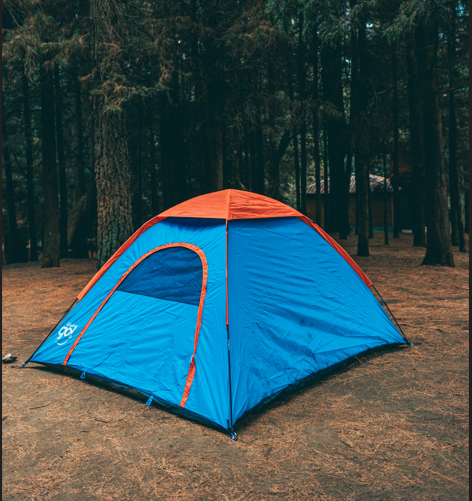
Two things decide this and neither is the headline capacity. The first is how it handles rain and the second is how it handles condensation, which is the problem nobody mentions and everybody meets.
A proper rainfly that reaches low, with a gap between it and the inner tent, is what keeps water out and lets moisture escape. Warm bodies produce a surprising amount of water overnight, and a tent with poor ventilation is wet inside by morning even when it has not rained at all. Mesh panels and a fly you can vent are the difference. A tent with a full rainfly and large mesh windows is the shape to look for rather than any particular brand.
Capacity ratings are optimistic across the whole industry. A four person tent fits four people with no gear and no room to move. Two spaces more than your group is about right, so four people are comfortable in a six. Going much larger has real costs, since a ten person family tent is excellent for a large group with a big level site and genuinely difficult on a normal provincial park pad, where the cleared area may not be big enough and the pitch takes a long time.
Whatever you choose, pitch it once in the garden before you go. Not for practice exactly, but to find out which pole is missing.
⭐ Cooking and Light After Dark
These two are grouped together because they fail together. The point at which people give up on cooking outside is nearly always the point at which they cannot see what they are doing.
A two burner stove is the standard answer and it earns its place, because one burner means everything is served at different times. Something like a two burner propane stove handles a pan and a kettle at once, which is most of what anyone actually cooks at a site. A sturdier two burner model is worth it only if you cook properly outside rather than reheating, and most people find they do not.
Light is where the biggest quality of life gain sits and it costs the least. A headlamp each rather than one shared lantern is the whole trick, because hands free light turns washing up, finding things in the tent and walking to the washroom into ordinary activities. A rechargeable two pack covers a couple, and a three pack covers a family with one spare, which you will need because one always goes missing.
Point them down when you walk past other sites. Nothing marks out a first timer faster than a headlamp swinging across somebody’s tent at ten in the evening.
⭐ How Do You Make the Second Night Better?
Fix one thing rather than everything. Add insulation underneath if you were cold, move the tent out of the morning sun if you cooked at six, or simply go to bed two hours earlier. One change is enough, and the second night improves on its own anyway.
Warmth is easier to add than people think. A jumper laid under your hips, a spare mat under the shoulders, or dry socks kept only for sleeping all make a real difference and none of them require buying anything. Being properly hydrated helps too, and a large insulated bottle filled before bed saves the walk to the tap. For anyone who drinks little during the day, a bottle with a straw is a small trick that works.
The last thing is somewhere comfortable to sit in the evening, which sounds unrelated to sleep and is not. People who spend the evening perched on a picnic bench go to bed stiff and restless. A proper chair, or a padded double seat if there are two of you, changes the last three hours of the day. The rest of the site setup that supports all this is in the campsite kit guide.
⭐ Best Sellers
Top Products and Picks
- An ultralight sleeping pad, the first thing to buy if anybody in the household woke up cold on the last trip. Insulation underneath is what fixes that, and no amount of extra bedding on top will.
- A tent with a full rainfly and mesh windows, the shape to look for when you stop borrowing. The fly and the ventilation matter more than the brand or the capacity on the box.
- A rechargeable headlamp two pack, worth buying before any lantern. One each rather than one shared is the entire point, and it is the cheapest change on this list.
- A folding camping chair, for the point where you notice the evening is the best part of the day and a picnic bench is not where you want to spend it.
⭐ Final Thoughts
It is worth resisting the temptation to claim too much for a couple of nights in a field. Camping is not a treatment and it will not fix anything that was not already fixable by a weekend with no schedule.
What it does reliably is give you a different shape of day, and that is worth more than it sounds. Meals take longer. The evening is long and empty in a way that feels strange on Friday and good by Saturday. You wake with the light, which nobody chooses and most people end up liking. And there is generally a stretch on the second morning where nothing at all is happening and it is the best part of the month.
All of it depends on sleeping. So if only one thing gets bought before the next trip, make it the thing that goes underneath you, and let everything else wait.
⭐ Additional Resources
For the science behind why light rather than habit sets when you feel sleepy, the public fact sheet on circadian rhythms is a short and neutral explanation of how body clocks work, and it makes the early mornings outdoors a lot less mysterious.