
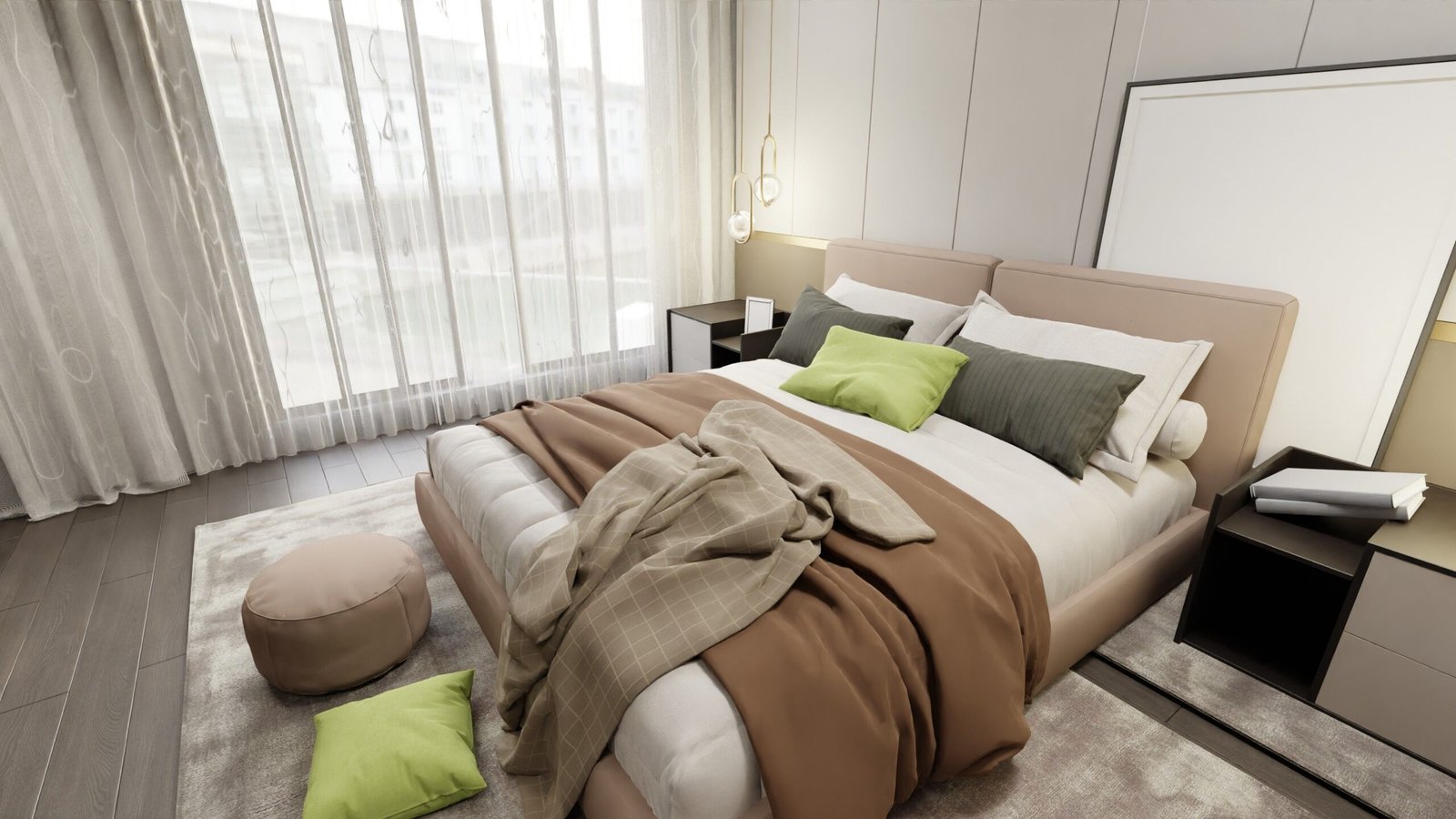
Bedroom Decor Ideas That Make the Room Feel Calm and Finished
As an Amazon Associate I earn from qualifying purchases. Some links in this post go to Amazon and may earn me a small commission at no extra cost to you.
Last Updated on September 5, 2026 by Smarteryouu
⭐ Bedroom Decor Ideas That Make the Room Feel Calm and Finished
Most bedroom decor ideas treat the room like any other room, and it is not one. A living room has to work for several people doing several things. A bedroom has two jobs, and one enormous piece of furniture sitting in the middle of it.
That changes where the effort goes. The bed takes up most of the floor and almost all of the attention, so how it looks decides how the room reads before anything on the walls gets noticed. After that it is the two square feet beside your pillow, and how much light gets in at six in the morning.
Everything below is about those few things rather than a long list of pretty objects. Get the bed, the bedside and the light right and the room feels finished even when the rest is still a work in progress.

⭐ Start With the Bed, Because It Is Most of the Room
A bed that looks unmade makes the whole room look unfinished, and no amount of décor elsewhere will undo that. The good news is that the fix is a habit rather than a purchase.
Layers are what make a bed look considered. A fitted sheet, a duvet pulled flat, one blanket folded across the lower third, and two to four pillows. That is the whole formula, and it takes under a minute in the morning once it becomes automatic.
Resist the pile of decorative cushions. A bed with twelve cushions on it means twelve cushions on the floor every night, and within a month nobody is putting them back. Two that get used and one that looks good is a sustainable number.
One practical detail that matters more than any of the styling. If two people share the bed, buy the duvet one size larger than the mattress. A queen duvet on a queen bed leaves both people pulling it back and forth all night, while a king duvet on the same bed drapes over both sides and looks better made.
⭐ Give the Wall Behind the Bed Something to Do
The wall behind the bed is the one everybody sees on the way in, and in most bedrooms it is completely empty. Filling it is what makes a room look designed rather than furnished.
You do not need a headboard to do it. One large piece of art centered above the pillows works, so does a pair of matching frames, a hung quilt or textile, or a block of paint the width of the bed. Each of these does the job a headboard would do, which is to give the bed a visual top edge.
Scale is the part people get wrong. Whatever goes up there should relate to the width of the bed, not the width of the wall, and it should sit low enough that it reads as part of the bed. There is a fuller explanation of that in our guide to arranging a room so it looks considered.
If you cannot drill, this is still achievable. Leaning a large framed piece on a low shelf behind the bed works, and our post on decorating without leaving marks covers what holds on a wall and what quietly takes the paint with it.
⭐ Get the Bedside Right and the Room Starts Working
The two square feet beside your pillow get used more than anywhere else in the house, and they are usually chosen last. Start with height. The surface wants to be within about two inches of the top of the mattress, so you can reach it lying down without sitting up.
This is where a lot of bedrooms quietly fail. Most nightstands are built around 24 to 28 inches tall, and a deep mattress with a topper on a high frame can sit well above that. Measure your mattress height before buying, because the same table is either perfect or useless depending on the bed it stands next to.
Then count what lands there every night. A lamp, a glass of water, a book, a phone. If all four do not fit with room to spare, the table is too small, no matter how good it looks.
Light you can switch off without getting up is the last piece. A lamp with the switch on the base or partway down the cord beats a beautiful one you have to reach behind. Measure from the outlet to the table too, since a short cord is the reason so many bedside lamps end up on the wrong side. Bulb choice is covered separately in our post on small upgrades that make a home easier to live in.
⭐ Keep the Floor Clear and Use the Space Under the Bed
A bedroom feels calm in direct proportion to how much floor you can see. It is the one room where clear floor matters more than anything on display, because you walk through it half awake.
Under the bed is the storage most homes forget they own. Measure the clearance first, since most rolling boxes need around six inches, near 15 cm. Use it for the things you touch twice a year, spare bedding and off season clothes, rather than anything you need in a hurry.
Choose boxes with lids. Open baskets under a bed collect dust in a way that means you stop opening them, and vacuum bags work well for bulky winter bedding but flatten anything you care about creasing.
Above the floor, two things need a home or they will end up on it. Laundry wants one basket with a lid, and shoes want one place by the door rather than a drift under the window. We covered what actually holds up in our guide to racks and organizers worth keeping.
⭐ Decide How Much Light You Want at Six in the Morning
Light control is the one thing a bedroom needs that other rooms do not, and it is worth sorting out before the decorative layer.
Two layers work better than one heavy curtain. A light filtering blind fitted inside the window gives you daytime privacy without shutting the room down, and a lined curtain over the top handles the night. The two together also look softer than a single blackout panel.
Here is the part the product descriptions leave out. Blackout fabric does very little on its own, because the light that wakes you comes around the edges rather than through the middle. A curtain that stops at the frame will leave a bright outline all around it, so the rod needs to extend well past the window on both sides, and a blind needs to fit the recess closely. Sizing that properly is covered in our post on measuring a room before you decorate it.
If the room faces the morning sun and you cannot change the window coverings, a folding screen beside the bed does a surprising amount of the same work.
⭐ Plan for the Chair That Collects Clothes
Almost every bedroom has one. A chair, a corner of the bed, or a bench that slowly disappears under clothes that are not clean enough to put away and not dirty enough to wash.
It is worth saying plainly that this is not a discipline problem. Those clothes exist, they need to go somewhere, and most bedrooms are set up as though they do not. The pile forms because there is no home for that particular category.
So give it one on purpose. A row of hooks on the back of the door, a valet stand, a bench with a basket underneath, or a small open rail in a corner. Anything that holds three or four items and looks intentional will absorb the pile and stop it spreading.
Then keep the actual chair, if you have one, as a chair. A seat you can sit on to put your shoes on is genuinely useful, and it only works if it is empty.
⭐ Give Each Person a Surface When Two of You Share
A shared bedroom needs symmetry more than a single one does, and not for looks. Two nightstands, two lamps, and two places to plug something in prevent a daily negotiation over one small table.
The tables do not have to match, though matching ones make a room look settled quickly. What they do need is similar height and a similar amount of usable surface, because that is where the friction actually comes from.
Light is worth splitting too. One person reading while the other has finished for the night is much easier with two separate lamps than with one overhead light and a compromise.
The same idea applies to the dresser. One drawer each for the things that accumulate keeps the top of it clear, and a clear dresser top does more for a bedroom than anything you could put on it.
⭐ Choose What Does Not Live in This Room
Bedrooms quietly absorb whatever else has nowhere to go. The drying rack, the overflow from a closet, the exercise bike, the desk that arrived one spring and stayed.
You do not have to be strict about it, but it helps to decide on purpose rather than by accident. Pick the two or three things the room is for, and give everything else a review. A room asked to do six jobs will not feel restful at any point in the day.
If a desk has to be in here, and for a lot of homes it does, treat it as a piece of furniture rather than an office. Face it away from the bed, keep the cables tidy, and put the work away at the end of the day. A folding screen or a curtain on a track will close it off completely for very little money.
The same goes for anything that hums or glows. It is a small change, and it is one of the few that costs nothing at all. There are more starting points in our home décor inspiration collection.
⭐ Best Sellers
Top Products and Picks
Four items cover most of what this guide describes, and all are easy to find on Amazon.
- An oversized duvet cover, one size up from the mattress, which is the cheapest way to stop two people sharing a duvet that is too small for both of them.
- A bedside lamp with the switch on the base or the cord, so it can be turned off lying down rather than reached for behind the table.
- A cordless blackout roller blind sized to fit closely inside the window recess, which handles the edges that a curtain alone leaves bright.
- A set of lidded under bed storage boxes on wheels, ideally low enough to clear your bed frame, for spare bedding and off season clothes.
⭐ Final Thoughts
A bedroom is the only room nobody else really sees, which is why it tends to come last. It is also the first room you see every morning and the last one every night, so it earns more attention than it usually gets.
What makes one feel calm is rarely decorative. A bed that looks made. Something on the wall above it. A table you can reach without sitting up. Clear floor, and a way to keep the light out until you are ready for it. None of that is expensive and most of it is a decision rather than a purchase.
Leave the room a little unfinished while you work out what belongs in it. Bedrooms are easy to overfill, and the empty space is doing more than you think.
Start tonight with the smallest one on the list. Clear the top of the dresser, or move the lamp to the side you actually reach for, and see how the room feels in the morning.
⭐ Additional Resources
On the blinds mentioned above, the United States Consumer Product Safety Commission keeps an information page on cordless window coverings, which is worth reading before choosing a blind for any room where young children spend time.
Candles are a common bedroom addition, and the National Fire Protection Association publishes plain guidance on using them safely, including where they should not be placed.