
Winter Car Emergency Kit: What to Keep in Your Trunk This Season
As an Amazon Associate I earn from qualifying purchases. Some links in this post go to Amazon and may earn me a small commission at no extra cost to you.
Last Updated on October 25, 2026 by Smarteryouu
⭐ Winter Car Emergency Kit: What to Keep in Your Trunk This Season
The first real snowfall in Ontario always seems to leave somebody stuck on the side of the road. Usually it is nothing dramatic. It is a car that will not start in a parking lot, a wheel spinning in a snowbank at the end of a driveway, or a highway closure that turns a forty minute drive into three hours of sitting still.
A winter car emergency kit is simply the small collection of things that make those moments easier. It is not about expecting the worst. It is about turning a cold, stressful wait into a mildly annoying one.
This guide walks through what is genuinely worth carrying, what tends to sit unused in the trunk for years, and how to keep the whole thing small enough that you actually leave it in the car. Most of it costs very little, and a good part of it you probably already own.

⭐ Why Winter Changes What You Carry
In summer, a breakdown is mostly an inconvenience. You call someone, you wait in the shade, and you get on with your day. In winter, the same breakdown comes with cold, early darkness, and roads that can be slow for help to reach. The car itself also has a harder time. Batteries lose strength in the cold, tire pressure drops as the temperature falls, and washer fluid that worked fine in October can freeze solid in January.
I have driven through a lot of Canadian winters in a lot of different cars, and the lesson that stuck came from a battery that died on a cold morning with nothing in the trunk to help. Nothing about it was dangerous. It was just a long, cold wait that a small box in the trunk would have shortened to about ten minutes.
That is really the whole idea. The things you carry do two jobs. Some help you get moving again on your own. The rest keep you warm and comfortable if you cannot. Driving habits matter just as much, and our guide on how to drive in snow covers the part that happens before anything goes wrong.
⭐ What Should You Keep in Your Car for Winter?
Keep a snow brush and scraper, a small shovel, a way to restart a dead battery, something for traction, a warm blanket, spare gloves and a hat, water and snacks, a flashlight, and a phone charger. That short list covers almost every winter problem a regular driver runs into.
It also lines up closely with the Ontario government’s winter driving advice, which suggests a charged phone, water and food, a flashlight, a blanket and warm clothes, jumper cables, a shovel, and traction mats or sand.
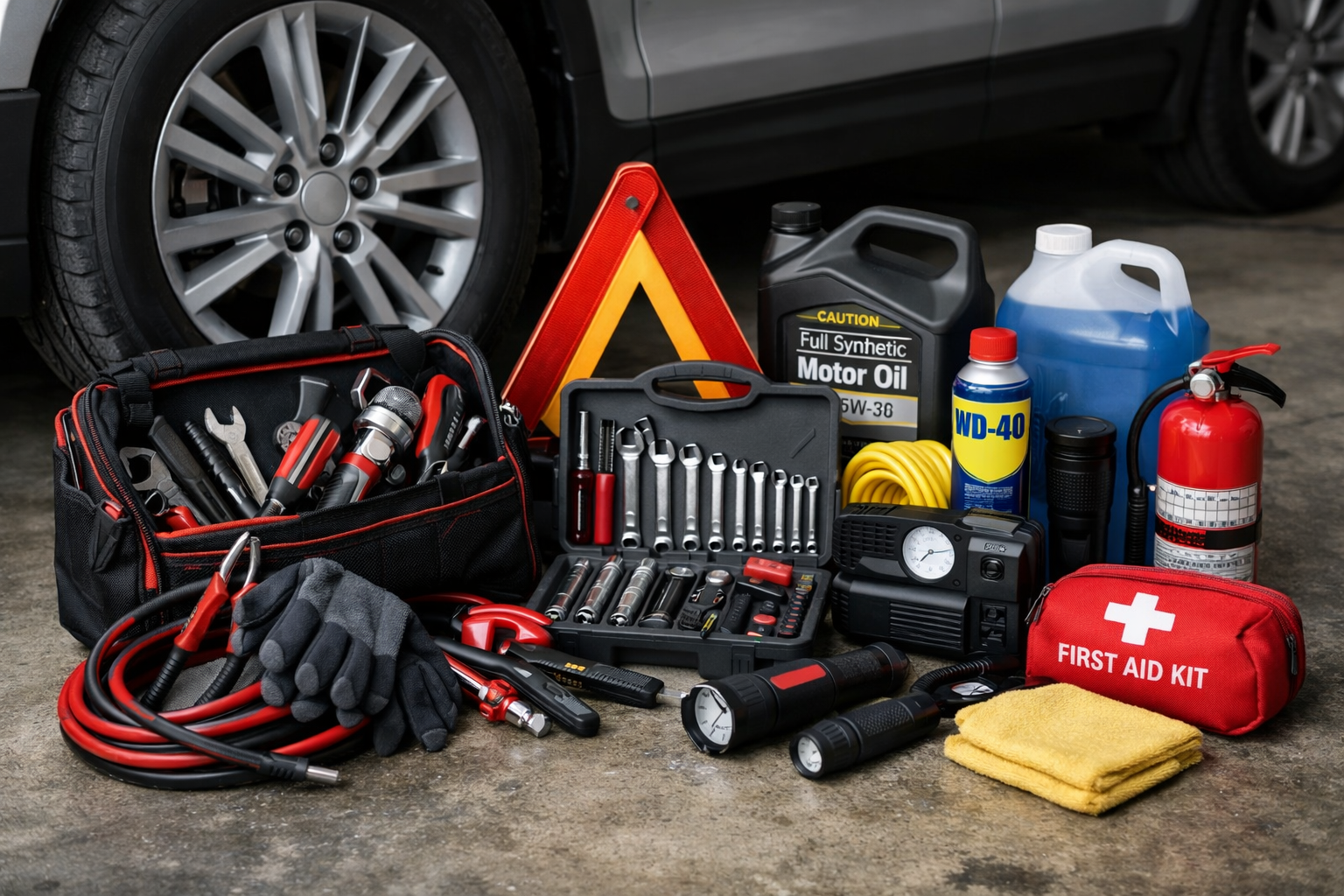
What you can usually leave out is just as useful to know. A big roadside tool set rarely gets used, because most winter problems are not mechanical repairs you can do in a snowbank. A tow strap only helps if a second vehicle shows up and someone knows how to use it safely. And a giant first aid kit is fine to have, but a small one you can actually find is better than a large one buried under everything else.
The goal is a kit small enough to live in the car all season without taking over the trunk. If it gets in the way, it gets taken out, and then it is not there on the morning you need it.
⭐ The Things That Get You Moving Again
Start with a proper snow brush and ice scraper. If you drive an SUV or a minivan, a longer handle makes a real difference, because clearing the roof is part of the job. Snow sliding off the roof onto your windshield at the first stop, or onto the car behind you on the highway, is the kind of problem that is easy to avoid.
Next is a compact shovel. Look for one with a metal blade that folds or comes apart, since cheap plastic blades tend to crack in deep cold. Most of the time you are not digging out a whole car. You are clearing the packed snow in front of and behind the tires so they have somewhere to go.
Traction is the third piece. The old trick is a bag of sand or cat litter poured in front of the spinning wheels, and it still works. Traction mats are tidier and reusable. You wedge them under the wheels that actually drive the car, which on most sedans and small SUVs is the front pair, then ease forward gently rather than spinning hard.
Add a spare jug of washer fluid rated for minus 40, because you go through far more of it in winter than you expect. A small tire inflator is also worth its space. Cold air drops tire pressure noticeably, and topping it up at home is easier than finding a gas station air pump that works. There is more on keeping tires in good shape in our tire maintenance guide.
⭐ The Things That Keep You Warm While You Wait
A real blanket matters more than anything else in this group. A wool blanket or an old sleeping bag keeps you far warmer than the thin foil emergency blankets on their own. The foil ones are light and cheap, so they make a good backup, but they should not be the only thing you have.
Keep a spare hat, a pair of warm gloves, and thick socks in the car. If you commute in office shoes, a pair of old winter boots in the trunk is one of the most underrated things you can carry. Cold feet make a short wait feel very long.
Air activated hand warmers are cheap, last for hours, and take up almost no room. Tuck a few into the glovebox. Add some water and food that keeps well, like granola bars or a bag of nuts. Water bottles can freeze in the trunk, so leave some space in each one, or keep a bottle in the cabin where it stays a little warmer.
A flashlight or headlamp is essential, since it can be dark by five in the afternoon in December. Rechargeable lights are convenient, but a basic one with batteries stored separately is the most reliable in the cold.
If you do run the engine for heat while you wait, make sure the tailpipe is clear of snow first, keep a window open just a little, and run it in short spells rather than continuously. It is a simple habit that keeps the air in the car safe to breathe.
⭐ Do You Need a Jump Starter, or Are Jumper Cables Enough?
Jumper cables only work when another car is there to help. A portable jump starter works on its own, which is why it is the item most people buy right after they have been stranded once. If you often drive alone, early in the morning, or late at night, the jump starter is worth it.
Cables are still useful and cost much less. If you buy them, choose a thicker set that is long enough to reach from one car to another when they cannot park nose to nose, which happens a lot in parking lots and on narrow streets.
A jump starter does need a little care. It holds its charge for months, but not forever, so plug it in every couple of months through the winter. Check the manual for its storage temperature range too. On the coldest nights, some people bring it inside and put it back in the car in the morning. Many models also charge a phone, which makes them doubly handy on a long wait.
If your car sits unused for long stretches over the winter, a battery maintainer that plugs in at home can stop the problem before it starts. We cover a few of these on our Automobiles Essentials page.
⭐ Where Should You Keep Everything in the Car?
Keep anything you might need from the driver’s seat inside the cabin, like the scraper, phone charger, gloves, hand warmers and a small flashlight. Everything else belongs together in one bin or bag in the trunk, so it stays organized and does not slide around on every turn.
A collapsible trunk organizer or a simple lidded bin works well. Put the heavy items, like the shovel and the washer fluid, at the bottom or toward the back seat side so they cannot shift forward. Some cars have useful space under the trunk floor around the spare tire, which is a good home for traction mats and cables.
It also helps to keep one blanket behind a front seat rather than in the trunk. If the trunk is blocked by a snowbank or you would rather not step out into traffic on a busy road, you can still reach it from inside the car.
For longer drives over the holidays, you might add a few comfort items on top of the basics. Our list of road trip must haves covers the extras that make a long drive more pleasant.
⭐ How Often Should You Check Your Kit?
Twice a year is enough for most drivers. Do a full check in October or early November before the first snow, and again in spring when you take the winter items out. A five minute look catches flat batteries, frozen water, and the gloves somebody borrowed in February and never put back.
The easiest way to remember is to tie it to something you already do. Many people check their kit on the same day their winter tires go on. The car is already getting attention, so it takes no extra planning.
During the fall check, charge the jump starter, test the flashlight, swap out snacks that have gone stale, and top up the washer fluid. Make sure the blanket is dry. A blanket that got damp in a leaky trunk is much less useful than it looks.
In spring, you do not need to empty the car completely. The flashlight, cables and a small first aid kit can stay all year. Bring the shovel, traction mats and heavy blanket inside, and the car gets its trunk space back for the summer. Our beginner’s guide to car maintenance has a few more seasonal habits worth pairing with this one.
⭐ Best Sellers
Top Products and Picks
Three things worth adding first if your trunk is empty right now, chosen for the problems that strand people most often in winter.
If you park on the street
GARANT Telescopic Car Shovel
For clearing packed snow from in front of and behind the tires after a plow goes by. The aluminum handle slides down short enough to live in the trunk all winter, and the D grip is easy to hold with gloves on.
Check price on AmazonFor the long wait
Arcturus Military Wool Blanket
For staying warm if you are stuck and the engine is off. Wool keeps you warm even when it gets damp, which matters in a trunk full of snowy boots. At 64 by 88 inches it is large enough for two people.
Check price on AmazonIf you often drive alone
NOCO Boost GB40 Jump Starter
For restarting a dead battery without waiting for another car. It also charges a phone and has a built in flashlight. Plug it in every couple of months through the winter so it is ready when you need it.
Check price on Amazon⭐ Final Thoughts
Getting ready for winter driving does not have to be a big project. A blanket, a shovel, a scraper, something warm to wear, and a way to get the engine started again will cover most of what a normal season can throw at you.
The real trick is keeping it simple enough that it stays in the car. A tidy bin in the trunk and a few small things in the cabin are easy to live with all season, and easy to check when the tires go on in the fall.
Most of the time, none of it will get used, and that is fine. It is there for the one cold morning when the car will not start or the highway slows to a crawl. On that morning, a little preparation turns a long, uncomfortable wait into a short story you tell later. Start with what you already have at home, then fill in the gaps one piece at a time.
⭐ Additional Resources
Winter driving, Government of Ontario: tips for getting a vehicle ready for winter, choosing winter tires, and staying safe on the road.
Get Prepared, Government of Canada: general guidance on preparing for winter storms and building household emergency kits.